

Five types of cockroaches show up in US homes far more than any others: German, American, brown-banded, Oriental, and smokybrown. Worldwide there are roughly 4,600 known cockroach species, but only a small handful ever cross an American threshold.
You can tell these five apart by size, color, markings, and where you find them, and matching what you saw to the right one is the first step toward getting rid of it. The guide below covers how to identify the most common cockroach species, plus what to do once you know what you're dealing with.
The 5 most common types of cockroaches
Cockroach identification comes down to four things: size, color, markings, and where you found it. Each roach species below has its own combination, and once you know the pattern, matching a sighting takes seconds.
1. German cockroaches (Blattella germanica)

The German cockroach is the most common indoor species in the US, and it lives strictly indoors near heat and moisture, in places like kitchens and bathrooms. Adults run about ½ to ⅝ inch long and are tan to light brown. Look for two dark, parallel stripes running down the pronotum, the shield-like plate right behind the head. They have wings but rarely use them to fly.
2. American cockroaches (Periplaneta americana)

The American cockroach is the largest cockroach you're likely to find indoors, measuring 1½ to 2 inches. It's reddish-brown with a yellow margin ringing the pronotum. Both sexes have wings, though they rarely fly. You'll usually find it in basements, drains, and sewers, coming inside for food and moisture. "Palmetto bug" most often refers to this species, though people apply the nickname loosely.
3. Brown-banded cockroaches (Supella longipalpa)
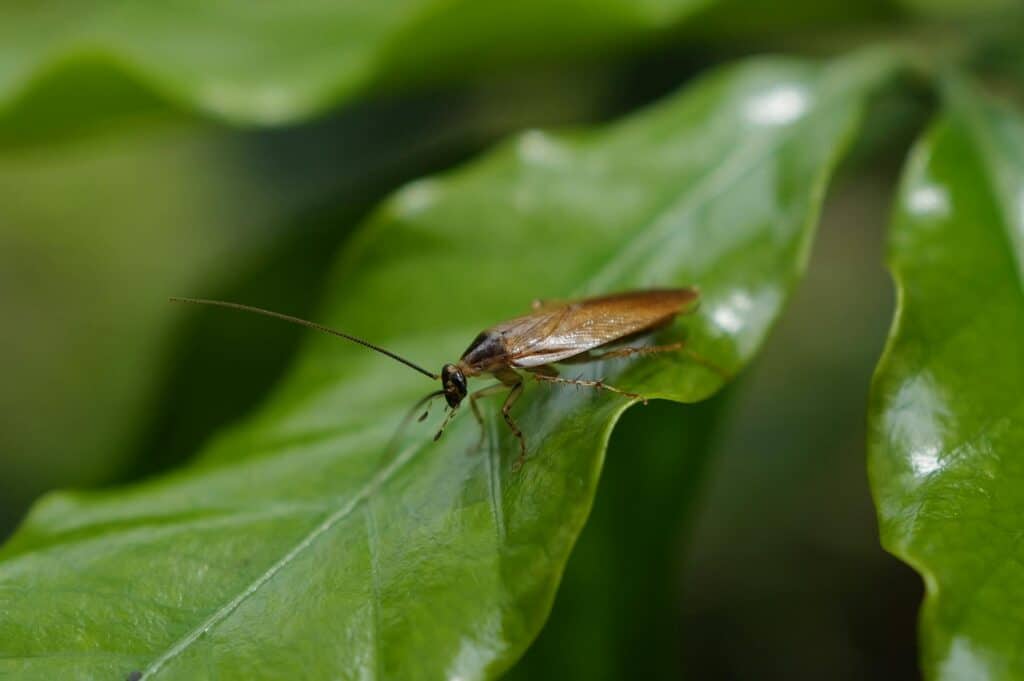
The brown-banded cockroach is small, around ½ inch, and light brown, easy to mistake for a German cockroach at a glance. The real difference is in the pattern: two broad, light bands running across the abdomen rather than stripes on the pronotum. It also prefers warm, dry, elevated spots, upper cabinets, closets, and behind picture frames and furniture, away from water. Adult males may fly when disturbed. Check the abdomen, not just the color, before you rule this one out.
4. Oriental cockroaches (Blatta orientalis)
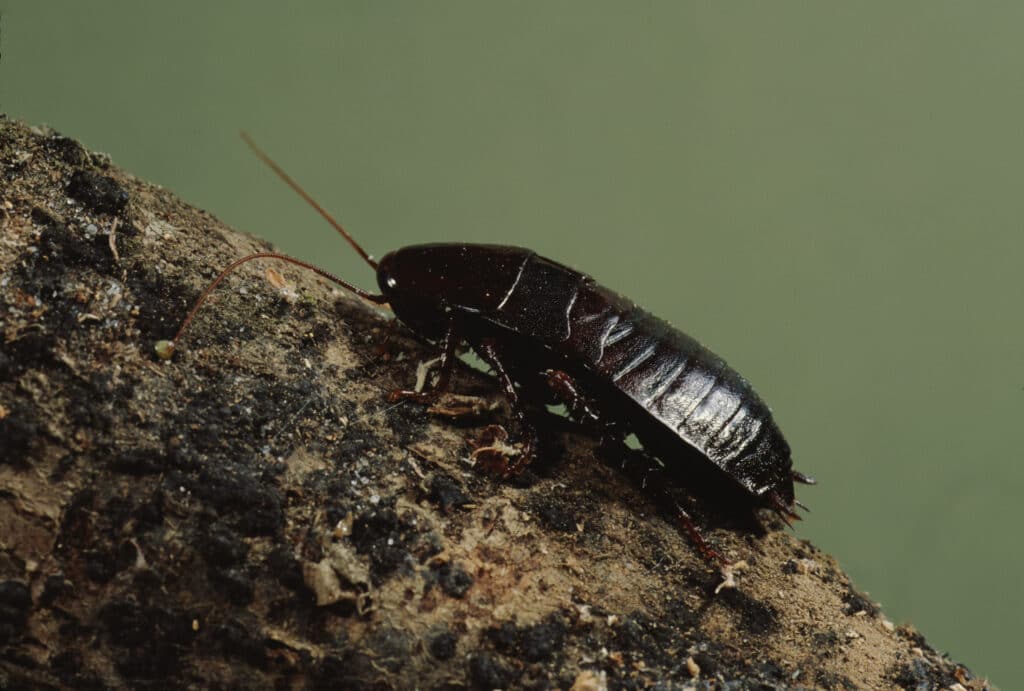
The Oriental cockroach is shiny black to dark reddish-brown. Females run about 1 inch and males about 1¼ inches. Males have short wings, and females are nearly wingless, so neither sex flies. It favors cool, dark, damp areas like basements, drains, and water meter boxes, often moving in from outdoors. That habitat preference is exactly why many homeowners call it a water bug.
5. Smokybrown cockroaches (Periplaneta fuliginosa)
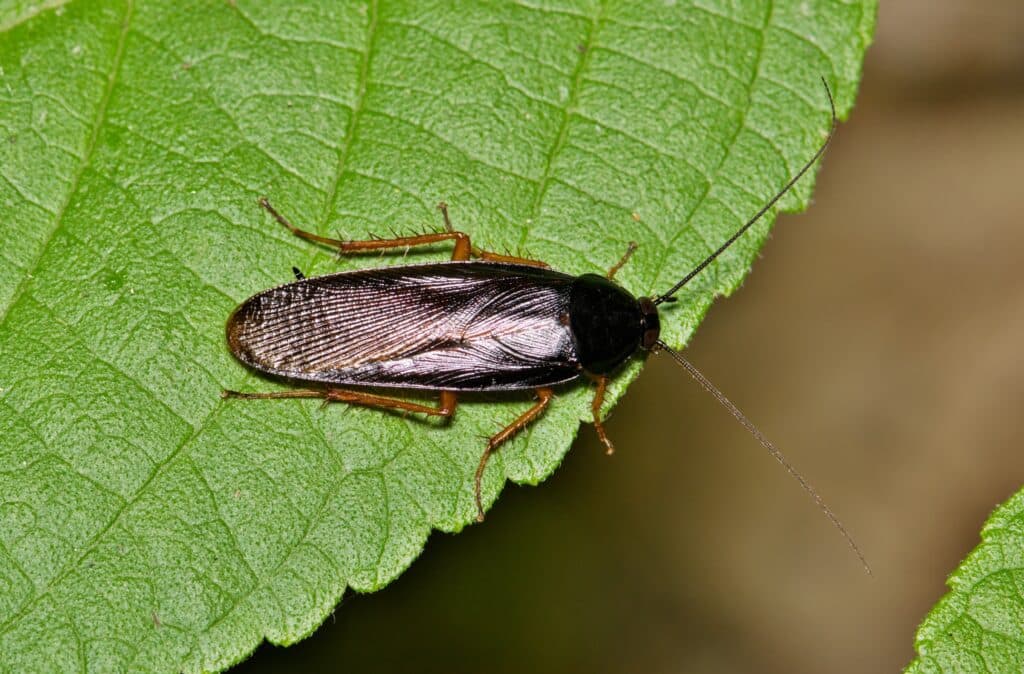
The smokybrown cockroach grows to about 1½ inches and is uniformly shiny dark mahogany to black, with no yellow margin on the pronotum. That uniform color is what separates it from the similarly sized American cockroach. Both sexes are strong fliers drawn to light. It lives mostly outdoors and around the home, slipping into attics and other upper areas. It’s most often encountered across the southeastern US.
How to tell the different cockroach types apart at a glance
Once you know size, color, and habitat, matching a sighting can be quick:
- Tiny and striped: Likely German or brown-banded.
- Large and reddish-brown: Likely American or smokybrown.
- Shiny, black, and flightless: Likely Oriental.
Use the table below to compare the five most common types of roaches in your home:
| Species | Size | Color and markings | Where found |
|---|---|---|---|
| German cockroach | ½–⅝ in | Tan to light brown; two dark stripes on pronotum | Kitchens and bathrooms |
| American cockroach | 1½–2 in | Reddish-brown; yellow margin on pronotum | Basements, drains, sewers |
| Brown-banded cockroach | ~½ in | Light brown; two light bands across abdomen | Warm, dry, high spots |
| Oriental cockroach | 1–1¼ in | Shiny black to dark reddish-brown | Cool, damp basements and drains |
| Smokybrown cockroach | Up to ~1½ in | Uniform shiny dark mahogany to black | Outdoors, attics, southeastern US |
Seeing a smaller, darker version of any of these, with partial or no wings, usually means a nymph (baby cockroach) rather than a different species. Nymphs look like scaled-down adults and stay close to where they hatched, which is a sign of active breeding nearby.
Why identifying the type of cockroach matters
Getting the cockroach species right changes where you look and how you treat, because each roach has its own habitat and moisture needs. A brown-banded infestation hiding in dry upper cabinets needs a different approach than an Oriental infestation breeding in a damp basement drain.
German cockroaches are worth identifying quickly because they breed fast. A female develops five to eight egg capsules over her lifetime, and each capsule holds 30 to 40 eggs, so a single female can produce hundreds of offspring. Early action makes a real difference with this species specifically.
Cockroach poop, shed skins, and saliva can also trigger asthma and allergies, especially in children. Cockroach allergens are considered one of the more underestimated indoor asthma triggers, and one study found cockroach sensitization in 36% of inner-city asthmatic children studied. Cockroaches can also pick up bacteria as they move between trash, drains, and food surfaces, which is part of why reducing their numbers matters beyond simple annoyance.
The content in this article is provided for informational purposes only and is not intended as medical advice, diagnosis, or treatment. Always consult a qualified healthcare provider regarding any medical condition. Do not delay seeking emergency care for severe allergic reactions such as difficulty breathing or swelling of the face or throat. Individual reactions to cockroach allergens may vary, and no guarantees are made regarding the effectiveness of any treatment described. Home remedies are not medically verified and may cause adverse reactions. Aptive Environmental LLC provides pest control services only and does not offer medical advice. The company is not liable for any damages or injuries resulting from the use of this information.
When to call a professional for cockroach control
A few signs mean it's time to bring in professional cockroach control:
- Daytime sightings: Seeing roaches out in the open during the day, when they'd normally stay hidden.
- Repeat sightings: Spotting them again after cleaning.
- Physical evidence: Finding droppings, shed skins, or egg cases even without seeing a live roach.
Store-bought cockroach spray and bait can knock back a light problem, but they're typically short-lived, especially against fast-breeding German roaches. Aptive's Pest Intelligence Center analyzes over 500 million data points a year to flag where cockroach activity is trending up, which helps a Service Pro match treatment to the species and its hiding spots rather than guessing. Get a quote for cockroach control if identification alone hasn't solved the problem.
Types of cockroaches FAQs
Q: What cockroaches are the worst to get rid of?
German cockroaches are the hardest to fully clear because they breed indoors year-round and a single female can produce hundreds of offspring in her lifetime. Brown-banded roaches come in second since their preference for dry, elevated hiding spots keeps them out of reach of many standard baits. Both usually need targeted professional treatment rather than a single spray.
Q: Which cockroaches are most likely to be in your house?
German cockroaches are the most common indoor species in the US, followed by American and brown-banded cockroaches. Oriental and smokybrown cockroaches turn up more often in damp basements or when they wander in from outside.
Q: Do cockroaches come out when people are sleeping?
Cockroaches are nocturnal and most active at night, which usually includes the hours most people are asleep. They're drawn out by darkness and quiet, not by a person's presence specifically, and a heavy infestation is more likely to explain nighttime sightings than any interest in sleeping people.
Q: What's the most harmful cockroach?
Cockroaches aren’t venomous, and bites are rare, so “harmful” really means indirect health risk. German cockroaches rank highest because they live indoors year-round, close to food. Their droppings, shed skins, and saliva can trigger asthma and allergy symptoms, especially in children. They can also pick up bacteria as they move between trash, drains, and food surfaces.
Q: What bug can be mistaken for a cockroach?
The palmetto bug is the most common mix-up, since it's just a nickname in certain regions for American or smokybrown cockroaches rather than a different insect. Outside of that, some large beetles and water bugs get misidentified as cockroaches at a glance, though checking for the pronotum markings will confirm whether it’s a cockroach or not.