You observe occasional pest sightings in living spaces despite thorough surface cleaning and treatments, suggesting these organisms maintain protected populations beyond visible areas where conventional control efforts prove ineffective. Wall cavities—the hollow spaces between interior and exterior walls, around framing studs, and within insulation layers—provide stable microclimates with consistent temperatures.
They also offer protection from environmental extremes and disturbances, darkness enabling nocturnal species to remain concealed, and access to structural resources supporting ants, cockroaches, spiders, and various other species establishing breeding populations invisible to occupants.
The hidden nature of wall cavity populations creates detection and treatment challenges requiring professional pest control services and specialized application techniques.
Why Wall Cavities Attract Insects
Wall void environments provide multiple favorable conditions that make these spaces particularly attractive for pest establishment compared to exposed living areas.
- Temperature stability: Wall cavities maintain relatively constant temperatures year-round, insulated from outdoor temperature extremes by exterior walls and from indoor heating/cooling fluctuations by interior drywall. This stability—typically 18-24°C (64-75°F) in climate-controlled buildings—supports continuous pest activity and reproduction without seasonal dormancy requirements.
- Protection from disturbances: Unlike visible living spaces experiencing daily human activity, cleaning, and environmental changes, wall voids remain undisturbed for months to years. This absence of disturbance enables pest colonies to establish, breed, and expand without interruption from cleaning, pest control efforts, or other activities disrupting surface populations.
- Darkness advantages: Complete absence of light in wall cavities benefits nocturnal species demonstrating photophobic behaviors including most cockroaches, many ant species, and various spiders. Continuous darkness eliminates circadian activity restrictions, enabling 24-hour foraging and colony maintenance activities.
- Humidity conditions: Wall cavities often maintain elevated relative humidity compared to climate-controlled living spaces, particularly in exterior walls subject to condensation or in areas near plumbing where moisture infiltration occurs. This moisture supports species requiring elevated humidity for survival and reproduction including silverfish, certain cockroach species, and various arthropods.
- Structural resources: Wall framing provides surfaces for nest attachment, insulation material offers nesting substrate, electrical wiring and plumbing create travel corridors, and wood framing provides food for carpenter ants and certain beetle species. This resource availability enables extended residence without requiring frequent excursions into visible areas.
Ants: Building Complex Networks Out of Sight
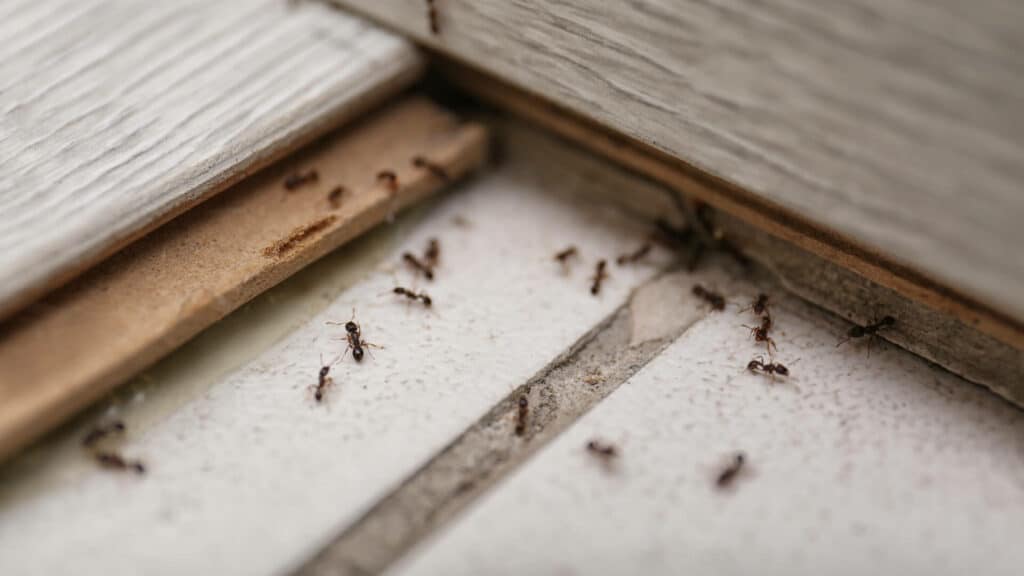
Multiple ant species exploit wall cavities for primary or satellite nest establishment, utilizing structural features for colony housing while foraging into adjacent living spaces.
- Carpenter ants: (Camponotus spp.) excavate galleries in wall framing, studs, and sill plates—particularly wood demonstrating moisture damage or decay—creating smooth-walled chambers housing 2,000-10,000 workers in mature colonies. These excavations weaken structural integrity over time while colonies remain completely concealed except during periodic worker foraging into kitchens and bathrooms.
- Odorous ants: Tapinoma sessile establish satellite nests in wall insulation, behind baseboards, and in gaps between wall studs, with populations of 100-10,000 workers utilizing wall voids as protected harborage while maintaining outdoor parent colonies. These ants readily relocate within wall systems when disturbed, making elimination challenging without void treatments.
- Pharaoh ants: Small colonies of 1,000-10,000 workers distributed across multiple wall cavity nests connected through utility penetrations and structural gaps create extensive networks difficult to eliminate through surface treatments alone. Wall populations serve as reproductive centers continuously supplying foragers into living spaces.
Cockroaches: Masters of Hidden Survival
Wall cavities provide essential harborage for cockroach species seeking protected, humid environments, with populations establishing in voids near moisture and food sources.
- German cockroaches: (Blattella germanica) congregate in wall voids adjacent to kitchens and bathrooms where moisture from plumbing and warmth from water heaters create optimal conditions. Populations of hundreds to thousands inhabit spaces between drywall and studs, around pipe penetrations, and within insulation, emerging at night to forage in adjacent rooms.
- American and Oriental cockroaches: Larger species prefer damper wall areas near sewage pipes, in basement wall cavities, or in exterior walls with water infiltration. These cockroaches utilize wall voids as protected harborage while foraging primarily at night, with populations remaining concealed during daylight hours.
Spiders: Hunters in the Shadows
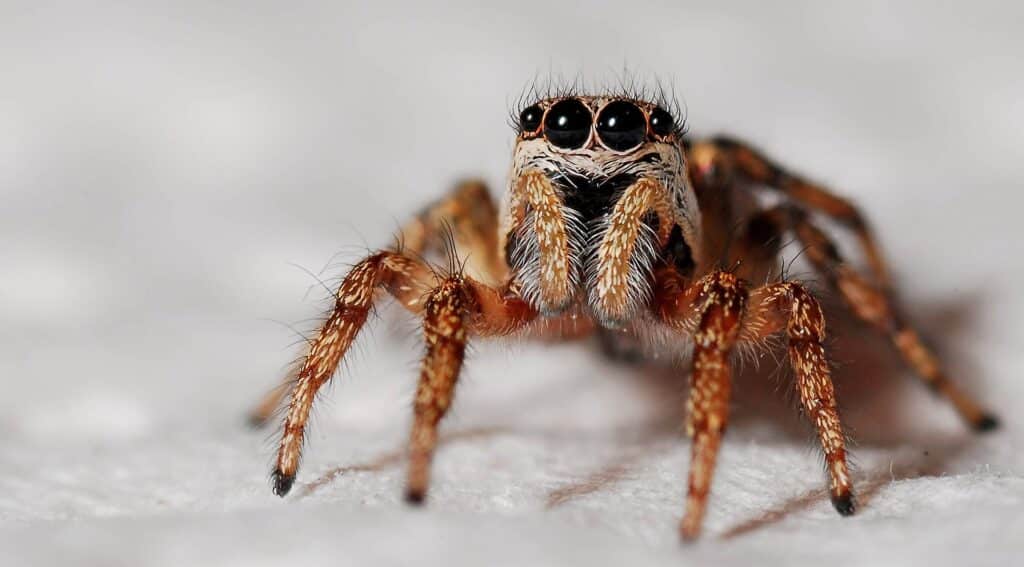
Various spider species utilize wall cavities for web construction, egg sac placement, and concealed residence, with some species rarely emerging into visible living spaces.
- House spiders: (family Theridiidae) construct cobwebs in wall voids near insect entry points, capturing prey attempting to enter living spaces through structural gaps. These spiders demonstrate site fidelity, maintaining webs in productive locations for weeks to months with minimal disturbance.
- Brown recluse considerations: In regions where Loxosceles reclusa occurs, wall cavities provide preferred undisturbed harborage, with spiders rarely emerging into living areas except during extreme conditions. These spiders demonstrate long lifespans (2-4 years) and can establish multi-generational populations within wall systems.
- Cellar spiders: Pholcidae species construct irregular webs in wall voids near moisture sources, with populations of 5-20 individuals inhabiting single void areas. While generally beneficial (preying on other arthropods), large populations create aesthetic concerns when individuals emerge into basements or crawl spaces.
Detection Methods
Identifying wall cavity infestations requires attention to subtle indicators since concealed populations produce minimal visible evidence until populations become substantial.
- Auditory cues: Quiet rustling, scratching, or tapping sounds within walls during nighttime hours indicate arthropod or rodent movement, with insect sounds typically softer and more intermittent than rodent activity. Carpenter ant excavation produces distinctive faint rustling as workers remove wood particles.
- Visible activity patterns: Sudden increases in pest sightings near specific walls, particularly around baseboards, outlets, or plumbing fixtures suggest nearby wall cavity populations, with activity peaks at night when concealed insects emerge to forage in living areas.
- Structural evidence: Small holes in drywall, sawdust-like frass beneath wall areas, moisture stains, or wall surface irregularities may indicate pest activity or damage within voids. Carpenter ant frass (wood shavings mixed with insect parts) appearing near baseboards signals active gallery excavation.
- Odor detection: Musty or oily odors near walls suggest cockroach populations, while distinctive chemical smells may indicate ant colonies producing defensive compounds. Odors typically concentrate near wall areas housing largest population densities or near gaps enabling air exchange between voids and living spaces.
When to Talk to a Professional
Professional pest control providers conduct thorough assessments identifying evidence of wall cavity colonization, determine species involved and approximate population levels, and develop treatment strategies appropriate for building construction and infestation severity. Expert evaluation includes inspection of structural features, moisture conditions, and access points contributing to pest establishment.
For properties experiencing persistent pest problems despite surface treatments, observing pest emergence from wall areas, hearing sounds within walls suggesting concealed activity, or concerned about potential hidden infestations, contact Aptive today for a free quote.