




The Essential Guide to Earwigs: Facts, Behaviors & Identification Tips
Learn how to identify and manage earwigs with our expert guidance, so you can take care of your home with confidence.
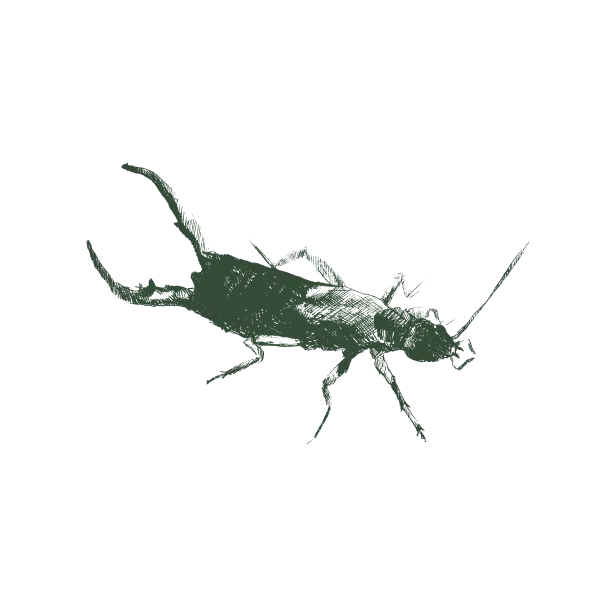
ORDER DERMAPTERA
Earwig facts every homeowner should know
Earwigs are mainly a nuisance, not a danger
Earwigs are generally not considered dangerous to people, and if handled, they typically only cause a mild pinch. They’re omnivores, feeding mostly on decaying plant matter, pollen, and other insects – though they will also chew on tender seedlings and garden plants. Earwigs are nocturnal, doing most of their foraging at night and often gathering near outdoor lights.
Earwig activity peaks in late summer
The earwig lifecycle typically runs one generation per year. In many U.S. regions, adults reach maturity by late summer, around August and September, when pairing begins. Since earwigs are mainly a nuisance whose numbers tend to peak in late summer, their arrival near the home follows a predictable seasonal rhythm.
Earwigs move indoors during hot, dry weather
Earwigs live outdoors in damp, dark places, tucked under mulch, leaf litter, boards, and stones. During mid-to-late summer, earwigs move indoors during hot, dry stretches in search of the cooler, moister shelter they lose outdoors.

earwig treatment
How we handle earwig control
Aptive’s earwig control services treat around your home’s foundation, flower beds, mulch areas, and turf within a couple of yards of your residence, as well as in the crawl space areas of the home. We also treat around the building adjacent to the foundation (perimeter treatment) to stop or limit earwigs from getting indoors.
Our pest experts take a tailored approach when treating your property and work to ensure that your concerns are addressed and your home is protected, inside and out. We’re dedicated to providing you with peace of mind and making sure you enjoy your home. For specialized earwig pest control and to discover how we can help you, find a location near you and experience our exceptional service.
A female earwig can lay 30 to 60 eggs in a single cluster, and overwintering females can produce a second brood that hatches by early summer, meaning one nesting site near your foundation can turn into a much larger population fast.*
If you’re dealing with earwigs in your home, give Aptive a call and let our team help you take your space back.
Identifying Earwigs
What do earwigs look like?
Earwigs have slender, flattened bodies that typically run about 1/4 to 1 inch long, with coloring that ranges from pale brown to reddish brown to nearly black. Their most recognizable feature is a pair of pincer-like cerci at the rear of the abdomen, curved on males and straighter on females. They have six legs and long, threadlike antennae, and most species carry wings tucked beneath short covers, though they rarely fly. These traits together make earwigs hard to mistake for any other household pest.
What are signs of earwig infestation?
The clearest sign of an earwig infestation is finding them indoors in damp rooms like bathrooms, kitchens, laundry rooms, and basements, especially since earwigs are normally nocturnal and daytime sightings often point to larger numbers nearby. Outdoors, look for groups clustering around exterior lights, door and window frames, and mulch beds pressed against the foundation, particularly after dark when earwigs are most active. Earwigs also leave irregular, ragged holes chewed into leaves and flower petals on plants like marigolds, dahlias, and hostas, without the slime trail that slugs leave behind.
A few earwigs indoors can turn into a steady stream fast, especially as the weather stays warm and dry. Acting on these signs early makes it easier to keep the population from building up around your home.
What causes earwigs in your house?
Earwig activity in your house is usually seasonal. As late-summer heat dries out mulch and soil outdoors, earwigs leave those drying spaces and head toward the moisture and shelter your home offers. Leaky spigots, poor drainage, and gutters that dump water near the foundation create the damp conditions earwigs seek. And leaf litter, mulch beds, and stacked firewood give them places to hide close to your walls. From there, they typically slip inside through small cracks and gaps near the foundation, doors, and windows.
How to get rid of earwigs?
To get rid of earwigs, reduce moisture around the foundation, clear leaf litter and mulch from your home, and seal cracks around doors and windows. For nests that keep returning, call a professional. Aptive’s Service Pros treat the perimeter and harborage areas where earwigs gather, helping keep them from coming back.
earwig FAQs
Contact us.
Aptive has earwig control experts in a city near you. Call us anytime.
earwig control near me
Aptive has local earwig control experts ready to serve you. Search for your zip code to find a branch in your area.
Get a quote
Aptive is here to help you build a personalized earwig control plan based on your needs.