You observe nocturnal insects demonstrating precise flight trajectories and targeted host-finding behaviors despite complete darkness, raising questions about sensory mechanisms enabling sophisticated navigation without visual cues that humans depend upon for spatial orientation. Nocturnal insects employ diverse non-visual sensory modalities including chemoreception detecting volatile compounds at parts-per-billion concentrations.
The intersection of sensory physiology, behavioral ecology, and applied pest management determines effectiveness of control measures targeting nocturnal pest species.
The Sensory Toolkit of Nocturnal Insects
Nocturnal insects rely on multiple senses working together, creating navigation abilities that function reliably even when it’s pitch black outside.
- Powerful sense of smell: Insect antennae contain thousands of tiny receptors that can detect specific scents at concentrations so low they’re almost unimaginable. Male moths can track female pheromones from over a kilometer away, following invisible scent trails through the night air with remarkable precision.
- Feeling air movement: Specialized hairs covering insect bodies detect the slightest changes in air currents, helping mosquitoes and other fliers maintain stable flight, avoid obstacles, and sense nearby objects—all without seeing them.
- Temperature and humidity sensing: Nocturnal insects can detect subtle temperature changes and humidity levels that guide them toward potential food sources. Mosquitoes use this ability to find warm-blooded hosts, zeroing in on the heat and moisture we give off.
- Touch and taste combined: When insects land on surfaces, specialized sensors on their feet immediately assess whether they’ve found suitable feeding or egg-laying sites through direct contact.
Nocturnal Chemical detection
Chemical detection enables nocturnal insects to navigate precisely over long distances and perform complex searches without any light.
Moths demonstrate sophisticated scent-tracking behavior—flying upwind when they detect pheromones, zigzagging side to side when they lose the scent, then surging forward again when they pick it up. This creates the characteristic looping flight pattern you might notice around porch lights, though in nature, it successfully brings males to females from impressive distances.
Many nocturnal insects find food by detecting plant scents carried on the breeze. Different species have evolved to recognize specific combinations of plant chemicals, allowing them to locate host plants even when surrounded by dozens of other plant species in complete darkness.
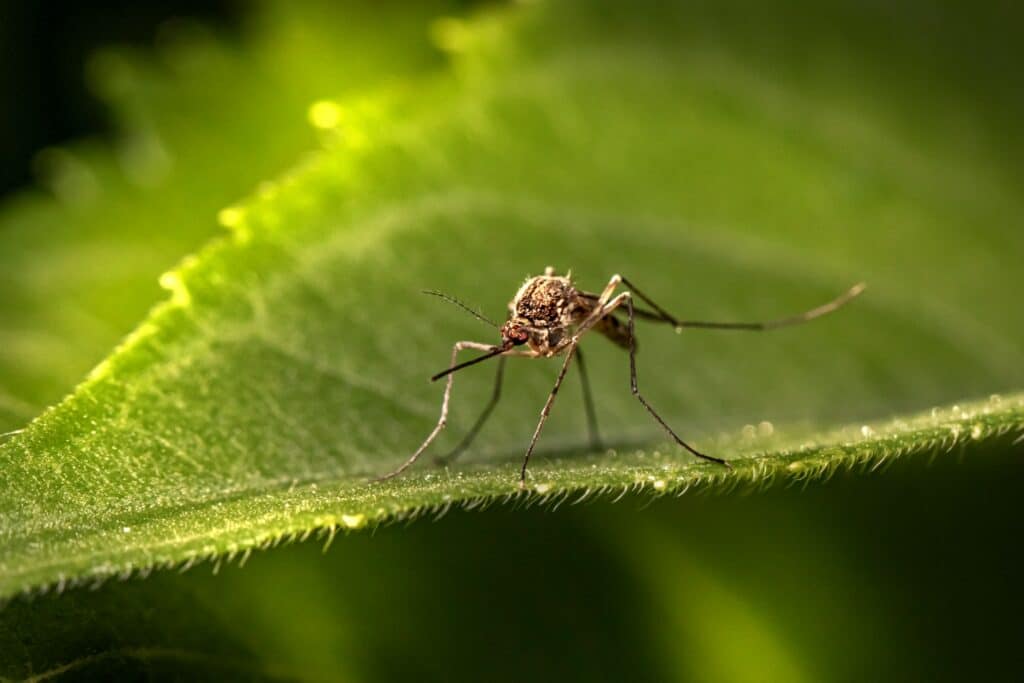
Mosquitoes track the carbon dioxide we exhale with every breath, detecting these plumes from 25-35 meters away. Combined with body heat and skin odors, these cues create an invisible map leading them straight to us.
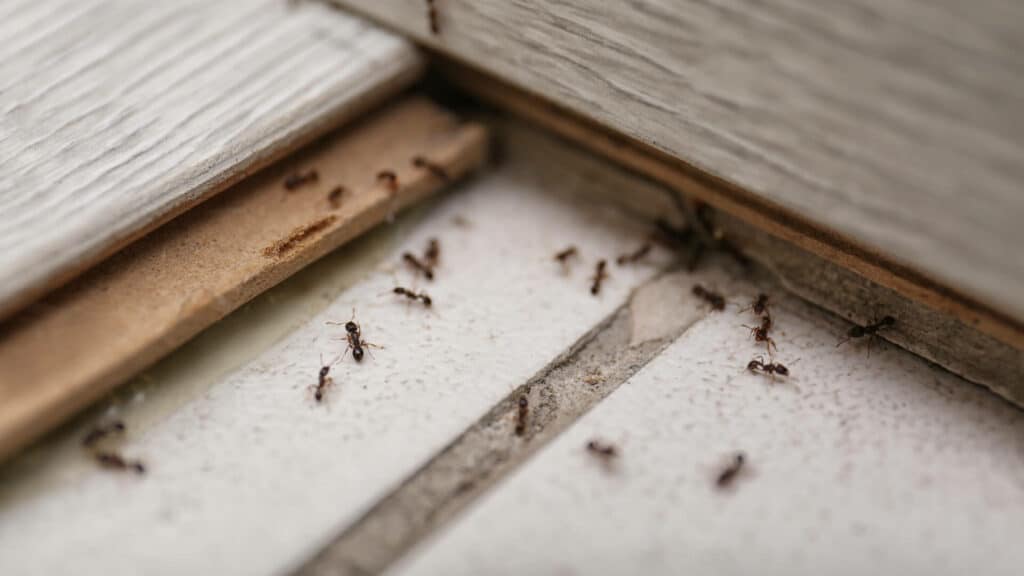
Nocturnal ants lay down chemical trails that function like roads for their colony mates, enabling efficient travel through pitch-black underground tunnels. These trails can remain effective for hours or even days, guiding hundreds of workers to food sources and back home.
Surprisingly, many nocturnal insects can learn to associate certain smells with rewards, improving their navigation efficiency over time through memory and experience.
Insects and Polarized Light
Specialized vision enables nocturnal insects to detect light patterns we can’t see, providing compass-like directional information even at night.
Insect eyes have photoreceptor cells arranged in special patterns that detect polarized light—essentially, light waves oriented in specific directions. This creates a sky pattern that remains visible during twilight and even on clear nights, functioning as a natural compass.
Dung beetles use these patterns to roll dung balls in straight lines away from competitive areas, maintaining their bearing with impressive accuracy even when clouds obscure direct views of the moon or stars.
Moths and other long-distance nocturnal fliers maintain constant angles relative to the moon, enabling them to travel in straight lines over many kilometers. Unfortunately, this same navigation system causes problems around artificial lights—since light bulbs are much closer than the moon, maintaining a constant angle creates a spiral inward, trapping moths in endless circles.
Some evidence suggests certain migrating moths may use patterns of stars for navigation, similar to how birds find their way, though researchers are still investigating exactly how this works.
What Insect Navigation Reveals About Adaptation
Detecting and responding to air currents helps nocturnal flying insects maintain direction, search efficiently, and conserve energy during flight.
Flying upwind: When nocturnal insects detect interesting scents—whether food, mates, or hosts—they orient upwind, flying toward the source. Their flight speed might only get them moving slowly against the breeze, but this strategy reliably brings them to their target.
Search patterns: If an insect loses a scent trail it’s following, it switches to crosswind flight, sweeping back and forth in increasingly wide arcs until it picks up the trail again. This systematic search pattern prevents them from getting hopelessly lost.
Choosing flight altitude: Migrating nocturnal insects often fly at different heights above ground depending on wind conditions, selecting altitudes with favorable winds that reduce the energy needed for long-distance travel.
Compensating for crosswinds: Mosquitoes and other small fliers can detect when crosswinds push them off course and make subtle flight adjustments to maintain their intended direction, despite being much lighter than the air moving around them.
Professional Help with The Night’s Hidden Order
Professional pest control service providers identify which nocturnal pest species you’re dealing with through monitoring programs using appropriate attractants and traps, determining when they’re most active and where they’re coming from. Expert pest control evaluation examines environmental factors including outdoor lighting, vegetation, and standing water that might be supporting pest populations.
If you’re experiencing persistent problems with moths damaging stored products, mosquitoes creating health concerns, or other nocturnal pests requiring professional assessment and species-specific management, contact Aptive today for a free quote and comprehensive evaluation with customized solutions for your specific situation.
FAQs About Nocturnal Insects
Here are some commonly-asked questions from homeowners about the type of insects that are active during the night.
Q: What Types of Moths Are Nocturnal?
Most moth species are nocturnal, including common household pests like pantry moths (Indian meal moths), clothes moths, and various species that damage stored products. Outdoor species include hawk moths, underwing moths, and giant silk moths. These nocturnal fliers use moon and starlight for navigation while tracking pheromones and plant scents to find mates and food sources. Their activity peaks typically 2-4 hours after sunset during warmer months.
Q: Which Types of Ants Are Nocturnal?
Several ant species demonstrate nocturnal activity patterns, including carpenter ants that often forage at night to avoid daytime predators and heat. Desert-dwelling harvester ants forage nocturnally during hot seasons to prevent water loss. Some tropical species operate exclusively at night, using chemical trails to navigate in complete darkness. Nocturnal foraging enables these species to exploit food resources while avoiding competition with day-active ants and reducing predation risks from visual hunters.
Q: How Do I Know I Have a Nocturnal Pest Control Problem?
Signs include discovering insects early morning around light fixtures, finding shed wings near windows or doors, noticing damage to stored foods or fabrics that appears overnight, or hearing buzzing or crawling sounds after dark. You might also observe droppings, staining, or debris accumulation in areas that were clean the previous evening. Increased mosquito bites during evening hours or moths repeatedly entering your home at night also indicate nocturnal pest activity requiring attention.