Funnel weaver spiders (also sometimes called funnel-web spiders) are easy to miss. That is, until you spot their dense, sheet-like webs tucked along the edges of your porch or in the corners of a basement window. These spiders are active and proficient builders. They move at lightning speed too.
The good news? Most aren’t aggressive. Still, the large, very obvious webs can be an eyesore or a source of anxiety for those who don’t love the idea of sharing their home with creepy crawlies.
They’re not rare, in fact, funnel weavers are one of the more common spider groups found around homes in many parts of the country. You’ll likely find them around late summer or fall, as this is when the mature spiders make themselves known.
This article covers how to identify funnel weaver spiders, what draws them into homes, what risks they might pose, and what steps you can take to keep them out. It also explains why calling a professional can be the right approach if you’re seeing signs of an infestation.
What Are Funnel Weaver Spiders?
Funnel weaver spiders belong to the family Agelenidae, which includes hundreds of species found in North America. These spiders are named for the distinctive funnel-shaped web they spin: a flat sheet with a narrow retreat that leads into a crevice or hidden space. They wait deep inside this funnel and rush out quickly when prey lands on the web.
Unlike orb weavers, which build classic circular webs, funnel weavers create horizontal webs anchored to surfaces like grass or building corners. Their silk isn’t sticky, but it’s thick and layered, making it easy to see once it’s established.
Funnel weavers are often confused with wolf spiders or grass spiders, but their web-building habits and quick movement are unique.
What Do Funnel Weaver Spiders Look Like?
Funnel weaver spiders have a lean, quick-moving build. Their pattern blends easily into dry leaves and ground cover. They vary slightly by species, but their shared traits make them recognizable once you know what to look for.
Check for these identification points:
- Body length ranges from 6 to 20 millimeters, depending on the species.
- Color varies from light brown to grayish brown with darker streaks or bands along the cephalothorax and abdomen.
- Legs are long and covered in fine hair. They are designed for speed rather than strength.
- The web is a flat, sheet-like structure with a funnel-shaped retreat at one end.
- Eyes are arranged in two horizontal rows, with the front row a little curved.
- They move quickly across their webs and retreat into the funnel when disturbed.
What Do Funnel Weaver Spiders Eat?
Funnel weaver spiders are what’s called generalist predators. They rely on vibration to detect movement on their webs. Then, they sprint from the funnel to seize their prey. Their diet includes small insects and arthropods commonly found around homes and yards.
They often feed on:
Because their webs sit close to the ground or in shaded corners, they tend to catch crawling insects more often than flying ones. Their quick reaction time and strong legs let them overpower prey.
What Is the Lifecycle of a Funnel Weaver Spider?
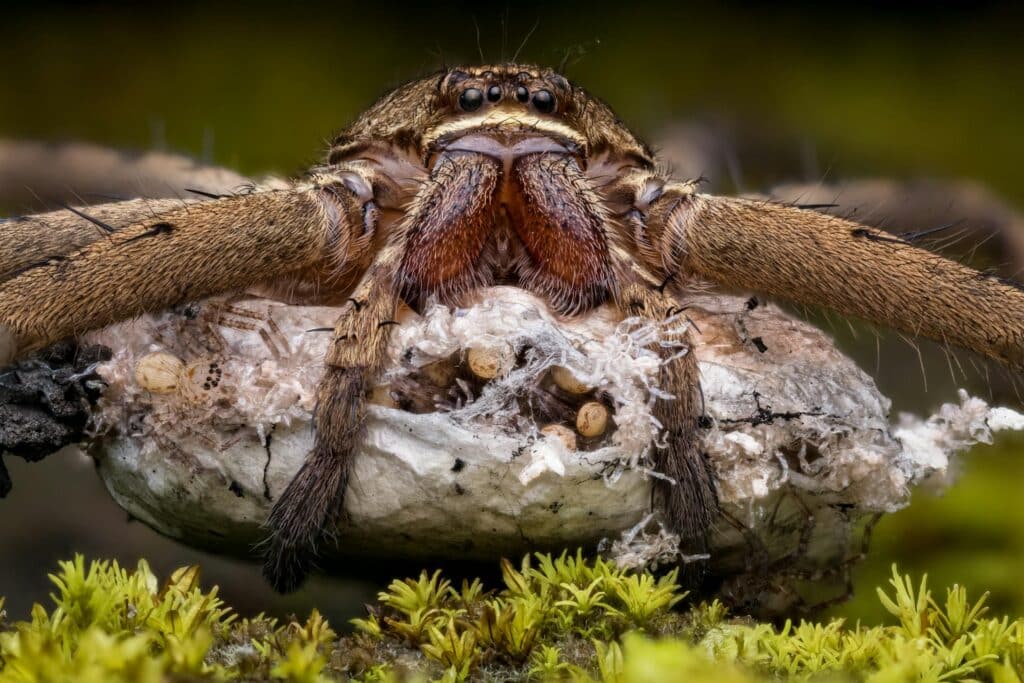
The funnel weaver lifecycle begins when females lay eggs in silken sacs. These are usually hidden in their funnel retreats or nearby crevices. Depending on the species and climate, each sac can hold 50 to 200 eggs. Females guard these sacs until spiderlings hatch, which usually happens within two to three weeks in warm conditions.
The young spiders disperse shortly after hatching. They climb to a high surface, release silk strands, and allow the wind to carry them to new areas. This process is known as ballooning. It helps them spread over large distances so they don’t compete for prey.
Once settled, juveniles start weaving small webs and begin feeding independently. They grow through several molts, where they shed their outer exoskeleton as they increase in size. Most species reach maturity within one year, though cooler climates can extend that timeline.
Adult males typically live for only a few months after mating, while females may survive through the winter and produce one or two egg sacs before dying.
What Attracts Funnel Weaver Spiders to Your Home?
Funnel weaver spiders don’t seek out people. Homes with insect activity and cluttered outdoor areas or undisturbed dark corners are ideal. Here’s what attracts these spiders:
1. Insects and Other Prey
Funnel weavers go where the food is. If your home has an ongoing supply of small insects, spiders are likely to follow. This includes flies, ants, beetles, and other ground-dwelling bugs that wander near entry points or into basements and crawlspaces. Exterior lighting can also attract insects toward your home. You might see an uptick in spider activity near windows and doors.
2. Dense Vegetation Near Structures
Shrubs or overgrown plants pressed against siding or foundation walls create the perfect sheltered space for a web. These areas attract prey and allow the spider to stay hidden away. When vegetation isn’t trimmed back, spiders can move from the yard to structures as temperatures drop outdoors.
3. Gaps and Entry Points
Cracks in siding, loose screens, broken vents, and unsealed doors give funnel weavers access to the inside of a home. When they’ve found their way inside, they seek out quiet, undisturbed spaces to anchor their webs. Garages and crawlspaces provide exactly what they need: dry shelter, low light, and minimal human or pet disruption.
4. Outdoor Clutter and Stored Items
Stacks of firewood, unused planters, storage bins, and other outdoor clutter create long-term hiding places. These items hold moisture and heat in shaded areas, making them attractive to both spiders and the insects they feed on.
Common attractants include:
- Firewood stored directly against the house
- Cardboard boxes in open sheds
- Leaf piles or yard waste left near foundations
- Tools or garden supplies not moved for long periods
5. Humid or Damp Areas
While funnel weavers don’t need wet environments, they do favor spots with consistent moisture. Leaky outdoor spigots, clogged gutters, or foundation drainage issues can create localized damp zones. Indoors, spiders may seek out bathrooms or areas with poor ventilation.
What Are the Risks of Funnel Weaver Spiders?
Funnel weaver spiders are not considered aggressive, but their presence indoors can lead to problems for property owners. While they don’t cause structural damage, they can build webs quickly and in large numbers. This is an even bigger issue during their peak season.
The number one risk is web buildup. These unique webs collect dust and trap dead insects. Over time, they can become a recurring hassle in basements, garages, and other quiet zones. Removing them by hand can be tedious, and you likely have better things to do on your weekend.
Some species may bite if you pick them up, but bites are uncommon and typically not serious. Still, their sudden movement and appearance can cause distress.
A funnel weaver problem can also be a sign of a larger insect issue. Because funnel weavers need insect prey to survive, a high number of them inside your home may suggest an ongoing issue with flies, ants, or other small bugs.
7 Quick Tips to Prevent Funnel Weaver Spiders
Here are some tips you can follow to keep funnel weaver spiders away from your home:
1. Remove Outdoor Web Sites
Clear out places where spiders are likely to build their web. Check and clean the following:
- Under eaves and around porch lights
- Between shrubs and exterior walls
- Inside unused planters or stacked wood
- Around basement windows and crawlspace vents
2. Trim Back Plants
Cut back any vegetation that touches your home. Aim to have at least 12 inches of space between your plants and the exterior walls of your home.
3. Seal Off Entry Points
Check around your home’s exterior for cracks and gaps. Pick up some caulk or weather stripping to seal them up. You can also use quality screening.
4. Reduce Clutter Indoors and Out
Spiders look for quiet, hidden places. Cleaning up these areas makes your home less attractive.
Remove:
- Unused boxes or containers
- Stacks of paper or fabric
- Old furniture or stored items in basements
- Piles of firewood near walls or doors
5. Address Moisture Problems
Fix any outdoor drainage issues and repair the indoor leaks you might have. Damp zones attract both spiders and their prey.
6. Change Your Exterior Lighting
Insects crowd around lights at night. Switching to yellow-toned bulbs or turning lights off when not needed can lower insect traffic near your entry points. Fewer insects means less prey for funnel weavers.
7. Maintain Screens and Vents
Check that all window screens fit tightly and are free of holes. Make sure attic and foundation vents are covered with tight mesh that blocks spiders and small insects.
What to Do if You Have Funnel Weaver Spiders
When funnel weaver activity is building indoors or around entry points around your property, professional pest control can provide precise identification and a targeted plan. At Aptive, technicians can distinguish funnel weavers from look-alike house spiders, then design a program which targets your particular pest. This pest-specific approach helps ensure the right methods are used for the species and setting.
If you are seeing sheet-like webs with tunnel-style retreats along foundations, shrubs, or basement corners, or you are unsure what is drawing spiders inside, contact Aptive for a free quote. Our professional technicians can assess interior and exterior areas, note current spider activity, and recommend steps to reduce access, harborage, and prey sources so your home is better protected going forward.