You maintain careful cleaning routines throughout your home yet consistently observe pest activity concentrated in kitchen areas, suggesting this room provides unique conditions supporting pest establishment and reproduction beyond simple food availability.
Kitchens combine essential survival resources—diverse food sources, constant moisture from plumbing and appliances, elevated temperatures from cooking and refrigeration equipment, and numerous structural access points through utility penetration. This creates optimal habitats for cockroaches, ants, rodents, and stored product pests that rarely find comparable conditions in other residential spaces.
The intersection of human food preparation requirements and pest survival needs creates inherent vulnerabilities requiring proactive management rather than reactive responses.
Where Heat, Moisture, and Food Collide
Kitchens contain concentrated, diverse food resources in multiple forms—fresh produce, stored dry goods, cooking residues, and waste—that remain accessible despite typical homeowner sanitation efforts.
Even well-maintained kitchens retain food particles in locations difficult to clean including behind appliances, inside cabinet hinge gaps, beneath sink edges, and within small cracks in countertops or flooring. Individual crumbs measuring 1-5mm provide sufficient nutrition for dozens of ants or support cockroach populations for days between major food discoveries.
Cooking activities deposit airborne grease films on surfaces throughout kitchens, with microscopic lipid layers accumulating on walls behind stoves, inside range hoods, on cabinet fronts, and even on ceiling surfaces. These greasy residues provide concentrated calories for German cockroaches (Blattella germanica) and other pests accessing vertical surfaces.
Pantry items in cardboard packaging, paper bags, or even thin plastic containers remain vulnerable to pest penetration, with Indian meal moths (Plodia interpunctella) chewing through packaging to access flour, cereals, dried fruits, and nuts, while rodents gnaw through multiple material types reaching stored foods.
Kitchen trash containers concentrate food odors and residues attracting pests from throughout structures and even from outdoors. Organic waste in bins produces volatile compounds detectable by fruit flies from 50+ meters and by mice from 10-20 meters, creating attraction gradients drawing pests toward kitchen areas.
How Kitchen Design Gives Pests an Edge
Multiple water sources including plumbing fixtures, appliances, and condensation create humid microenvironments essential for most pest species’ survival and reproduction.
- Plumbing leaks and seepage: Even minor drips from sink faucets, disposal units, or supply line connections provide sufficient moisture for cockroach, ant, and silverfish survival, with leak rates of just 5-10ml daily supporting small populations indefinitely. Many leaks occur within cabinet bases or wall voids remaining undetected for weeks to months.
- Appliance condensation: Refrigerators produce condensation on cooling coils and drain pans collecting 50-200ml water daily, creating permanent moisture sources in otherwise dry environments. Dishwashers vent humid air during operation raising local humidity to 70-90% for 1-2 hours daily—conditions favoring cockroach activity and reproduction.
- Sink and faucet areas: The zone immediately surrounding sinks maintains elevated moisture from splashing, wet dish storage, and sponge placement, with standing water in dish racks or around faucet bases providing drinking sources for various pest species including ants and cockroaches that require daily water access.
- Drain environments: Kitchen sink drains contain organic residue-coated interior surfaces with continuous moisture presence, creating ideal habitats for drain flies (Psychodidae) breeding in biofilm accumulations. These humid drain systems also provide water access points for cockroaches traveling through plumbing networks between units in multi-family buildings.
- Relative humidity impacts: Cooking activities—boiling water, steaming vegetables, running dishwashers—temporarily elevate kitchen humidity to 60-80% several times daily, with poorly ventilated kitchens maintaining chronically elevated moisture supporting silverfish, booklice, and other humidity-dependent species.
Why Kitchens Are Especially Vulnerable
Kitchen construction requirements create numerous openings through which pests access indoor environments, with utility penetrations and appliance installations providing entry routes and concealed harborage.
- Plumbing penetrations: Gaps around pipes passing through floors, walls, and cabinets typically exceed pest size requirements, with spaces of 5-15mm around sink supply lines, drain pipes, and dishwasher connections enabling cockroach (requiring 3-5mm gaps) and mouse (requiring 6-12mm gaps) entry from basement, crawl space, or inter-unit locations in multi-family buildings.
- Electrical access: Outlet boxes, light switch locations, and appliance power supply connections create pathways through walls into electrical chase systems, with German cockroaches particularly adept at utilizing electrical conduit systems for inter-unit travel in apartments and commercial buildings. Wall cavities accessed through these openings provide extensive harborage areas beyond homeowner reach.
- Appliance gaps: Spaces between appliances and cabinets or walls—often 10-50mm wide—provide protected travel corridors and harborage areas rarely accessed during routine cleaning. The space behind refrigerators particularly attracts pests through a combination of warmth, moisture from condensation, and food debris accumulation from items falling behind units.
- Cabinet construction: Kitchen cabinets contain numerous internal voids, gaps between drawer slides and cabinet boxes, and spaces where cabinet backs meet walls creating extensive hidden harborage networks. Pests utilize these protected spaces for nesting, breeding, and as protected routes between different kitchen areas.
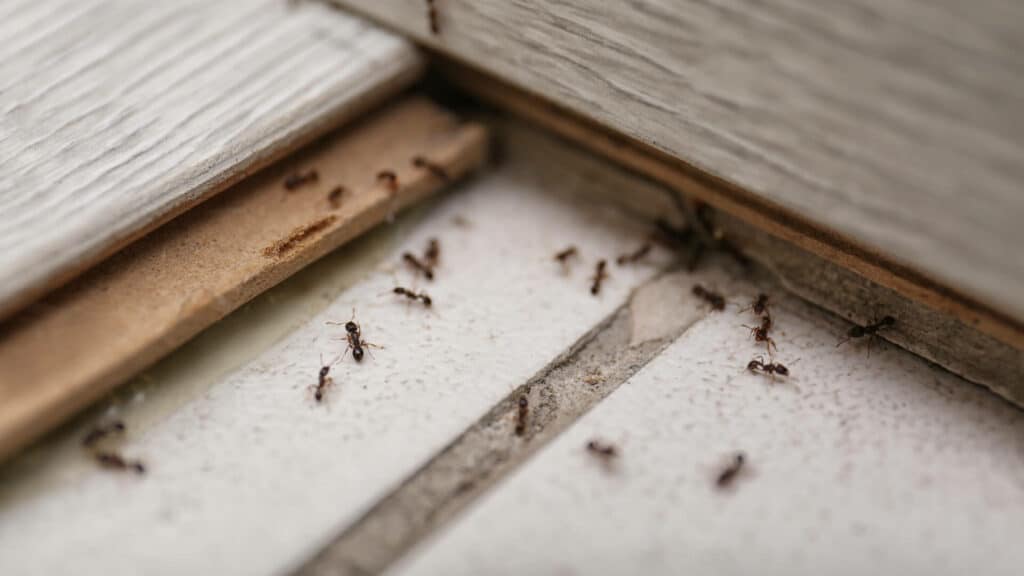
- Counter and floor gaps: Separations between countertops and backsplashes, gaps where flooring meets cabinetry, and cracks in grout or caulk provide access to wall voids and subfloor spaces. Even well-maintained kitchens often contain multiple 1-3mm gaps sufficient for ant and small cockroach nymph penetration.
Why Cleaning Might Not Be Enough
Despite regular sanitation efforts, kitchen environments retain characteristics supporting pest populations through resources in inaccessible locations and continuous resource renewal.
- Inaccessible areas: Most homeowner cleaning focuses on visible surfaces while spaces behind and beneath appliances, inside wall voids accessed through utility openings, and within cabinet bases remain uncleaned for months or years. These protected zones accumulate food debris and moisture supporting pest populations beyond sanitation efforts’ reach.
- Rapid recontamination: Even thorough cleaning provides only temporary resource elimination, with cooking activities within hours redepositing food particles, grease films, and moisture creating renewed pest resources. The cycle of resource removal and renewal means kitchens rarely remain in resource-limited states long enough to force pest populations to relocate or decline.
- Microscopic resources: Human visual inspection cannot detect many resources sufficient for pest survival, including grease films invisible to naked eyes, individual grain particles in floor cracks, or moisture condensation in hidden appliance areas. Pests possess sensory capabilities detecting these microscopic resources humans cannot perceive or eliminate without specialized equipment.
- Behavioral adaptation: Pest species thriving in kitchens evolved behavioral patterns exploiting protected microhabitats and timing activity to avoid human presence, with nocturnal foraging enabling resource access during overnight hours when kitchens remain undisturbed for 6-8+ hours providing extended feeding opportunities.
Ready to Manage Pests in Your Kitchen?
Professional pest control service providers implement specific strategies in troubled kitchen areas, recognizing that standard perimeter treatments prove insufficient for pests already established in these environments. Expert assessment identifies specific conditions supporting pest activity including appliance-associated harborage, moisture sources requiring repair, and food storage vulnerabilities requiring modification.
For properties experiencing persistent kitchen pest problems despite sanitation efforts, dealing with stored product pest infestations, or observing pest activity concentrated around specific appliances or areas, contact Aptive today for a free quote and comprehensive evaluation.