Phone Icon

(855) 948-5816

Aptive Pest Control Logo

How to Get Rid of Ants in the Kitchen

Written by Aptive Pest Control
Updated: May 21, 2026 Published: January 8, 2019

In the animal kingdom, it is hard to find an animal that is quite as tenacious as the ant. Even after conducting a deep clean of your kitchen, it is possible for ants to return in search of food and water. In order to get rid of ants, you need to adopt a comprehensive pest control approach, focusing not only on your home, but on surrounding ant colonies that my been your yard as well.

Why You Have Ants in the Kitchen

Unlike family members, friends or neighbors, ants do not visit your kitchen in order to check out your new countertops or stainless steel fridge. When it comes to the kitchen, ants are there for two reasons: food and water. Because ants have powerful odor receptors, they are highly adept at detecting food sources. Imagine living next to a bakery and being tantalized by freshly baked bread. For ants, even trace amounts of food can be as enticing as a bakery is to you. Additionally, water can be an attractant as well. If you have a leaky faucet, dripping pipes, or poor drainage, your kitchen could be susceptible to ants or other insects.

What do Ants Eat?

Do you have a sweet tooth, or maybe you prefer something carb-y or cheesy? If the answer is “yes” to any of these, then you’ve got something in common with ants. Sweets (granulated sugar and fruit), protein (meat and dairy), and carbohydrates (baked goods) are all big hits with ants. If you are a big cook or baker, it is important that you wipe down your surfaces and don’t leave any ingredient lying around. Furthermore, because it is possible for ants to contaminate food with E. coli or Salmonella, it is important that you keep food put away and sealed tightly. By practicing proper food storage and kitchen cleanliness, not only are you reducing the chances of ants visiting your kitchen, but you are also reducing your chances of getting a foodborne illness.

How to Get Rid of Kitchen Ants

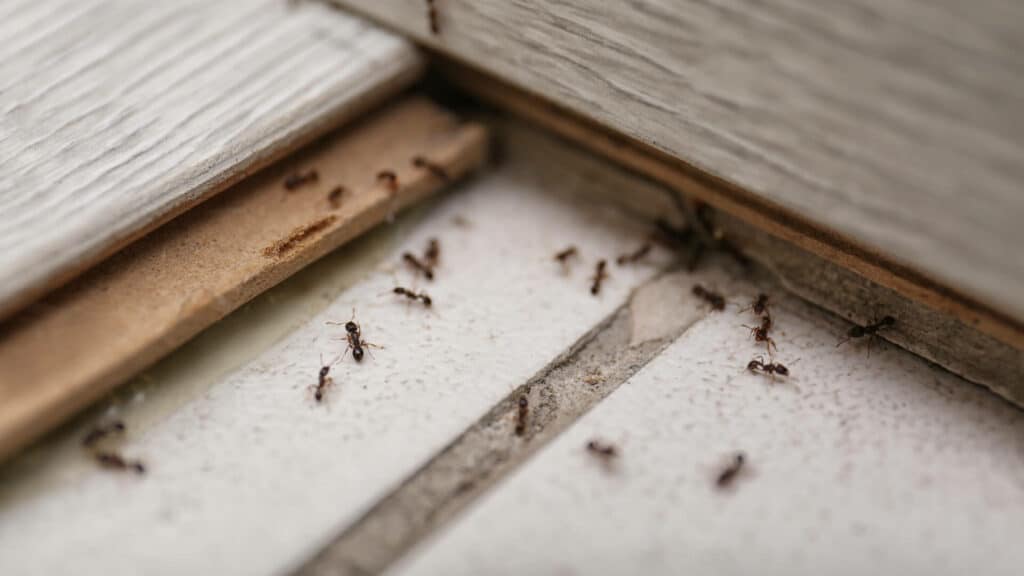
If you discover ants in your kitchen, you are likely dealing with Argentine antspharaoh ants, or odorous house ants. Each of these species is tiny In order to make your kitchen less attractive to ants, you should follow these tips:

  • Make sure opening or cracks around windows and doors are sealed.

  • Clean kitchen surfaces regularly, especially after cooking or eating.

  • Don’t kill the worker ants until you see where they are coming from. These ants are getting food and bringing it back to the colony. By killing them, it will be harder to locate the colony.

  • Remove cat and dog food once your pet has finished eating.

  • Sweep or vacuum your floors regularly in order to get rid of any fallen crumbs.

  • Call a pest control expert to treat your property’s ant colony or colonies.

If you discover ants in your kitchen, there is probably a colony nearby. In order to control ants effectively and efficiently, you need to locate and treat the source. Because ant colonies tend to run deep into the ground, it is extremely difficult to eliminate every ant, especially the queen or queens, on your own. Your best bet is to call a pest control expert such as Aptive Pest Control.

After inspecting your home and property, an Aptive pest specialist will be able to determine the most effective and safest treatment option based on your needs. Aptive’s dedication to customer service and commitment to the environment distinguish us from our competitors. If you have a pest problem that needs controlling, call Aptive Pest Control today.
Learn more about ants

10 Fascinating Facts about Queen Ants 12 Preventive Tips to Eliminate Odorous Ants for Homeowners 3 Essential Ant Prevention Strategies to Know for New Homeowners 3 Strange Adaptations That Help Ants Survive 3 Surprising Facts About Pavement Ants 3 Things That Attract Ants to Your Home & How to Prevent It 3 Unexpected Reasons Fire Ants Build Mounds in the Same Spot 4 Common Myths About Ant Infestations (And the Truth Behind Them) 5 Effective Measures on How to Prevent Ants in the Apartment A Detailed Guide to Fire Ant Control A Guide to Common Types of Ants: Identification, Behavior, and Risks Ant Lifespan Differences Between Workers and Queens Ant Trails: Learn Why They Always Return to Your House Ants in Electrical Outlets: Causes, Risks, and Fixes Ants Marching - Why Do Ants Walk in a Line? Are Ants Arthropods? Are Ants Nocturnal? Argentine Ant Supercolonies: Why Control Is Hard Argentine Ants vs. Odorous House Ants Asian Needle Ants Guide: What Are They and Are They Dangerous? Can Ants Feel Pain? Can Ants Harm Pets?: A Guide for Pet Owners Can Ants Really Lift 50 Times Their Body Weight? Can Ants Swim? Common Household Items That Attract Ants Do Ant Trails Really Work Like Highways? Fire Ants vs Pavement Ants: What Are the Differences? Ghost Ants 101: What Are Ghost Ants? Harvester Ants: Guide to Identification, Prevention, and Treatment How Ants Are Getting Into Your House And How to Stop Them How Argentine Ants Communicate to Form Supercolonies How Do Ant Colonies Divide Labor Without a Leader How Long Do Ants Live? How to Get Rid of Ants in the House and Keep Them Away How to Get Rid of Flying Ants: Identification & Control How to Identify, Prevent, and Treat Pharaoh Ant Infestations How to Tell if You Have an Ant Infestation or Just a Few Strays Little Black Ants vs Pavement Ants: What Are the Differences? Pavement Ants 101: What Are Pavement Ants? Pavement Ants in High-Traffic Outdoor Zones: What You Should Know Preventing Argentine Ants: Tips for Securing Your Home Against Invasion Termite Swarm or Just Flying Ants? Texas Bullet Ants 101: Where Do They Live and What Are They? The Differences Between Ants and Termites The Different Types of Ants The Role of Ant Queens in Colony Expansion The Strange Reason Ants Follow Dead Ant Trails Thief Ants vs. Pharaoh Ants: What Are the Differences What Are Army Ants and Where Are They Found? What Are Flying Ants? Homeowner's Guide to Dealing with These Pests What Attracts Ants to Your Home? What Do Ants Do at Night? What Do Odorous House Ants Smell Like? What Happens Inside an Ant Nest After Rainfall When Are Ants Most Active? Seasonal Changes and Their Impact Where Ants Live & How to Control Them Where Do Ants Lay Eggs? Where Do Pavement Ants Get Their Name? Which Ants Have Stingers and How Do They Work? Why Ants are Invading Your Home Why Are There Ants in My Bathroom and How to Get Rid of Them? Why Are You Seeing More Ants After Rain? Here's What to Know Why Do Ants Build Mounds? Why Do Ants Keep Coming Back? Why Do Ants Keep Showing Up in the Same Spot Every Morning Why Do Fire Ant Stings Burn? Why Do Some Ant Colonies Split Instead of Expanding? Why Do Some Ants Form Living Bridges with Their Bodies Why Odorous Ants Love Your Kitchen: Attraction Factors and Prevention Tips Why Store-Bought Ant Baits and Sprays Don't Work Why You Keep Seeing Ants in the Dishwasher Why You Shouldn't Squish Ants

Curated articles for you, from our pest experts.

A Detailed Image Of A Norway Rat Walking Across A Log Surrounded By Ivy And Dead Leaves In An Outdoor Setting.

The Top 6 Most Common Pests in Georgia

Georgia’s pest activity is shaped by a humid subtropical climate, long warm seasons, and a landscape that ranges from barrier islands and salt marshes to the rolling Piedmont and the Blue Ridge foothills.

Jan 21, 2026
A Close-Up Image Of A Brown Roof Rat Perched On A Weathered Green Metal Lantern, With Its Large Ears, Long Whiskers, And Inquisitive Eyes Facing The Camera. The Background Is Softly Blurred With Dappled Light And Trees.

The Top 5 Most Common Pests in California

California's Mediterranean and semi-arid climates with mild winters, extended warm seasons, and diverse microclimates create ideal conditions for numerous pest species remaining active year-round...

Jan 19, 2026

Take back your home with ant control today.