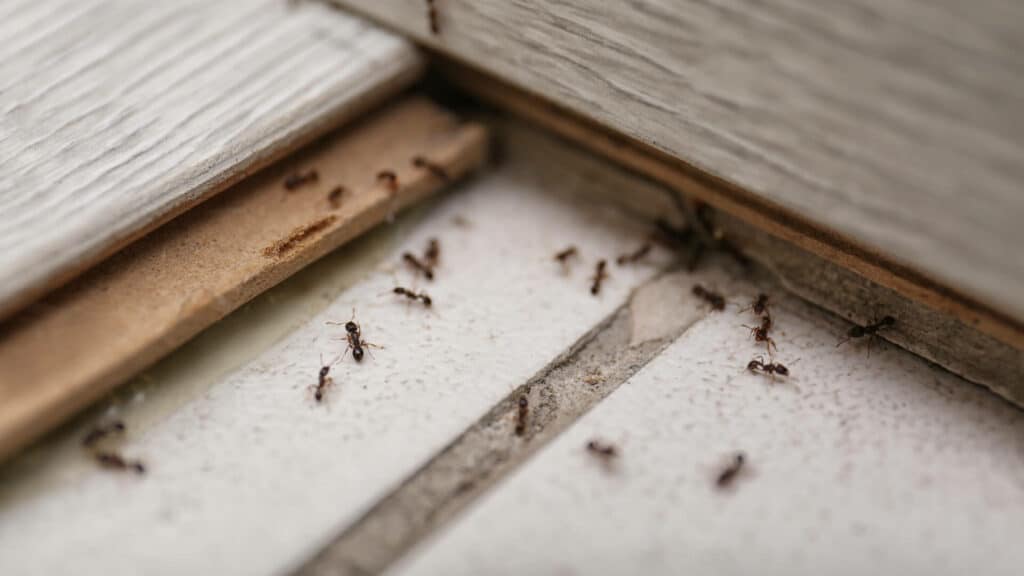
You observe ants appearing in identical kitchen or bathroom locations each morning despite overnight cleaning, suggesting these insects possess memory systems or chemical marking enabling precise spatial navigation and route fidelity.
Household ants demonstrate remarkable location consistency through pheromone trail networks deposited by successful foragers creating persistent chemical pathways lasting 24-72 hours without reinforcement, combined with individual spatial memory enabling scouts to relocate productive food sources even after trail disruption, collectively explaining why ant activity concentrates in specific high-reward locations appearing “scheduled” to human observers unaware of underlying communication systems.
How Ant Trails Guide Ants
Ants establish persistent chemical pathways through pheromone deposition, creating invisible but highly effective navigation systems guiding colony members to productive resource locations through trail-following behavior.
- Trail pheromone deposition: When foraging workers locate food or water, they return to nests while depositing trail pheromones from specialized glands in their abdomen (Dufour’s gland in many species), leaving chemical markers on substrate surfaces at intervals of approximately 1-5mm. These volatile and contact chemicals create detectable pathways other workers follow using chemoreceptors on their antennae.
- Recruitment amplification: Successful foragers returning with food reinforce trails through additional pheromone deposition, with each successful trip strengthening chemical signal concentration. This positive feedback creates exponential recruitment where productive locations receive progressively stronger trail marking as more workers make successful trips, explaining rapid trail intensification following initial food discovery.
- Trail persistence: Pheromone chemicals demonstrate varying evaporation rates depending on species and environmental conditions, typically remaining detectable 24-72 hours without reinforcement under indoor conditions (longer in humid, cool environments with minimal air circulation). This persistence means trails remain functional overnight guiding morning foragers even if no nighttime activity occurred.
- Trail specificity: Different ant species use distinct pheromone compounds preventing heterospecific trail following, with chemical composition sometimes varying between food types (sugar sources versus protein sources) enabling colony-level resource allocation decisions based on trail chemical profiles.
- Concentration gradients: Trail strength (pheromone concentration) indicates resource value, with heavily-used trails to abundant food demonstrating higher concentrations than lightly-used exploratory routes. Workers respond to these gradients, preferentially following stronger trails creating efficient resource exploitation hierarchies.
Scent Memory and Daily Patterns
Beyond pheromone trails, individual ant workers demonstrate spatial memory capabilities enabling direct navigation to previously discovered resources even when chemical trails are disrupted or absent.
Ants utilize visual landmarks including furniture edges, appliance positions, wall textures, and light-dark boundaries creating spatial reference frames for memory formation. Research demonstrates ants recognize specific visual patterns enabling return to locations after single successful visits even in complex environments like kitchens.
Workers track distance and direction traveled from nest locations through proprioceptive signals (internal position sensing), enabling direct-route returns even through novel paths. This “dead reckoning” supplements pheromone following, providing backup navigation when chemical trails deteriorate or become disrupted.
Spatial memories in foraging ants persist several days to weeks depending on species and experience, with repeated visits to locations strengthening memory traces. This means successful foraging sites remain encoded in individual worker memories even during periods without active trail pheromones.
What Draws Ants Back to Certain Spots?
Ants concentrate activity in locations demonstrating consistent resource availability, with successful exploitation history creating persistent targeting through both chemical marking and colony-level memory regardless of visible food presence.
Even thoroughly cleaned surfaces retain microscopic food residues in locations including cabinet hinge gaps, countertop-backsplash junctions, appliance seams, and floor cracks. These deposits measuring micrograms provide detectable chemical cues (sugars, amino acids, lipids) attracting scout ants investigating historical success locations.
Beyond food, ants require water with some species visiting sink areas, dishwasher perimeters, or condensation sites on plumbing multiple times daily. These moisture-seeking trips create persistent trail networks appearing as regular morning activity at identical locations despite absence of visible attractants.
Some ant activity follows circadian rhythms or responds to environmental cues (temperature changes, light levels) creating time-of-day activity patterns. Morning kitchen activity may correlate with overnight nest temperature decreases triggering increased foraging as colonies experience resource demands from waking workers.
Colony-wide nutritional needs influence foraging intensity and target selection, with protein-deficient colonies sending more workers to previously-successful protein sources while sugar-deprived colonies emphasize carbohydrate locations. These nutritional memories persist days to weeks influencing morning foraging priorities.
Why Cleaning Isn’t Enough
Surface cleaning removes visible attractants and some pheromone deposits but fails to address microscopic residues, trail pheromones in protected locations, and spatial memories enabling scouts to relocate cleaned areas.
Pheromone persistence: Trail pheromones deposited in protected locations including behind appliances, within floor-wall junctions, and along vertical surfaces receive minimal cleaning contact, maintaining detectable concentrations guiding workers even when countertop trails are wiped away. Volatile pheromone components may also redeposit from air onto cleaned surfaces.
Microresidual attraction: Cleaning removes visible food but often misses microscopic deposits in textured surfaces, porous materials, or structural gaps. These residues remain detectable to ant chemoreceptors capable of sensing concentrations below human detection thresholds, continuing to attract scouts investigating historical success locations.
Scout rediscovery: Even if cleaning temporarily disrupts trails and removes attractants, scout ants with spatial memories periodically revisit locations checking for resource renewal. Single successful rediscovery by one scout reestablishes trail pheromones recruiting additional workers recreating visible morning activity.
Different Ant Species, Different Behaviors
Different ant species demonstrate varying trail fidelity, recruitment intensity, and navigational strategies affecting observed daily activity patterns and persistence following control attempts.
- Argentine ants: Form massive interconnected colony networks with extensive trail systems, demonstrating extremely high location fidelity and rapid recolonization following disturbance. Their supercolony organization means treating visible trails proves futile without addressing entire colony networks potentially spanning multiple properties.
- Odorous house ants: Establish satellite nests within structures enabling short foraging distances and rapid daily reappearance at productive locations. Their multiple-queen colonies and budding reproduction create persistent populations despite localized control efforts.
- Carpenter ants: Demonstrate nocturnal foraging patterns with activity peaks 1-3 hours after sunset, meaning morning discoveries represent overnight foraging to previously-established food sources. Their large worker size and single-file trails create particularly noticeable daily activity patterns.
- Pharaoh ants: Small size (2mm) and preference for protein sources including grease, pet food, and even toothpaste create persistent targeting of bathroom and kitchen locations where these materials accumulate. Their defensive budding behavior means disturbance triggers colony splitting creating multiple new infestations.
- Pavement ants: Outdoor ground-nesting species demonstrating seasonal indoor invasions, with spring and fall activity peaks coinciding with colony reproduction and temperature extremes. Their temporary indoor presence explains why morning activity may appear seasonally but disappear during other periods without intervention.
When Ants Become a Daily Disruption
Professional pest control services providers recognize morning activity patterns indicate established colonies with functional trail networks requiring comprehensive approaches addressing trails, attractants, and colonies simultaneously rather than sequential surface-only treatments.
If you’re experiencing persistent morning ant activity returning to identical locations despite cleaning, observing rapid trail reestablishment following disruption, or dealing with increasing activity suggesting colony growth, contact Aptive today for a free quote and expert evaluation determining species, locating colonies, and implementing comprehensive strategies for ant control.