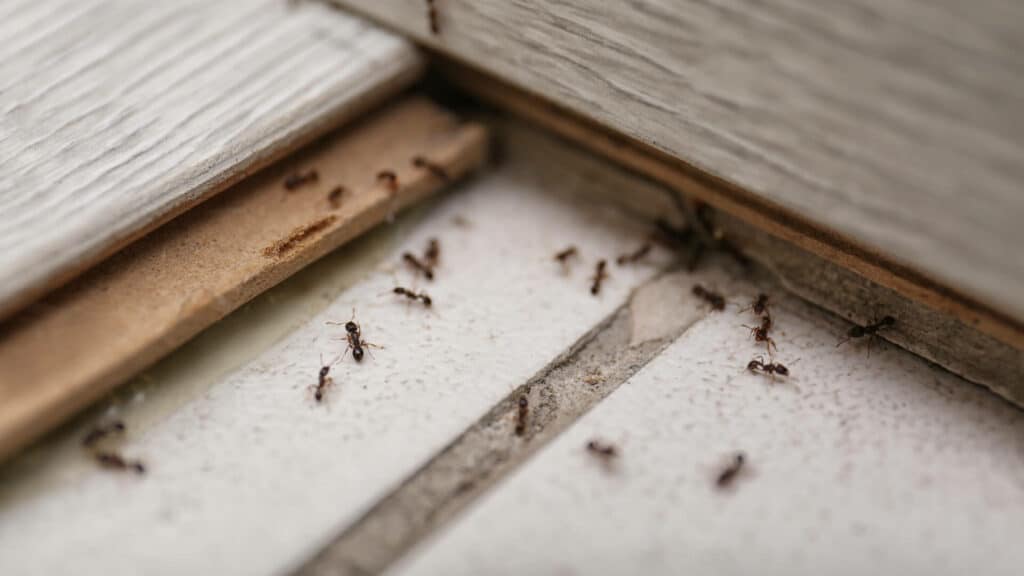
Ants are small, seemingly harmless pests, but without proper treatment they can quickly become a massive nuisance. Oftentimes, homeowners don’t know where to start with ants and typically try solutions that only temporarily fix the problem. It can be difficult to find the source of an ant infestation and you can spend ages trying to get rid of them. Even just one or two in the home can signal a nest of thousands nearby. In this article, we’ll explore more about what attracts ants to your home, how to prevent them, and how you can get rid of them for good if you’re experiencing an infestation.
What Attracts Ants?
If you’re finding ants marching around your home, it can be hard to target what attracted them or determine how they ended up in your home in the first place.
Food
Accessible food is the most common source. With 400+ odor receptors, ants have an incredible sense of smell, considering how small they are. Different kinds of foods attract different kinds of ants, but most are attracted to sugar and grease. Oftentimes, forgotten food spills or hidden messes will attract them. Additionally, ants can easily smell food that isn’t securely stored in a container or inside the fridge.
Although ants don’t fall into the pantry pest category, they are sometimes also attracted to dry foods such as flour or grains if they’re not securely stored.
Water
Excess moisture is another factor that could be attracting ants. If there are ants in your bathroom, basement, or attic, water is typically a factor. Carpenter ants, for example, build nests under bathroom sinks and tiles since they hold the most moisture. If you’re finding ants, there could be a leak – check near toilets, sinks, and tubs for any leaks. If you’ve thoroughly stored and secured food in your kitchen, they could be attracted to water.
Why Do Ants Like Water?
Interestingly, not only are ants attracted to food spills and crumbs, but many ant species display a strong attraction to water sources in the home, a behavior that might leave homeowners puzzled. Ants’ necessity for water becomes particularly evident if your environment is generally dry. Even a small cup of water left out or minor leakage from pipes can draw them. This attraction is why areas like kitchens and bathrooms are often the hardest hit, which we will talk about next. To reduce this risk, promptly repair any drippy faucets or plumbing issues and avoid leaving standing water in sinks or on counters.
Preventing Ants in Home
Kitchen
To prevent ants in your home cleanliness is most important. Make sure to clean countertops and floors regularly with soap (water alone may not completely eradicate scents that attract ants). Clean up any spills as quickly as possible, especially spills that are sugary or greasy. Pay extra close attention to small spaces or cracks that food could fall into, as well as children that may be hiding food around the home.
Additionally, make sure to clean indoor garbage cans and empty them out daily. Place perishable food inside a bag before throwing it into the trash, and keep any outside trash cans away from the entrance of your house.
Bathroom
To prevent ants in your bathroom, make sure to thoroughly clean your bathroom to remove any standing pools of water. Also, scrub the floors and inside of drawers with a cleaner. Along with the bathroom, the kitchen sink may also provide ants with needed water. Try to keep the kitchen sink and nearby areas free of standing water.
Getting Rid of Ants
In some unfortunate circumstances, ants may have decided to make a nest in your home walls or other secluded areas. While this is a less common occurrence, it happens. In this case, you’ll need a professional like Aptive if you can’t reach the source of the problem with regular bug sprays or other pest treatments. Some species are more likely to nest in your home (for example, pavement ant infestation is common, as they often live in home foundations).
If you already have an infestation, there are a few ways you can go about getting rid of ants. Try to pinpoint what they are attracted to, as they usually huddle around it. For example, if you dropped a piece of pie next to the fridge, they will likely leave once you remove their source of food. If you can’t find the exact source, try following all of the prevention measures listed previously. Perform a deep clean of your kitchen to remove any old spills and crumbs. If this doesn’t work, search the home for any standing water or leaks.However, sometimes you’ll find stubborn ants that have created a nest in your home. You can try over-the-counter products to get rid of ants. Ant traps can be successful, as well as some repellant, but usually this requires a professional to perform a full ant inspection. Overall, a professional pest control company will be able to target the source of the problem and quickly eliminate it. Aptive focuses on eliminating the current infestation as well as future infestations. If the bugs come back, Aptive will too, at no additional cost.