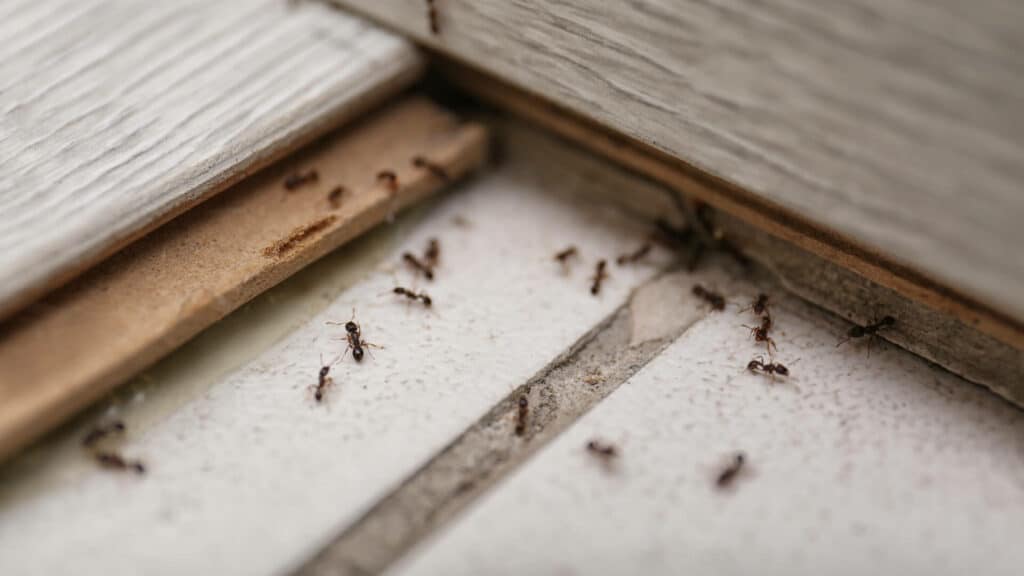
Squishing ants seems like an instinctive response when discovering these insects crawling across countertops or floors, but crushing individual ants can actually worsen infestations by triggering defensive behaviors and attracting additional colony members to investigate disturbances.
When ants are crushed, they release alarm pheromones—chemical signals warning nestmates of danger—that can summon aggressive reinforcements and mark areas for increased activity. Understanding why squishing ants can prove counterproductive helps homeowners implement more effective ant control strategies that address entire colonies rather than creating additional problems through well-intentioned but ultimately harmful crushing responses.
Why is it a bad idea to squish ants?
Squishing ants releases alarm pheromones from their bodies that chemically signal danger to other colony members, potentially attracting dozens or hundreds of worker ants to investigate the threat and defend against perceived attackers.
These volatile chemical compounds serve as emergency communication systems, with crushed ant remains acting as distress beacons that recruit aggressive nestmates to the location. Additionally, squishing ants creates contamination from ant body fluids, bacteria from surfaces they’ve crossed, and potential staining on fabrics or porous materials.
Crushing ants provides only temporary satisfaction without addressing the underlying colony producing endless replacement workers, making individual ant elimination essentially futile. More importantly, squished ants near food preparation areas spread bacteria and pathogens the ants may have contacted while foraging through garbage, drains, or outdoor waste, creating sanitation concerns beyond the original nuisance.
Which species of ants are the worst to squish?
Fire ants, carpenter ants, and odorous house ants represent the worst ant species to squish due to aggressive alarm pheromone responses, massive recruitment of reinforcements, or particularly unpleasant odors released when crushed.
Fire ants respond to alarm pheromones with coordinated mass attacks, with crushed workers summoning swarms that sting aggressively in defensive frenzies making situations dramatically worse. Odorous house ants release extremely pungent odors described as rotten coconut or blue cheese when crushed, creating lingering unpleasant smells throughout rooms that persist long after dead ants are removed.
Carpenter ants produce strong alarm pheromones recruiting nestmates from extensive colonies potentially containing thousands of workers, while Argentine ants from massive supercolonies can summon overwhelming numbers. Pharaoh ants respond to disturbance by fragmenting colonies—a survival strategy called “budding”—where stressed colonies split into multiple new colonies, actually multiplying infestations when control efforts including crushing workers create pressure.
Can squishing ants make an infestation worse?
Yes, squishing ants can worsen infestations by releasing alarm pheromones that attract more ants to investigate, trigger defensive colony behaviors including increased foraging activity, and create contamination attracting additional ants to food residues on crushed ant remains.
Species like Pharaoh ants respond to control attempts including squishing workers by fragmenting into multiple satellite colonies through a survival mechanism called budding, directly multiplying colony numbers. The pheromone trails leading to squished ants remain active, with subsequent ants following scent paths to investigate disturbances and potentially establishing new foraging routes.
Squishing ants addresses symptoms without eliminating source colonies, allowing queens to continuously produce replacement workers rendering individual ant elimination completely ineffective for long-term control.
How to know if you have an ant infestation
Ant infestations create distinctive signs indicating established colonies requiring intervention:
- Persistent ant trails and activity: You might notice continuous streams of ants following pheromone trails between nests and food sources, appearing daily despite cleaning efforts and indicating established foraging routes.
- Ants inside during winter months: It’s concerning to find active ants indoors during cold weather when outdoor ants are dormant, suggesting nests established within wall voids or other protected structural areas.
- Multiple ant species present: You’ll likely observe different ant types simultaneously, indicating your home provides favorable conditions supporting diverse ant populations with varying food preferences and nesting requirements.
- Structural damage or sawdust: You might discover wood shavings, hollow-sounding wood, or visible galleries indicating carpenter ant activity causing property damage beyond simple nuisance concerns requiring immediate professional attention.
How to get rid of an ant infestation
Eliminating ant infestations requires comprehensive colony-targeting strategies rather than individual ant removal:
- Use ant baits targeting entire colonies: Place slow-acting poison baits near ant trails allowing workers to transport toxins back to nests, killing queens and broods rather than just visible foraging ants.
- Eliminate food and water sources: Clean thoroughly, store foods in sealed containers, fix leaks, and remove attractants denying ants resources that support colony growth and foraging activity near structures.
- Seal entry points throughout structure: Caulk cracks in foundations, around pipes and wires, along baseboards, and around windows preventing ants from accessing indoor spaces from exterior nesting sites.
- Contact professional pest control: Seek expert assistance for persistent infestations, carpenter ant damage, or difficult species like Pharaoh ants requiring specialized treatment approaches beyond typical homeowner control capabilities.
When it’s time to call the professionals
When dealing with ant problems throughout your property and need expert solutions that offer effective and more lasting solutions, professional pest control services can provide comprehensive treatment strategies targeting source nests and preventing future infestations. At Aptive, our pest control experts understand ant colony biology and implement control methods that address root causes rather than just visible symptoms.
If you’re experiencing persistent ant activity despite your control efforts, have discovered invasive ant types in your kitchen or living space, or are dealing with aggressive stinging ant species like fire ants requiring immediate professional intervention, don’t wait—contact Aptive today for a free quote.