While many homeowners are familiar with common ant species, the Asian needle ant represents a relatively recent invasive threat spreading throughout the southeastern United States. These distinctive insects frequently establish colonies in unexpected locations including landscaping mulch, structural crawl spaces, and along interior baseboards. Though less widely recognized than fire ants or pavement ants, they present unique challenges including painful stings and potential allergic reactions that make proper identification and management essential for homeowner safety.
This guide provides detailed information about Asian needle ant identification, lifecycle patterns, behavioral characteristics, and effective prevention strategies to help you protect your property from these increasingly common invasive pests.
What Are Asian Needle Ants?
Asian needle ants (Brachyponera chinensis) represent an invasive species originally native to Southeast Asia that has established expanding populations throughout the southeastern United States. Unlike many native ant species, these adaptable insects thrive in shaded, moisture-rich environments and demonstrate remarkable tolerance for proximity to human habitation.
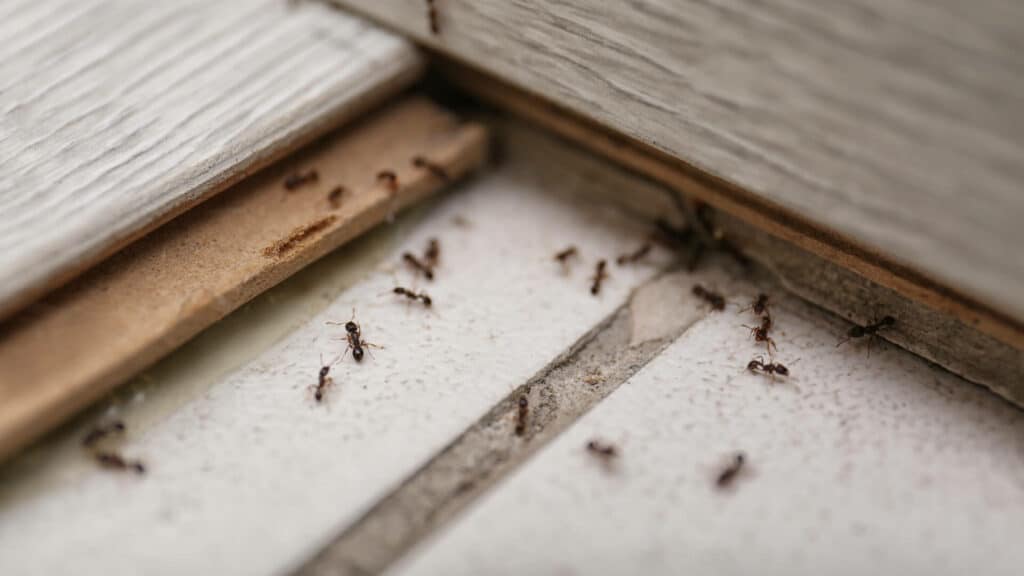
Their nesting preferences include soil substrates beneath rocks, fallen logs, and decomposing woody materials. Within residential structures, they gravitate toward damp, concealed spaces including under-sink cabinets, wall voids adjacent to plumbing, and areas behind baseboards. While their colonies typically remain relatively small compared to other invasive species (generally maintaining populations under several thousand individuals), they reproduce efficiently when environmental conditions remain favorable.
These distinctive ants engage in active foraging behaviors throughout their range and possess functional stingers they readily deploy when disturbed or threatened. While their sting mechanism lacks the aggressive nature of fire ants, certain individuals may experience significant allergic reactions ranging from localized swelling to more serious responses requiring medical intervention.
Their ecological impact also extends beyond human health concerns, as they effectively displace beneficial native ant species through aggressive competition and habitat modification, potentially disrupting established ecosystem functions.
The Lifecycle of an Asian Needle Ant
Like most ant species, Asian needle ants progress through a complete metamorphosis life cycle encompassing four distinct developmental stages. Environmental factors including ambient temperature and humidity levels significantly influence development rates and reproductive timing throughout their seasonal activity period.
The cycle begins when fertilized queen ants deposit eggs within protected nest chambers. Unlike some ant species that maintain single-queen colonies, mature Asian needle ant populations frequently support multiple reproductive females, enhancing their colonization potential and population resilience following disturbance events.
The larval stage emerges from viable eggs, with these developing individuals receiving attentive care from worker ants that provide protein-rich nutritional resources supporting rapid growth and development. Following sufficient growth, larvae undergo transition to the non-feeding pupal stage, remaining stationary within protected nest locations while completing their transformation.
Emerging adults immediately assume specialized roles within the colony structure: queens focus exclusively on reproduction, males serve reproductive functions during mating periods, and workers perform essential tasks including foraging, nest maintenance, defense activities, and brood care responsibilities.
This efficient developmental pathway enables relatively rapid population expansion when environmental conditions remain favorable, explaining their successful establishment throughout introduced regions despite competition from native species.
How to Identify Asian Needle Ants
Telling Asian needle ants apart from more common household ants might seem challenging, but they have several distinctive features that can help you identify them correctly. Many homeowners initially mistake them for odorous house ants or pavement ants, but looking closely reveals important differences.
These ants measure about 1/5 inch long (4.5-5mm), making them slightly larger than most native ants you’re used to seeing. They have dark brown to black bodies with noticeably lighter-colored legs. Their bodies appear slender with a single distinct “waist” segment between the middle section and abdomen. Though you can’t see it without magnification, they possess functional stingers–something many common household ants lack.
Their behavior provides additional clues to their identity. They move more slowly and deliberately compared to other ants. Rather than forming the tight, organized trails you might expect, Asian needle ants often travel individually or in loosely organized groups.
Another telling sign is when you spot ant activity during cooler weather. These ants remain active during temperature drops that send most native species into dormancy, particularly during early spring and late fall when other ants are rarely seen.
How Are They Different From Other Ants?
Several key characteristics set Asian needle ants apart from the native ants you’re probably more familiar with seeing around your home and yard.
Unlike most common household ants in North America, Asian needle ants can sting when disturbed. This defensive ability creates potential health risks not present with typical ant invaders, particularly for sensitive individuals or those with insect allergies.
Their seasonal patterns differ significantly from native species–they begin foraging during late winter and early spring when most other ants remain inactive. This extended activity period gives them a head start on finding food and establishing territory before native ants become active.
Their environmental impact is particularly concerning, as they aggressively displace beneficial native ant species that perform important functions like aerating soil, dispersing seeds, and naturally controlling other pests in your yard.
Perhaps most noticeably, these ants strongly prefer shaded, moist environments rather than the sunny locations many native species seek out. This preference for shade and moisture explains why they’re often found in mulched garden beds, beneath porch steps, or in your basement rather than in open, sunlit areas of your property.
Are Asian Needle Ants Dangerous?
Asian needle ants present legitimate health considerations beyond the simple nuisance factor associated with typical household ants. Their ability to sting creates varying reactions depending on individual sensitivity.
For most people, stings cause sharp pain, redness, and mild swelling that typically resolves within a day or two. However, sensitive individuals may experience more intense reactions including significant swelling, prolonged discomfort, and potentially serious allergic responses that require medical attention. Medical literature has documented cases of anaphylactic reactions following Asian needle ant stings, highlighting why proper identification and management matter for family safety.
Beyond human health implications, these invasive ants create ecological disruption by outcompeting native ant species that play essential roles in your yard’s ecosystem. As their populations grow, they reduce local biodiversity while potentially affecting soil quality, plant health, and natural pest control systems that help keep other insects in check.
While they don’t damage your home’s structure like carpenter ants or termites might, their presence creates both direct health concerns and broader environmental issues that make proactive management a wise approach, especially in homes with children, pets, or individuals with insect sensitivities.
What Attracts Asian Needle Ants?
Asian needle ants look for specific conditions when choosing places to nest. Understanding what attracts them helps identify vulnerable areas around your home and can help you with ant control.
Their primary requirements center on consistent moisture and protected hiding spots. Here’s what makes your property appealing to these ants:
Outdoor attractants:
- Piled mulch or pine straw against your foundation walls
- Decomposing logs or stumps in shady areas of your yard
- Consistently damp soil near your home’s perimeter
- Spots with irrigation leaks or drainage problems that keep the soil wet
- Leaf litter accumulated in shaded corners of your yard
- Stacked firewood resting directly on the ground
Entry points they exploit:
- Gaps around basement windows or foundation vents
- Openings where utilities enter your home
- Unsealed crawl space access points
- Cracks where concrete meets siding
- Damaged door sweeps or weather stripping
- Gaps under exterior doors or around window frames
Indoor hiding spots they prefer:
- Basements, especially near water heaters or laundry areas
- Wall voids adjacent to bathrooms or kitchens
- Spaces around plumbing fixtures
- Areas behind dishwashers or under sinks
- Rarely accessed storage areas with elevated humidity
- Around foundation cracks or where pipes enter the home
Their preference for these hidden locations often allows colonies to grow substantially before homeowners notice their presence, making elimination more challenging once they’ve established themselves.
How to Prevent an Asian Needle Ant Infestation
Implementing some straightforward prevention measures significantly reduces your chances of hosting Asian needle ants while creating conditions they find less appealing. Focus on these practical approaches:
- Create a protective zone around your home by keeping mulch and organic materials at least 12-18 inches away from foundation walls. Fix moisture issues by repairing leaky outdoor faucets and addressing irrigation system problems promptly. Remove rotting logs, stumps, and woody debris from shaded areas near your house, as these provide perfect nesting sites.
- Seal potential entry points by caulking foundation cracks and gaps around utility lines, installing fine-mesh screens over foundation vents, storing firewood on elevated racks away from your home, and trimming bushes and tree branches to prevent direct contact with exterior walls that could create bridges for ants to access your home.
- Manage moisture levels by improving ventilation in crawl spaces, installing vapor barriers over exposed soil under your home, using dehumidifiers in damp basement areas, and conducting regular inspections around your foundation to catch changing conditions that might make ant entry easier.
These simple preventative steps create significantly less favorable conditions for Asian needle ants while reducing the likelihood they’ll move indoors, targeting the specific environmental conditions these ants seek out when establishing new colonies. This is where contacting a professional pest control service can help.
When to Contact a Professional for Asian Needle Ant Control
When dealing with Asian needle ant problems around your home, Aptive’s pest control experts offer specialized solutions. Our technicians will perform a thorough inspection to assess the situation and develop a customized treatment plan targeting these stinging invaders. We’ll carefully identify nesting locations both indoors and outdoors, whether they’re hiding in landscaping mulch and damp soil around your foundation or have established colonies in crawl spaces and wall voids inside your home.
For outdoor infestations, we’ll focus on treating mulched areas, wood piles, and moist soil zones where these ants establish their primary colonies. When addressing indoor invasions, we can help to address and recommend dealing with moisture-prone areas and implement exclusion strategies to prevent future entry. Our comprehensive approach eliminates current ant populations while addressing the specific environmental conditions that attract these moisture-loving pests to your property.
If you’ve noticed stinging ants around your home or spotted these slow-moving invaders, contact Aptive today for a free quote. Our experts will evaluate your unique situation and recommend the most effective solutions to protect your family from these increasingly common invasive pests.