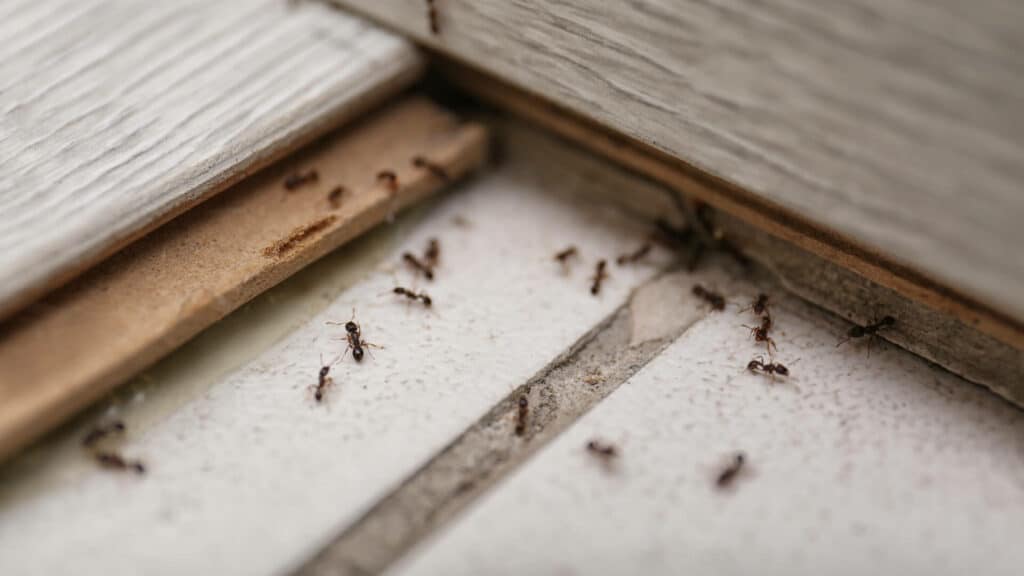
When observing ant trails in homes or watching outdoor colonies, understanding how long ants live is crucial for comprehending colony dynamics, predicting population patterns, and implementing effective ant control strategies.
Ant lifespan varies dramatically by caste (colony role) and species, with worker ants typically living weeks to months, male ants surviving only days to weeks primarily for reproduction, and queen ants potentially living years to decades as colony reproductive centers.
Understanding an ant lifespan explains why colonies persist despite worker mortality, reveals why queen-focused control proves most effective, and informs realistic timelines for elimination efforts recognizing that killing visible workers provides only temporary relief without addressing long-lived queens producing continuous replacements.
Ant Caste System and Lifespan Variation
Ants demonstrate eusocial organization with distinct castes performing specialized roles, with caste determining both function and lifespan creating dramatic longevity differences within single colonies.
Worker ants: These sterile females comprise colony majorities performing all labor including foraging, brood care, nest maintenance, and colony defense. Worker lifespans vary substantially by species from 1-2 months in small fast-reproducing species like pharaoh ants to 1-3 years in larger species like carpenter ants.
Environmental factors including temperature, food availability, predation pressure, and workload intensity affect actual lifespans. Workers performing high-risk activities including foraging outdoors experience higher mortality than workers remaining in protected nest environments.
Queen ants: Reproductive females (queens) demonstrate remarkably-extended lifespans relative to workers, with documented lifespans ranging from 5-15 years in many common species to potentially 30 years in some harvester ant queens. This extreme longevity enables colonies to persist for decades given a single queen’s continuous egg production.
Protected nest positions, constant worker attendance providing food and care, and lack of dangerous foraging or other high-risk activities contribute to exceptional queen survival.
Male ants: Reproductive males (drones) demonstrate shortest lifespans of any caste, typically surviving just days to weeks. Their sole function involves mating during nuptial flights with virgin queens from other colonies. Following mating, males die quickly having fulfilled their reproductive role. Males never participate in colony labor, receive minimal worker care, and lack adaptations for extended survival.
Species-Specific Ant Species Longevity
Different ant species demonstrate varying lifespans reflecting their ecological strategies, with some emphasizing rapid reproduction with short-lived workers while others invest in longevity and slower population growth.
- Carpenter ants (Camponotus species): Worker carpenter ants live 6-12 months with some individuals surviving 2-3 years, while queens may live 10-25 years continuously producing workers. These relatively long worker lifespans reflect their large body size and lower reproductive rates compared to smaller species.
- Odorous house ants (Tapinoma sessile): Workers live several months, while queens survive several years. Colonies often contain multiple queens (polygyne) enabling colony persistence even if individual queens die.
- Argentine ants (Linepithema humile): Worker lifespans approximate 2-4 months, while queens live 1-2 years. However, their massive supercolonies with thousands of queens distributed throughout networks ensure colony-level persistence far exceeding individual queen lifespans.
- Pharaoh ants (Monomorium pharaonis): Workers live just 4-10 weeks reflecting their tiny size and rapid reproduction strategy. Queens survive 4-12 months, with colonies maintaining multiple queens enabling sustained populations despite relatively short queen lifespans.
- Fire ants (Solenopsis invicta): Worker lifespans range from 5 weeks to 6 months depending on caste size (minor versus major workers), while queens live 2-7 years. Their aggressive reproduction and large colony sizes create substantial pest problems.
- Pavement ants (Tetramorium caespitum): Workers live several months to over a year, while queens survive 3-8 years enabling long-term colony establishment beneath sidewalks and building foundations.
Why Ant Lifespans Vary
Environmental conditions and colony characteristics substantially influence actual ant lifespans within species-specific ranges.
- Temperature: Warmer temperatures accelerate metabolism and development rates shortening lifespans, while cooler conditions slow physiological processes potentially extending longevity. However, extreme temperatures in either direction increase mortality through thermal stress. Optimal temperature ranges vary by species matching their native climate adaptations.
- Food availability: Adequate nutrition enables longer worker survival and greater queen fecundity, while food scarcity forces colonies into stress responses including reduced reproduction and increased worker mortality. Protein availability particularly affects brood production and worker longevity.
- Colony age and size: Young developing colonies often show higher individual worker longevity compared to mature colonies where rapid turnover maintains larger populations. Small colonies with fewer workers may show extended individual lifespans from reduced workload stress compared to large colonies with intense labor demands.
- Seasonal effects: Many temperate species demonstrate seasonal lifespan variation with workers produced in fall potentially overwintering and surviving 6-8 months while summer workers live just 1-2 months. This seasonal variation reflects differing energy demands and environmental conditions.
- Predation and competition: External pressures including predator attacks, competition with other colonies, and pathogen exposure all reduce actual realized lifespans below potential maximum longevity observed in protected laboratory conditions.
When You Need Professional Pest Control for Ants
Professional pest control for ants implements strategies such as queen-focused targeting through proper identification determining species and likely nest locations, appropriate treatment selection based on ant biology, strategic baiting or direct treatments, and follow-up ensuring colony elimination.
If you’re experiencing persistent ant problems despite control attempts, observing daily ant trails suggesting active nearby colonies, or uncertain about effective approaches given ant lifespan and reproduction, contact Aptive today for a free quote from a professional pest control service.