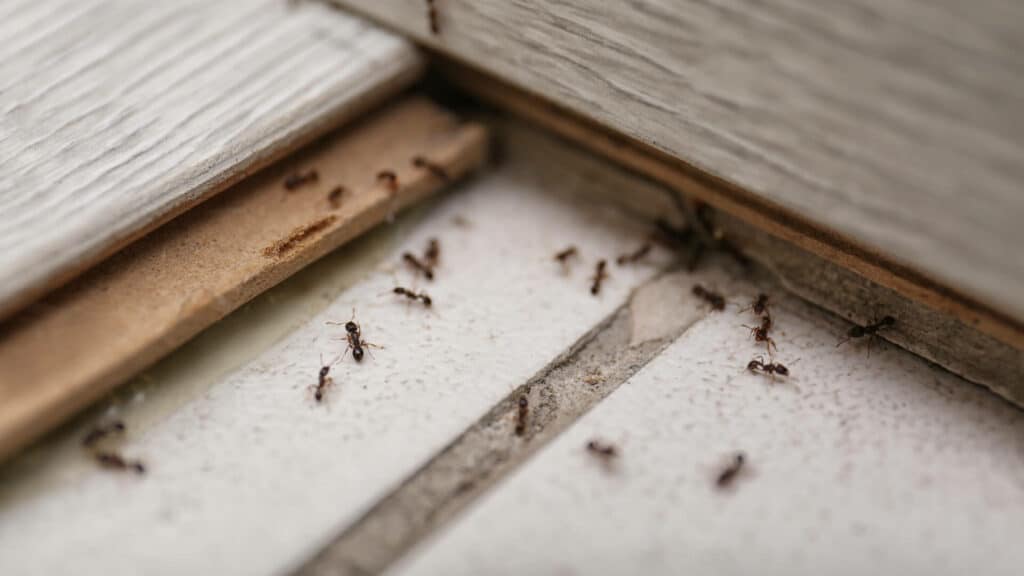
Ants are one of the most common pests in the world, with more than 10,000 known species. Seeing ants around your home every once in a while is pretty common, but are you aware of the type of ants you’re seeing? Recognizing the different species of ants can help you determine how big of a concern the ants are to you, your family, and your home. But knowing which type of ant you see only goes so far. You’ll also need to learn how to defend yourself against these pests properly.
So without further ado, here are the different types of ants and how to prevent them from becoming an infestation.
Common Household Ants
Argentine Ants
Argentine ants are an invasive species native to Argentina but can now be found worldwide, including in the United States.
Argentine ants are known as a nuisance pest because of their ability to spread quickly and establish massive colonies containing hundreds of queens. As adaptable pests, they typically build shallow nests around stored bricks, in moist soil or mulch, within woodpiles, or along sidewalks. However, they prefer to build nests in insulation or within walls.
Argentine ants are omnivorous, which means they can eat nearly anything. However, they enjoy eating a diet of sweet food. The worker ants will leave their nests in hopes of finding sugary foods and water in our homes. They search for entrances through small cracks and openings in walls or the foundation.
To determine if you have an Argentine ant infestation, keep an eye out for a trail of ants that quickly moves to a food or water source. Follow the path to its entry point to determine where the ants are coming from. Although store-bought sprays can kill some Argentine ants, it’s more difficult to remove their colonies. To effectively remove an Argentine ant infestation, professional pest control may be necessary.
Carpenter Ants
Carpenter ants are known for their large bodies, ranging from 3.4 to 13 mm long, while their queens can reach up to half an inch of length. A carpenter ant colony can consist of thousands of workers with only one queen. This species of ants prefer decayed wood as their nesting site because it provides them with consistent humidity and temperatures.
Carpenter ants cause severe damage if they tunnel through the wood in your home. Over time, your home’s structural integrity can be compromised, which could cost thousands of dollars in repairs. The most obvious sign of a carpenter ant infestation is piles of wood shavings underneath your furniture or other wooden items.
The most notable characteristics to look for when identifying a carpenter ant are their dark-colored bodies, narrow waists, elbowed antennae, and hind wings shorter than the front wing.
If you believe you have a carpenter ant infestation in your home, it’s important to act immediately to reduce the amount of damage to your home while protecting your family. While store-bought sprays or ant traps may help kill off some carpenter ants, we recommend searching for an “ant exterminator near me” to help you eliminate these pests from your home.
North American Ants
In the vast terrain of North America, several ant species roam freely. Among the most common types found across the continent are the odorous house ants and pavement ants, which are generally harmless but can be a nuisance due to their persistent scavenging behaviors. North American ants also include some less common but visually distinct species like the acrobat ants, which are recognized by their heart-shaped abdomens and ability to raise their abdomen over their thorax when disturbed. Understanding these species helps in recognizing and managing them effectively in both urban and rural settings.
Fire Ants
Fire ants are most commonly found in the Southern United States and are easily identifiable due to their red or orange coloring. They typically stay outdoors and build their mounds in lawns, pastures, buildings, or cracks in the concrete. Unlike other ant species that have an opening at the center of their mounds, fire ants build underground tunnels to enter and leave the nest. These tunnels can travel 25 feet away from the mound. Although fire ants tend to stay outside, they can still become a problem if they’re too close to your home, especially if you have children.
Despite their small size, fire ants can be aggressive and dangerous, attacking whoever disturbs their home. A fire ant bite is painful and can cause swelling, itching, and blistering Keeping it clean and applying antibiotic cream can help treat the bite and reduce the pain. A bite may lead to more severe issues for those allergic to fire ants, including hives, shortness of breath, and swelling of the tongue and throat. In this case, seeking immediate medical attention is critical.
Odorous Ants
Odorous Ants can be found indoors and outdoors. Indoors, they seek warm areas with moisture. This includes wall crevices, under carpets, beneath floorboards, and inside water pipes. If they stay outdoors, odorous ants build their nests in firewood, mulch, or in between sidewalks.
They have polydomous colonies, a nesting strategy where an ant colony occupies multiple, separated nests. These colonies are made up of hundreds of workers that serve a single queen, or thousands of workers serve hundreds of queens. The bigger the ant colony, the higher number of ants live within these colonies. Rather than leaving their nest and transporting food back, odorous ants have been found to move their nests as often as every three weeks to find new food sources. Since they have multiple nests that they move every few weeks, it can be challenging to eliminate an odorous infestation without the help of an ant exterminator.
However, there are specific ways to prevent an odorous ant infestation. Make sure your windows and doors are sealed, trim shrubs and trees, keep food stored in airtight containers, and keep your kitchen surfaces and counters clean.
Call Aptive Pest Control for Ant Extermination
Ants are stubborn pests, building nests in your home for shelter. While over-the-counter products may help reduce these pests, a full-blow ant infestation typically requires a professional to perform a full ant extermination. Aptive Pest Control controls ants in homes with professional and effective methods. Treatment begins with a comprehensive inspection of your home by a certified pest specialist. We identify risk areas and customize a solution to control ants and prevent infestations in the future. Aptive’s year-round treatments ensure your home will be protected from ants as well as other pests throughout the year. Find a provider today. Contact Aptive Pest Control today to receive a quote for pest control services.