Call Now and Ask About the Winter Deal While it Lasts →

Sign-in to Account
Call Us

(855) 948-5816

aptive_pest_control_lockup-white

Find Service Area

Ants Marching – Why Do Ants Walk in a Line?

Written by Aptive Pest Control May 9, 2019

When you were a kid you probably sang, “The ants go marching one by one, hurrah, hurrah,” but have you ever stopped and wondered why ants march one by one, or if there is any truth to the song? Turns out, there is some truth to the classic nursery rhyme.

Why Do Ants Follow Each Other in a Line?

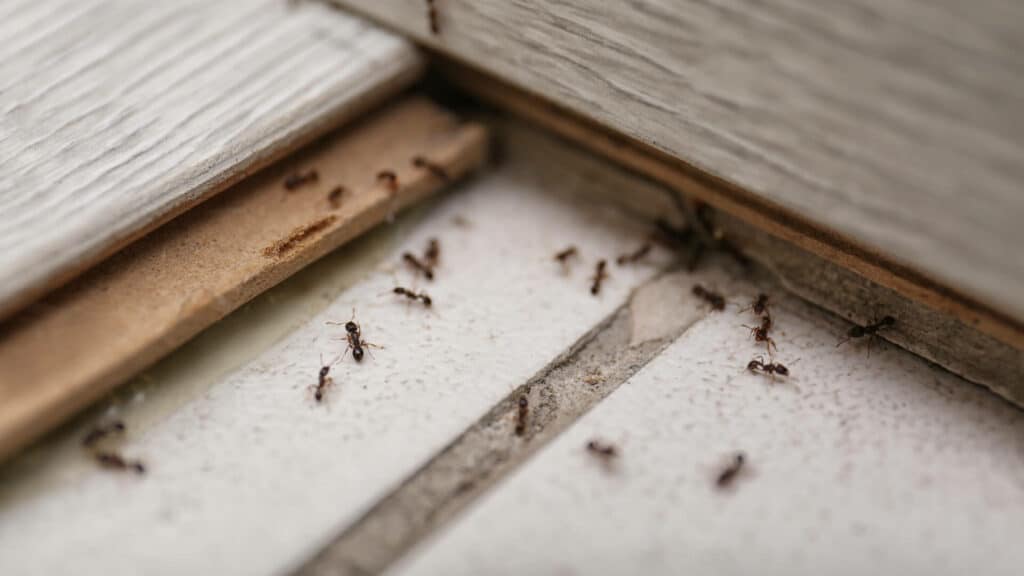
The reason ants march in a line boils down to scented chemicals called pheromones. Ants use pheromones to communicate with other ants. Ants will produce pheromones to warn other ants about a nearby predator, to tell other ants to help defend the colony, or to share the location of a food source. So what does this have to with an ant’s tendency to follow the leader?

When a worker ant finds food, or some other beneficial resource, she will lay down trail pheromones as she is returning to the colony. That way, other workers will be able to leave the colony and use the trail to find the resource. As other ants follow the trail, they will release additional pheromones. This makes the trail even more detectable. The worker ants will follow this trail to a tee until the food source is completely consumed or no longer available.

How do Ants Find Food?

Ants have a powerful sense of smell and rely on sensitive olfactory receptors found on their antennae to locate food. Compared to many other insects, ants have 4 to 5 times as many receptors making them highly adept scavengers. It is the worker ant’s job to find food for the colony’s queens, males and young. Using their olfactory receptors, worker ants will forage for food and leave behind trail pheromones if a food source is found. It is not uncommon for a worker ant to travel up to 100 yards away from the colony to find food.

When it comes to food, different types of ants prefer different types of food. For example, Argentine ants prefer sweet foods such as aphid honeydew, honey, syrup, and sugar. Meanwhile, fire ants are omnivores and feed on other bugs, meats, and sweets. When outdoor food sources are scarce, ants will look for food indoors. This is why it is common to find ants in your kitchen or bathroom.

How to Get Rid of Ants

Because each type of ant is different in terms of behavior and habitat, it is best to use a pest control expert to get rid of ants effectively and efficiently. An Aptive service professional will conduct a thorough inspection of your property and determine the best way to eliminate the ant colony, or colonies, you have. They will also provide you with helpful methods and suggestions to help prevent ants from returning and re-establishing colonies.

Based on your needs, climate, and the environment, an Aptive professional will be able to develop a suitable treatment plan. Your Aptive service professional will treat areas on your property where ant control products can be used responsibly and effectively. Ants are resilient little creatures so additional treatments may be necessary. With Aptive’s dedication to service and commitment to the environment, you can rest easy knowing your home is our priority.

Ants’ Movements, Communication, and Collaboration

Have you ever observed how ants communicate and work together to achieve common goals? Ants are fascinating creatures known for their complex social behaviors and efficient communication systems. They communicate mainly through pheromones, which are chemicals that can convey different messages such as alarm, direction, and identification. This communication is vital when ant colonies coordinate their efforts in foraging or defending their nest. For instance, when an ant encounters a food source, it will return to the colony leaving a pheromone trail. This trail helps other ants to follow the path directly to the food source, demonstrating an impressive level of teamwork. Moreover, ants can move surprisingly fast, considering their size, and have the ability to scale various surfaces, including walking upside down on ceilings. Their ability to adhere to walls and move along them is due to the tiny claws and adhesive pads on their feet. Additionally, their structured colony roles allow them to work together cohesively, making the colony more efficient and increasing their chances of survival. The unity and precision seen in their lines or rows when traveling reflect a well-organized system of navigation and mutual aid.

Aptive’s integrated pest management and firm commitment to the environment separate us from other pest control companies. If you have a pest problem that needs controlling, call Aptive Pest Control today.
Learn more about ants

10 Fascinating Facts about Queen Ants 12 Preventive Tips to Eliminate Odorous Ants for Homeowners 3 Essential Ant Prevention Strategies to Know for New Homeowners 3 Strange Adaptations That Help Ants Survive 3 Surprising Facts About Pavement Ants 3 Things That Attract Ants to Your Home & How to Prevent It 3 Unexpected Reasons Fire Ants Build Mounds in the Same Spot 4 Common Myths About Ant Infestations (And the Truth Behind Them) 5 Effective Measures on How to Prevent Ants in the Apartment A Detailed Guide to Fire Ant Control A Guide to Common Types of Ants: Identification, Behavior, and Risks Ant Trails: Learn Why They Always Return to Your House Ants in Electrical Outlets: Causes, Risks, and Fixes Argentine Ant Supercolonies: Why Control Is Hard Argentine Ants vs. Odorous House Ants Asian Needle Ants Guide: What Are They and Are They Dangerous? Can Ants Harm Pets?: A Guide for Pet Owners Can Ants Really Lift 50 Times Their Body Weight? Can Ants Swim? Common Household Items That Attract Ants Do Ant Trails Really Work Like Highways? Fire Ants vs Pavement Ants: What Are the Differences? Harvester Ants: Guide to Identification, Prevention, and Treatment How Ants Are Getting Into Your House And How to Stop Them How Argentine Ants Communicate to Form Supercolonies How Do Ant Colonies Divide Labor Without a Leader How Long Do Ants Live? How to Get Rid of Ants in the Kitchen How to Identify, Prevent, and Treat Pharaoh Ant Infestations How to Tell if You Have an Ant Infestation or Just a Few Strays How to Treat and Control Flying Ants Little Black Ants vs Pavement Ants: What Are the Differences? Pavement Ants 101: What Are Pavement Ants? Pavement Ants in High-Traffic Outdoor Zones: What You Should Know Preventing Argentine Ants: Tips for Securing Your Home Against Invasion Termite Swarm or Just Flying Ants? The Differences Between Ants and Termites The Different Types of Ants The Role of Ant Queens in Colony Expansion The Strange Reason Ants Follow Dead Ant Trails What Are Army Ants and Where Are They Found? What Are Flying Ants? Homeowner's Guide to Dealing with These Pests What Attracts Ants to Your Home? What Do Ants Do at Night? What Happens Inside an Ant Nest After Rainfall When Are Ants Most Active? Seasonal Changes and Their Impact Where Ants Live & How to Control Them Why Ants are Invading Your Home Why Are Ants in the Shower and How to Prevent Them from Entering Why Are You Seeing More Ants After Rain? Here's What to Know Why Do Ants Build Mounds? Why Do Ants Keep Coming Back? Why Do Ants Keep Showing Up in the Same Spot Every Morning Why Do Fire Ant Stings Burn? Why Do Some Ant Colonies Split Instead of Expanding? Why Do Some Ants Form Living Bridges with Their Bodies Why Odorous Ants Love Your Kitchen: Attraction Factors and Prevention Tips Why You Keep Seeing Ants in the Dishwasher

Curated articles for you, from our pest experts.

A Detailed Close-Up Image Of A Dark, Segmented Isopod Crawling On A Bed Of Dry Twigs, Leaves, And Soil. A Smaller Isopod Is Visible Nearby, Both Surrounded By Textured Ground Debris.

What Are Isopods in the Garden?

Isopods are beneficial soil-dwelling crustaceans commonly found in gardens where they play important ecological roles breaking down organic matter and contributing to soil health through their decomposition activities. These armor-plated creatures including...

Dec 2, 2025
A Vibrant Blue Wooden Door Framed By A Terracotta Wall And Surrounded By Cascading Green, Yellow, And Purple Vines, With House Number 5 Above The Entrance And A Small Stone Staircase Visible Inside.

The Importance of Sealing Entry Points Before Winter

You recognize that cooling fall temperatures trigger pest movement from outdoor environments into heated structures, with proper timing of exclusion work proving critical for preventing winter infestations.  Sealing entry points before winter proves important...

Dec 2, 2025
Modern Kitchen With White Cabinets, Stainless Steel Appliances, And A Decorative Tile Backsplash, Featuring A Wooden Tray With Decorative Items On The Countertop.

Why You Keep Finding Cobwebs Even After Cleaning

You remove cobwebs from corners, ceilings, and furniture only to discover new webs appearing within days or even hours, suggesting ongoing spider activity rather than residual old webs from previous occupation. Cobwebs keep reappearing after cleaning because active...

Dec 2, 2025
A Close-Up Image Of A Green Lacewing Insect Perched On A Fuzzy Plant Stem, Showing Its Delicate Transparent Wings With Iridescent Purple And Blue Hues And Long Antennae, Set Against A Dark Blurred Background.

Lacewings 101: What Are Lacewings?

Lacewings are among the most valuable beneficial insects in gardens and agricultural systems, with their voracious larvae earning the nickname "aphid lions" for their remarkable predatory capabilities consuming hundreds of pest insects during development. These...

Nov 25, 2025
A White Bookshelf Filled With A Vibrant Assortment Of Hardcover Books Arranged Neatly By Color, With Titles In Various Fonts And Sizes Creating A Visually Striking Rainbow Pattern.

Booklice 101: What Are Booklice?

Booklice are tiny, harmless insects commonly found in homes with moisture problems, feeding on mold, fungi, and microscopic organic matter rather than actually damaging books despite their misleading common name. These minute creatures appear suddenly in humid...

Nov 25, 2025
A Clean, Modern Bathroom Featuring A White Toilet, A Bathtub With A Handheld Showerhead, A Glass-Enclosed Shower Stall, And A Vessel Sink Mounted On A Black Vanity. The Walls Are Tiled, And A Window With Metal Security Bars Allows Natural Light Into The Space.

Why Do Bugs Appear in the Bathroom More Than Anywhere Else

You observe disproportionate pest activity in bathrooms compared to other household rooms, noticing insects including silverfish, cockroaches, and drain flies appearing regularly despite cleaning efforts, suggesting these spaces provide uniquely attractive...

Nov 25, 2025
A Close-Up Image Of A Dead Cockroach Lying On Its Back On A Rough Concrete Surface. Its Legs And Antennae Are Curled Upward, And Its Brown Exoskeleton Is Clearly Visible.

Why Dead Bugs Attract More Bugs

You observe clusters of dead insects in corners or windowsills accompanied by live insects including beetles, flies, or ants, suggesting decomposing insects attract additional pest activity rather than simply accumulating passively.  Dead insects release...

Nov 25, 2025
A Detailed Image Of A Basement Laundry And Utility Room With Exposed Wooden Beams, A Washer And Dryer, A Water Softener, Ductwork, And A Water Heater Unit Against A Brick And Wood-Paneled Wall.

Why Do Basements and Attics Host Different Pest Species

You observe distinct pest types in different vertical zones of your home—moisture-seeking insects in basements while overwintering pests concentrate in attics—suggesting these spaces provide fundamentally different environmental conditions attracting...

Nov 25, 2025
Modern Suburban Home With Beige Siding, Dark Shutters, And A Clean Black Roof, Featuring A Well-Maintained Lawn And A Triple Garage Under A Colorful Evening Sky.

Why Do Pests Return After Moving Out of a Home

You vacate a property expecting pest activity to cease without human occupancy, yet observe infestations reestablishing or intensifying during vacancy periods, suggesting pests exploit conditions created by unoccupied structures rather than requiring active human...

Nov 20, 2025
A Group Of Small Potted Plants, Including A Fuzzy Cactus, A Green Succulent, And A Taller Reddish Succulent, Arranged On A Windowsill With Sheer Lace Curtains Softly Filtering Daylight In The Background.

Why Windowsills Become Hotspots for Insect Activity

You observe disproportionate insect activity concentrated on windowsills compared to other household areas, finding dead and live insects including flies, ladybugs, spiders, and various other species clustered near glass surfaces.  Windowsills attract insects...

Nov 20, 2025

Take back your home with pest control today.