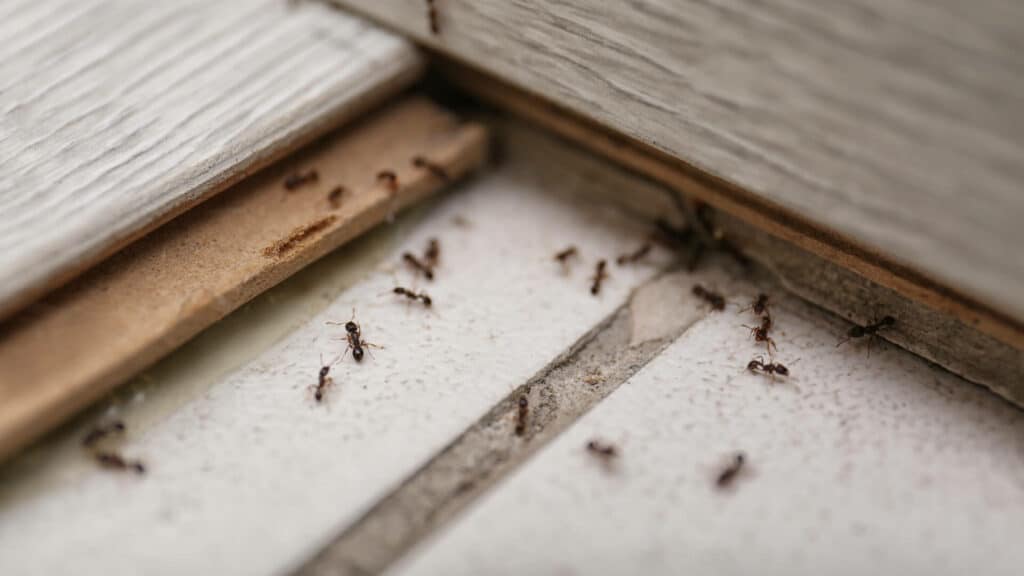
Living in an apartment has its advantages—shared maintenance, convenience, and community. But when it comes to apartment pest control, shared spaces can create unique challenges. If you’ve noticed crawling ants in the apartment through your kitchen or along your windowsills, you’re not alone. Ants are common because these pests can move openly between units, making it harder to isolate the problem. Knowing how to prevent ants is essential for maintaining a comfortable and inviting space for everyone.
Why Ants Are a Common Problem in Apartments
Ants in the apartment are more than just an annoyance. The layout of most apartment complexes also makes it easy for ants to invade and travel between units. A small infestation in one apartment can quickly spread to others through walls, pipes, and electrical lines. In many cases those pipes, lines and walls are often shared with your neighbor and their issues. Factors like shared trash areas, close neighbors, and high foot traffic also contribute to the problem.
For apartment dwellers, this creates a significant challenge. Unlike in a standalone home, where you can control your environment more completely, ants may be coming from a neighbor’s unit or communal areas. This makes pest control more complicated but not impossible.
5 Tips for Apartment Residents to Prevent Ant Infestation
While you may not be able to stop ants in the apartment and each factor of their infestation, there are several steps you can take on how to prevent ants in the apartment. Here are some targeted ant control tips to get you started:
1. Seal Entry Points
Ants can enter your apartment through even the tiniest gaps. To learn how to prevent ants, inspect each possible entry point, including your walls, windows, and doors, for cracks or openings. Pay special attention to areas where utility pipes, cables, and wires enter your apartment, as these are common access points for ants. Use caulk or weather stripping to seal these gaps and block the ants from coming inside.
Also, check your apartment’s shared walls or entry points where ants may be migrating from neighboring units. A little effort to seal these areas can go a long way in keeping ants out.
2. Keep Your Apartment Clean and Dry
There are things that always attract ants. They are constantly searching for food and water. In an apartment, where space is limited, even small crumbs or a bit of standing water can attract them. Cleaning your kitchen thoroughly after every meal may seem simple but this habit is an effective way on how to prevent ants. Wipe down countertops, sweep the floor, and don’t leave dirty dishes in the sink.
Be mindful of moisture as well. Leaky faucets or water build-up under sinks are attractive to ants, especially during dry spells. Repair any leaks immediately and keep high moisture areas dry.
3. Communicate with Neighbors and Building Management
In an apartment, you’re not in this alone. If you’re experiencing an ant infestation, chances are your neighbors are too. Coordinate with other residents and notify your property manager or landlord. This can help ensure that the building addresses the problem extensively, reducing the likelihood that the ants will simply move from one unit to the next.
4. Ensure Proper Trash and Food Storage
Improperly stored food and garbage cans are like open invitations for pests like ants. In apartments where shared trash areas are common, keeping these spaces clean is critical. Use tightly sealed garbage bags and ensure that trash is removed regularly. If possible, store your trash cans away from doors or windows to prevent attracting ants indoors.
Store food in airtight containers as part of your strategy on how to prevent ants. Even a small spill of sugar or crumbs left out can attract ants. Don’t forget to store pet food properly as well, as it can be another draw for pests.
5. Consider Professional Control Services
Sometimes, no matter how diligent you are, ants will find a way into your apartment. In these cases, it’s important to call in professional pest control services. Working with experts ensures that the infestation is handled thoroughly and that any hidden nests are identified and treated.
Many pest control companies offer services tailored specifically for apartment complexes, which means they understand the unique challenges you face. They’ll assess the situation, determine the source of the ants, and provide an effective ant control solution that addresses not just your unit but also the surrounding areas.
Keep Ants Out of Your Apartment with Aptive
Don’t let ants take over your apartment! By applying these tips, you can help prevent the chances that your spaces are invaded by these pests. You can also reach out to Aptive and learn more about our solutions for apartment dwellers. Call your local Aptive Pest Control branch for a free quote of our professional pest control services and get peace of mind.