Flying ants often appear suddenly, especially during warmer months when colonies swarm to reproduce. While they may seem alarming, flying ants are a common sign of a nearby nest – and in some cases, they can be mistaken for termites. The most effective way to help get rid of flying ants is to identify the source, eliminate the colony, and prevent future infestations.
What are flying ants?
Flying ants – also known as winged ants, ants with wings, or alates – are the reproductive members of an ant colony: winged males and females that take flight to mate and establish new ones. While they are a natural part of an ant colony’s life cycle, seeing flying ants indoors often indicates an established nest nearby that requires professional attention.
Flying ants vs. termites: what’s the difference?
Flying ants and termites are easy to confuse, but a few physical features tell them apart. Flying ants have a pinched waist, elbowed antennae, and front wings noticeably larger than their back wings. Termites have a uniform body shape, straight antennae, and wings that are all equal in size.
Their behavior differs too. Termites feed on wood and can cause serious structural damage to your home. Flying ants don’t feed on wood and they take flight to mate and establish new colonies.
Why do flying ants appear?
Flying ants appear during “nuptial flights,” triggered by warm temperatures and high humidity, most commonly in late spring and summer. During these flying ant swarms, males and females leave their colony to mate with ants from other colonies, spreading genetic diversity and helping populations establish in new areas.
After mating, male ants die off. Fertilized females shed their wings and search for a nesting site to begin a new colony as queens. Flying ants are also drawn to artificial light, which can pull them toward windows and entry points into your home.
Signs of a flying ant infestation
Look for these indicators if you suspect flying ants indoors:
- Discarded wings near windowsills or entry points, left behind by females after mating
- Large numbers of winged insects congregating indoors, especially near light sources
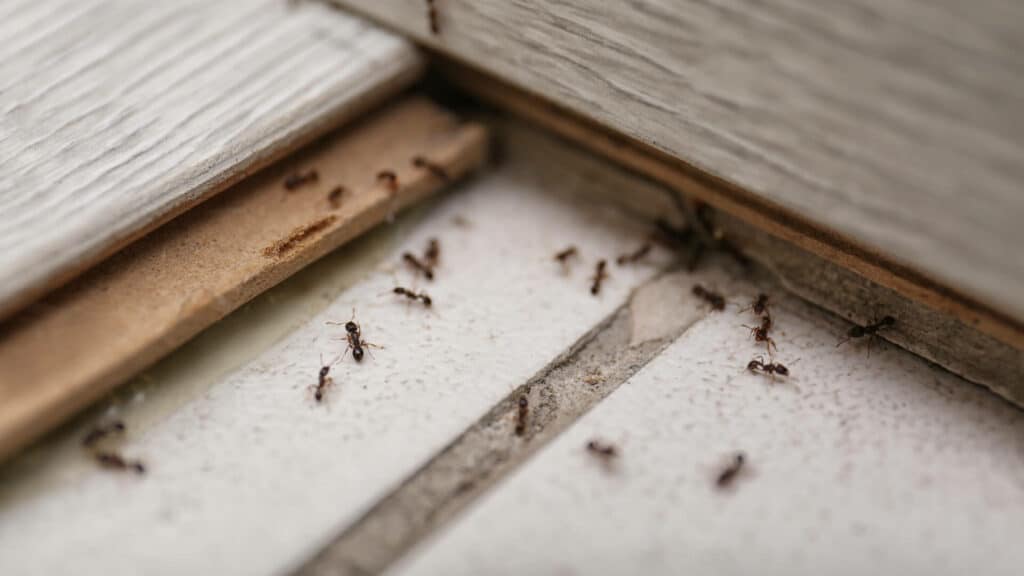
- Worker ant trails tracking between walls, flooring, or kitchen surfaces and food sources
- Small soil mounds near cracks or crevices, which can indicate a queen is establishing a new colony
How to get rid of flying ants in your home
A few practical steps can help limit flying ants from getting inside:
- Seal entry points: Caulk or weatherstrip gaps around windows, doors, and your foundation to close off common access points.
- Store food in airtight containers: Flying ants are foragers attracted to available food and moisture.
- Clean up spills and crumbs regularly: Removing food sources makes your home less appealing to foraging ants.
- Install window screens: A physical barrier that keeps flying ants out while allowing air to circulate.
- Vacuum visible ants: For individual ants spotted indoors, vacuuming is a quick removal option.
What causes flying ants in your house?
Flying ants typically appear indoors when an ant colony reaches maturity and begins its reproductive swarming phase. They are attracted to moisture, light sources, and easy access to food, which is why kitchens, bathrooms, basements, and window areas are common hotspots for activity. If you notice a large number of flying ants in your house, it may also signal an existing ant colony inside walls, crawl spaces, or damp wood structures.
Flying ant control methods
When deterrence alone isn’t enough, these methods can help address an active flying ant infestation:
- Treat the nest directly: Locate the colony and apply an insecticide labeled for ant control at the source. Targeting the colony is generally more effective than treating individual ants.
- Use bait stations: Ant bait allows foraging workers to carry product back to the colony, reaching ants that direct spray may miss. Monitor and replenish stations regularly.
- Soapy water: For small numbers of indoor ants, a dish soap and water mixture can help manage activity without pesticides.
For larger or persistent infestations, an Aptive Service Professional can inspect your property, locate the colony, and apply targeted flying ant treatments suited to your situation. Our year-round service keeps track of your ongoing pest needs, and if flying ants return between visits, we’ll come back at no extra charge.
Flying ants FAQs
What do flying ants look like?
Most flying ants have a pinched waist, six legs, and two pairs of wings, with the front wings noticeably larger than the back ones. Their elbowed antennae are one of the easiest ways to identify them. Coloring varies by species, ranging from black and brown to reddish tones. Queens are typically larger than males. These features help distinguish flying ants from termites, which have straight antennae and equal-sized wings.
Do flying ants bite?
Flying ants can bite, though it’s uncommon and typically mild. Most species will only bite if handled or threatened. Symptoms are usually minor, with slight redness or irritation at the bite site that fades quickly. Carpenter ants are an exception, as their bites can cause a brief burning sensation. If you experience swelling, hives, or difficulty breathing after a bite, seek medical attention, as these may indicate an allergic reaction.
Where do flying ants come from?
Flying ants come from established ant colonies nearby, usually located in soil, wood, or under pavement around your home. When conditions are right, typically warm and humid weather in late spring or summer, reproductive ants take flight to mate and start new colonies. They can find their way indoors through gaps around windows and doors, or by following artificial light sources. Seeing flying ants indoors often means a mature colony is active close by.