Most ant species are not strictly nocturnal, with activity patterns varying significantly between species based on temperature regulation needs, predator avoidance, and foraging efficiency, though many common pest ants including carpenter ants and certain fire ant species demonstrate increased nighttime activity.
Some tropical ant species are genuinely nocturnal, foraging exclusively after dark to avoid extreme daytime heat, while others remain active around the clock with workers operating in shifts.
Understanding ant activity patterns helps homeowners anticipate when different species are most likely to appear indoors and explains why some infestations seem worse during particular times of day and why you might need ant control.
What are ants?
Ants are highly social insects belonging to the family Formicidae within the order Hymenoptera, comprising over 13,000 identified species worldwide living in complex colonies featuring reproductive queens and sterile worker castes performing specialized tasks.
These sophisticated insects evolved from wasp-like ancestors approximately 140-168 million years ago, developing eusociality—advanced cooperative behavior including reproductive division of labor, overlapping generations, and cooperative brood care—enabling their extraordinary ecological success across virtually every terrestrial habitat. Ant colonies range from a few dozen individuals in some species to supercolonies containing millions of workers spanning vast territories in invasive species like Argentine ants.
They play crucial ecological roles as predators, scavengers, seed dispersers, soil aerators, and decomposers, though some species have become serious agricultural and household pests when their foraging behaviors conflict with human interests and sanitation expectations.
Do ants come out at night?
Many ant species increase foraging activity during nighttime hours to avoid extreme daytime temperatures, reduce exposure to predators, and exploit food resources with less competition, though activity patterns vary dramatically between species and environmental conditions.
Carpenter ants are notably nocturnal, with workers emerging after sunset to forage for food and water, making them more visible to homeowners during evening hours when they travel across floors and countertops. Some fire ant species demonstrate peak activity during cooler evening and nighttime hours during hot summer months, while remaining active throughout the day in moderate temperatures.
Certain tropical ant species are obligately nocturnal, foraging exclusively after dark to avoid lethal daytime heat. However, many common ant species including pavement ants and odorous house ants remain active around the clock, with workers operating in overlapping shifts maintaining continuous colony functions regardless of day-night cycles.
Do ants sleep during the night?
Ants do sleep, but not on predictable nighttime schedules like humans, instead taking hundreds of brief naps throughout 24-hour periods totaling only 4-5 hours of rest daily for workers and significantly more for queens.
Worker ants sleep in irregular short bursts lasting only one to six minutes each, scattered throughout day and night based on work demands and energy depletion rather than circadian rhythms. These micro-naps allow continuous colony operation since different workers rest at different times, ensuring essential tasks including brood care, nest maintenance, and foraging continue uninterrupted.
Queens sleep considerably longer—up to 9 hours daily—in longer sleep episodes, likely reflecting reduced physical demands compared to workers performing exhausting foraging and construction tasks. Ant sleep involves reduced responsiveness and characteristic antennal positioning, though they can wake instantly when disturbed, unlike deep sleep states in mammals requiring gradual arousal.
Do any species of ants sleep during the day?
Yes, many nocturnal ant species including certain carpenter ants and tropical leaf-cutter ants demonstrate reduced activity during daytime hours when most workers rest within nests, though even these species maintain some workers active performing essential colony maintenance tasks.
Nocturnal ant species adapted to avoid daytime heat or predators concentrate their sleep and resting periods during daylight hours, with workers sleeping more frequently and for longer durations when not actively foraging.
However, ant sleep patterns remain fundamentally different from diurnal mammal sleep schedules—even in nocturnal ant species, some workers remain active throughout the day performing critical tasks including brood care, nest repair, and food processing that cannot be postponed.
Colony-level activity decreases during ants’ inactive periods, but complete dormancy never occurs since continuous operation represents a fundamental advantage of social insect organization with overlapping worker generations and distributed task performance.
How to know if you have an ant infestation
Ant infestations create distinctive signs indicating established colonies requiring intervention:
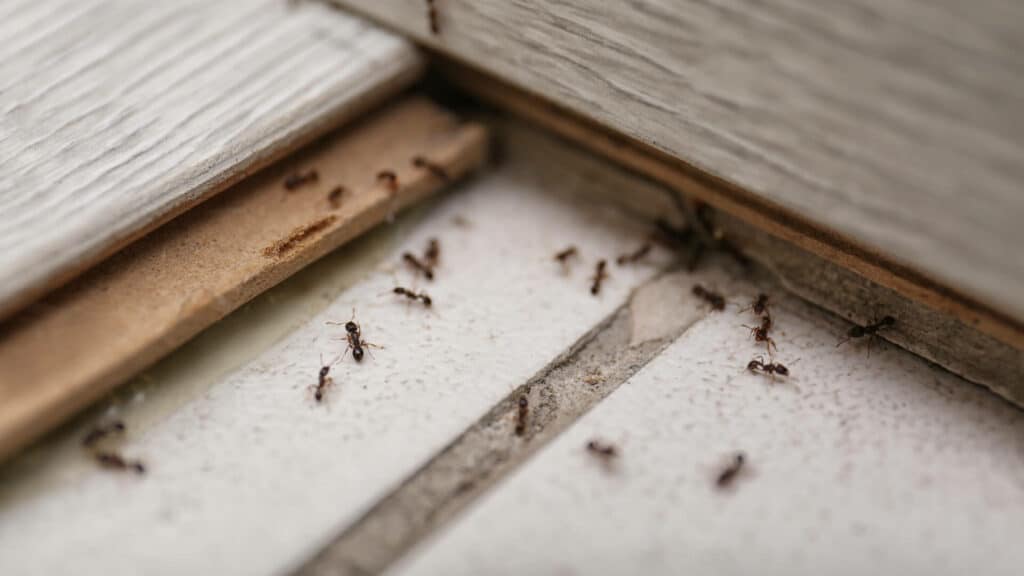
- Persistent ant trails throughout the day or night: You might notice continuous streams of ants following pheromone pathways between hidden nests and food sources, appearing during their active periods whether daytime or nighttime depending on species.
- Increased activity during specific hours: It’s common to observe carpenter ants appearing primarily during evening and nighttime hours, or certain species concentrating foraging during cooler morning and evening periods avoiding midday heat.
- Ants emerging from wall voids or baseboards: You’ll likely discover ants streaming from cracks, electrical outlets, or other openings in walls indicating nests established within structural voids rather than just outdoor colonies sending occasional scouts.
- Winged reproductive ants appearing seasonally: You might find winged ants (swarmers) indoors during spring and summer, particularly during specific times of day when mating flights occur, indicating mature colonies producing reproductive individuals for establishing new colonies.
How to get rid of an ant infestation
Eliminating ant infestations requires comprehensive colony-targeting approaches rather than individual ant removal:
- Deploy colony-eliminating baits strategically: Place slow-acting poison baits near ant trails during their peak activity periods—evening for nocturnal species—allowing workers to transport toxins back to nests, killing queens and broods eliminating reproductive capabilities.
- Eliminate food and moisture sources completely: Clean thoroughly, store all foods in sealed containers, fix water leaks, and remove attractants denying ants resources supporting colony growth regardless of their activity schedules.
- Seal structural entry points throughout building: Caulk cracks in foundations, around utility penetrations, along baseboards, and around windows preventing ant access to indoor spaces from exterior or interior wall nesting sites.
- Contact professional pest control services: Seek expert assistance for persistent infestations, nocturnal carpenter ant activity indicating structural nesting, or difficult species requiring specialized treatment approaches targeting colonies during appropriate activity periods for maximum effectiveness.
When to talk to the professionals
When dealing with ant problems throughout your property requiring expert solutions that account for species-specific activity patterns and nesting behaviors, professional pest control services can provide comprehensive treatment strategies targeting colonies during optimal times for maximum effectiveness.
At Aptive, our pest control experts understand ant activity patterns, identifying whether you’re dealing with nocturnal ants, day-active pavement ants, or other species requiring different timing approaches.
If you’re experiencing ant activity during specific times of day or night, or are dealing with persistent ant problems despite your control efforts, don’t wait—contact Aptive today for a free quote.