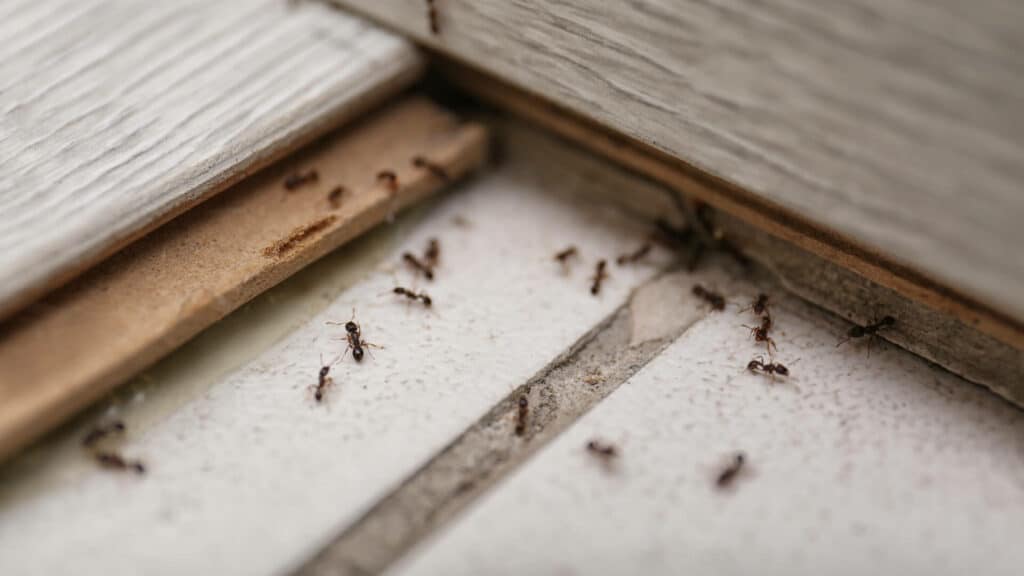
When observing small ants creating dirt mounds between sidewalk cracks or marching in organized trails across driveways, understanding their identity and behavior is crucial for implementing appropriate control measures.
Pavement ants (Tetramorium caespitum) derive their common name from their characteristic nesting behavior beneath paved surfaces including sidewalks, driveways, patios, and building foundations, with colonies excavating extensive tunnel networks.
Knowing more information about pavement ants helps you recognize why they concentrate in specific locations, identify what attracts them indoors, and implement targeted ant control strategies addressing both outdoor colonies and indoor foraging activity.
How Pavement Ants Got Their Name
Unlike most ant species nesting in natural soil, leaf litter, or rotting wood, pavement ants show a pronounced preference for nesting directly beneath concrete sidewalks, asphalt driveways, and building foundations. This unusual habitat selection inspired their descriptive common name. The characteristic behavior making them conspicuous involves workers excavating soil from beneath paved surfaces and depositing it through cracks and expansion joints, creating small conical dirt mounds along sidewalk seams and driveway edges—the signature behavior most people associate with these ants.
Pavement ants are an introduced species in North America, likely arriving from Europe during the 1800s. Their adaptation to urban environments and particular success colonizing areas around human structures made the pavement association so consistent that early naturalists adopted the descriptive common name reflecting their most-characteristic habitat.
What Pavement Ants Look Like
Workers measure 2.5-4.0mm body length making them small-to-medium sized—larger than pharaoh ants but smaller than carpenter ants. Body coloration ranges from light brown to dark brown or blackish-brown, with lighter-colored legs and antennae. The most reliable identification features include parallel furrows (grooves) running along the top of the head and thorax visible under magnification, two nodes on the petiole (narrow waist), and a pair of small spines on the back of the thorax.
Behaviorally, pavement ants demonstrate slow deliberate walking rather than rapid erratic movement, form distinct trails with numerous workers, and show aggressive territorial behavior toward other ant colonies, creating large battles with visible dead ants near territorial boundaries.
Why Pavement Ants Choose Driveways and Sidewalks
Paved surfaces offer multiple environmental advantages explaining pavement ants’ strong habitat preference. Concrete and asphalt absorb solar radiation during daylight then slowly release stored heat, creating warmer soil temperatures beneath pavement compared to exposed soil. This thermal buffering provides more stable moderate temperatures favoring colony activity and brood development, particularly beneficial during cool spring and fall periods.
Solid paved surfaces protect colonies from direct precipitation, reducing flooding risks while expansion joints provide controlled entry/exit points workers can monitor and defend. Soil beneath pavement maintains more-consistent moisture levels than exposed soil experiencing direct evaporation, preventing both excessive drying and waterlogging.
Pavement edges where concrete meets soil create productive edge habitats where cracks accumulate organic debris including wind-blown seeds, leaf fragments, and food crumbs providing supplemental nutrition.
What Attracts Pavement Ants to Homes
While pavement ants primarily nest outdoors beneath paved surfaces, they regularly invade structures foraging for food. Common entry points include foundation cracks and gaps, expansion joints where building slabs meet foundations, gaps around utility penetrations, beneath door thresholds, and through basement window frames. Many entry points originate from colonies nesting directly beneath building foundations or adjacent pavement.
Once inside, pavement ants concentrate foraging in kitchens (counters, pantries), dining areas where crumbs accumulate, bathrooms with moisture, and pet feeding areas. Primary attractants include exposed food, greases and oils, sweet substances, proteins, and pet food left accessible. Indoor invasions often increase during spring when colonies are growing, during hot dry summer periods when outdoor food becomes scarce, and during fall when colonies prepare for winter.
How Pavement Ants Build and Expand Colonies
Mature pavement ant colonies contain 3,000-10,000 workers with typically single queens living several years continuously producing eggs. Colonies excavate extensive shallow tunnel networks extending 30-60cm below surface with chambers for brood rearing, food storage, and queen housing. Workers continuously modify and expand tunnels, pushing excavated soil upward through cracks creating visible dirt mounds.
Pavement ant workers demonstrate organized foraging with scout ants locating food sources then recruiting nestmates via pheromone trails extending 9 meters or more from nest entrances. They consume proteins (dead insects, meats), sweets (honeydew, sugars), and fats (greases, oils). Notably, pavement ants are aggressive toward neighboring colonies, engaging in territorial battles involving thousands of workers that may last hours or days with significant mortality.
Colonies remain active year-round in heated structures but demonstrate seasonal patterns outdoors with peak activity during warm months and reduced winter activity when workers retreat to deeper tunnels.
What You Need to Know About Control
Effective pavement ant management requires addressing both outdoor colonies and indoor conditions enabling invasion. Locating and treating outdoor nest sites provides most-effective long-term control—look for characteristic dirt mounds along pavement cracks identifying colony locations, then application of appropriate treatments in targeted locations for the most effective results.
Professional pest control can address persistent problems, locating outdoor colonies, selecting appropriate treatments, and providing follow-up ensuring elimination.
If you’re observing dirt mounds along pavement edges, experiencing indoor trailing activity, or dealing with persistent problems despite DIY efforts, contact Aptive today for a free quote from a professional pest control service.