Gardens throughout the Midwest reflect the region’s changing seasons. Along with plants and flowers, these outdoor spaces also support a variety of insect activity. Seeing pests in or around garden areas doesn’t automatically signal a problem. In many cases, it’s a natural response to weather, moisture, and available plant growth.
Understanding these 10 common garden pests in the Midwest can help make encounters feel more manageable. When you know what you’re seeing, where it tends to gather, and why it shows up, it’s easier to make informed decisions about caring for your outdoor spaces and keeping pest activity around your home in check.
10 Common Garden Pests Midwest Homeowners Encounter
Below is a quick overview of some of the most common Midwest pests homeowners encounter in gardens and landscaped areas.
| Type of Pest | Primary Garden Habitat | What Attracts Them | Common Signs in Gardens | How to Reduce Supporting Conditions |
|---|---|---|---|---|
| Aphids | Garden plants and beds | New growth, nutrient-rich plants | Curled leaves or clustered insects | Avoid over-fertilizing and space plants for airflow |
| Japanese beetles | Lawns and flower beds | Flowering and leafy plants | Skeletonized leaves | Monitor plants regularly and reduce dense vegetation |
| Cutworms | Soil and garden beds | Freshly tilled soil, seedlings | Plants cut at the soil level | Limit soil disturbance and protect young plants |
| Earwigs | Damp garden areas | Moisture, mulch, and plant debris | Insects under mulch or stones | Reduce excess mulch and manage moisture |
| Slugs | Shaded, damp areas | Moist soil, dense foliage | Leaf holes or silvery trails | Improve drainage and thin dense plantings |
| Grasshoppers | Open yards and gardens | Abundant vegetation | Chewed leaves | Trim garden edges and manage tall grasses |
| Flea beetles | Vegetable beds | Young leafy growth | Tiny holes in leaves | Monitor early-season plants and rotate crops |
| Spider mites | Plant foliage | Hot and dry conditions | Discolored or speckled leaves | Reduce plant stress and maintain consistent watering |
| Squash bugs | Vegetable gardens | Squash-family plants | Wilting leaves, insects under foliage | Remove plant debris and monitor squash plants |
| Ticks | Garden edges and borders | Tall grass, wildlife pathways | Ticks on clothing or skin | Keep grass trimmed and clear vegetation along borders |
1. Aphids (Aphidoidea)
Aphids are small, soft-bodied insects that typically measure just a few millimeters long and are often green, black, yellow, or brown in color. They tend to cluster on stems and the undersides of leaves, where they feed on plant sap using piercing mouthparts.
In Midwest gardens, aphids are most common in spring and early summer, when plants are producing new growth. They’re drawn to tender leaves, new shoots, and nutrient-rich plants, which makes vegetable gardens and flowering beds especially appealing. Aphids are present because gardens provide easy access to food and relatively undisturbed conditions.
While they can stress plants when populations grow, aphids are not aggressive toward people and don’t pose a direct threat to homeowners. Rather than focusing on eliminating individual insects, many gardeners aim to reduce conditions that allow aphids to multiply, such as over-fertilization or overcrowding.
2. Japanese Beetles (Popillia japonica)
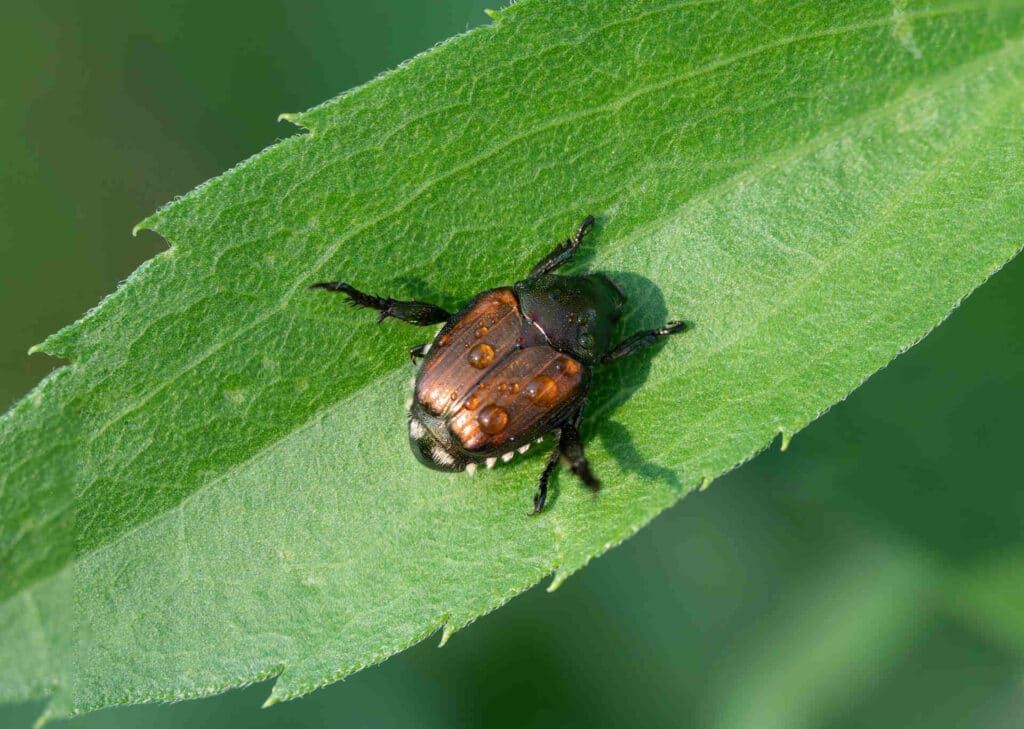
Japanese beetles are medium-sized insects, about half an inch long, with metallic green bodies and copper-colored wings, making them easy to recognize. In the Midwest, they’re most visible during warm summer days when they feed openly on flowers, shrubs, and fruit-bearing plants.
These beetles are drawn to gardens because of the abundance of leafy vegetation and flowering plants, and they often gather in noticeable numbers on the same plant. Japanese beetles are present in gardens not because something is wrong, but because the environment supports their feeding habits during peak summer conditions.
While they can cause visible damage to leaves, they are not dangerous to people. Avoiding direct handling is usually enough, as they do not bite or sting, and long-term management often focuses on understanding seasonal patterns rather than reacting to individual sightings.
3. Cutworms (Noctuidae larvae)
Cutworms are the caterpillar stage of several moth species and typically grow to about 1 to 2 inches long. They are smooth-bodied, often brown or gray, and spend most of their time hidden just beneath the soil surface.
This Midwest pest is most active at night, feeding on young plants and seedlings near ground level. They’re drawn to freshly tilled soil and newly planted garden beds, which provide easy access to tender stems. Because they remain out of sight during the day, gardeners often notice damage before ever seeing the insect itself.
Cutworms are not a concern for people or pets, but their feeding habits can be frustrating for gardeners early in the growing season. Rather than attempting to eliminate them outright, many homeowners focus on garden timing and soil-disturbance practices to limit their activity.
4. Earwigs (Dermaptera)
Earwigs are slender insects that grow to about half an inch in length and are easily identified by the curved pincers at the end of their abdomen. They are usually dark brown and prefer cool, damp environments.
In Midwest gardens, earwigs are commonly found beneath mulch, stones, or plant debris, especially after periods of rain. They’re drawn to moisture, shelter, and organic material, which makes heavily mulched or shaded garden beds attractive.
Earwigs are not aggressive and rarely interact with people, though their appearance can be startling. They do not seek out human contact, and their presence typically reflects environmental conditions rather than a specific problem. Reducing excess moisture and ground cover often helps limit how frequently they’re seen.
5. Slugs (Gastropoda)
Slugs are soft-bodied, shellless mollusks that vary in size and are usually gray, brown, or black. They move slowly, are most active in the evening or after rainfall, and thrive in gardens with dense vegetation, shaded areas, and consistently damp soil. They’re drawn to leafy plants and tender growth, which makes vegetable gardens and ornamental beds common feeding areas.
Slugs are present because gardens naturally retain moisture and provide cover from sunlight. While they can leave noticeable feeding marks on plants, slugs do not pose a risk to people and should generally be avoided rather than handled. Managing moisture levels and garden density often plays a larger role than reacting to individual sightings.
6. Grasshoppers (Caelifera)
Grasshoppers are medium- to large-sized insects that range from about 1 to 2 inches in length and are typically green, brown, or tan, allowing them to blend easily into grassy environments. They are strong jumpers and are most active during warm, dry summer days in the Midwest.
Grasshoppers are drawn to gardens because they feed on a wide variety of plants, including vegetables, flowers, and grasses, and open yards provide easy movement between food sources. Their presence often increases during hot seasons when vegetation is abundant and soil conditions are dry.
While grasshoppers can cause noticeable plant damage when populations are high, they do not pose a threat to people and generally avoid close interaction. Managing vegetation density and monitoring garden edges can help reduce the frequency with which they move into planted areas.
7. Flea Beetles (Chrysomelidae)
Flea beetles are very small insects, usually less than a quarter inch long, with hard, dark-colored bodies that may appear shiny or metallic. They get their name from their ability to jump quickly when disturbed.
Flea beetles are most noticeable in spring, when they feed on young plants and tender leaves, often leaving behind tiny holes that resemble pinpricks. They’re drawn to newly planted vegetables and leafy crops because these plants are easier to feed on early in the growing season.
Although their activity can affect plant appearance, they are not harmful to people and are best managed through early-season garden monitoring rather than reacting to individual insects.
8. Spider Mites (Tetranychidae)
Spider mites are extremely small pests that are difficult to see without close inspection, often appearing as tiny moving dots on leaves. They can be red, brown, or pale yellow and typically gather on the undersides of plant leaves, where they feed on plant fluids.
In the Midwest, spider mite activity tends to increase during hot, dry weather when plants may already be under stress. They’re drawn to warm conditions and dense foliage that offers protection from wind and rain. Spider mites reproduce quickly under favorable conditions, so their presence is often noticed through leaf discoloration rather than direct sightings.
Spider mites do not affect people directly, and avoiding excessive dryness in garden areas can help limit the conditions that favor them.
9. Squash Bugs (Anasa tristis)
Squash bugs are flat, oval-shaped insects that grow to about ¾ of an inch long and are typically grayish-brown in color. They are commonly found in vegetable gardens, including squash, pumpkins, and related plants.
Squash bugs are drawn to these gardens because they feed on plant sap and prefer the broad leaves and stems of squash-family plants for shelter.
They are most noticeable during the warmer months of the growing season, often gathering near the base of plants or beneath leaves. Squash bugs are not aggressive toward people, but their feeding activity can stress plants over time. Their presence usually reflects crop selection rather than overall garden health, and activity often follows predictable seasonal patterns.
10. Ticks (Ixodida)
Ticks are small, flat-bodied arachnids that vary in size depending on their life stage and whether they’ve recently fed. They are commonly found in tall grass, garden borders, and areas where vegetation meets wooded or shaded spaces. Ticks are drawn to gardens and yards that provide shelter, moisture, and access to wildlife, which can transport them into residential areas.
Unlike many garden pests, ticks do not feed on plants, but they may be encountered while gardening or working near landscape edges. Avoiding direct contact and staying aware of where they tend to gather are often homeowners’ primary concerns, especially during warmer months when outdoor activity increases.
FAQs About Midwest Pests
Q. Are some gardens more likely to attract pests than others?
Yes. Gardens with dense plant growth, frequent moisture, and limited airflow tend to support more insect activity. In the Midwest, factors such as heavy spring rainfall, fertile soil, and closely spaced plants can naturally create conditions that attract garden pests, even when plants appear healthy.
Q. Can garden pests move from outdoor spaces into the home?
Some pests found in gardens may wander indoors in search of shelter, moisture, or relief from the heat. While most garden insects prefer outdoor environments, reducing vegetation buildup near foundations and entry points can help limit accidental indoor encounters.
Q. When should Midwest homeowners pay closer attention to garden pests?
Spring and early summer are common times for increased activity as plants begin new growth. Late summer can also bring changes, especially during hot or dry periods. Monitoring gardens during seasonal transitions helps homeowners stay aware without overreacting.
Supporting Midwest Homes, One Yard at a Time
Garden pests are a common part of Midwest outdoor life and seeing them doesn’t mean your yard is out of balance. Still, ongoing activity near outdoor living spaces can affect how comfortable your home feels.
Aptive helps homeowners understand outdoor pest patterns and identify conditions that may be contributing to continued activity. Our Midwest pest solutions are designed to support homes and neighborhoods – helping people enjoy their outdoor spaces with confidence, one home at a time. Get a quote today to get started.