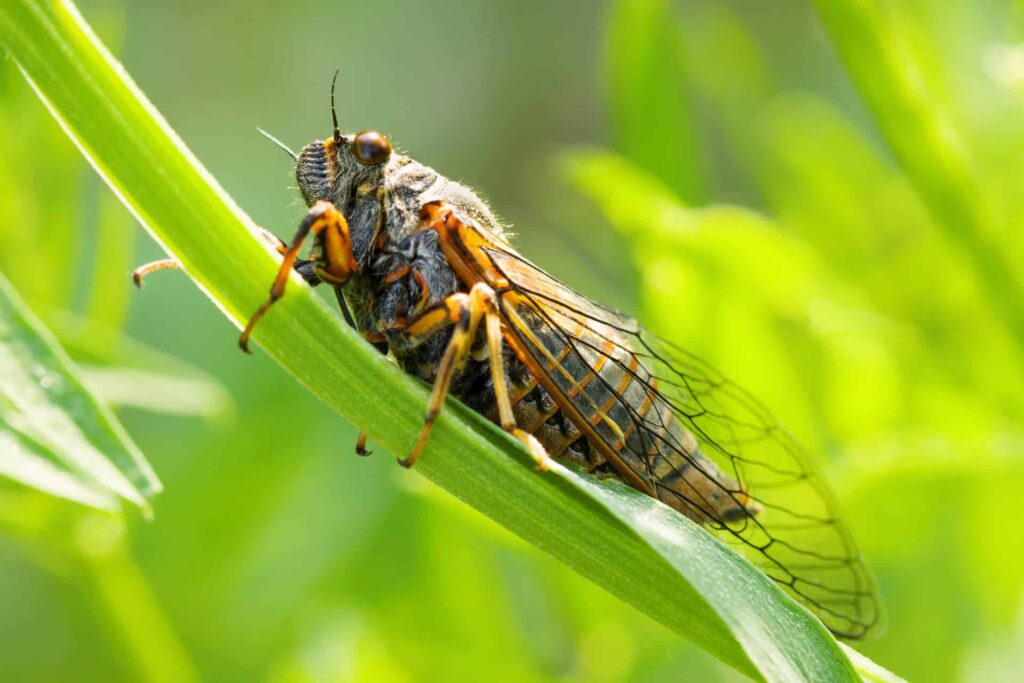
You attempt swatting flying insects and consistently miss as they dodge with seemingly impossible reaction speeds, suggesting these creatures perceive and process visual information fundamentally differently than vertebrate visual systems enable.
Insect compound eyes composed of hundreds to thousands of individual optical units (ommatidia) detect motion through rapid temporal resolution exceeding human capabilities by 3-4 times, while simultaneously providing nearly 360-degree visual fields and ultraviolet sensitivity creating sensory experiences entirely unlike human vision.
The fundamental differences between insect and human vision create advantages for these organisms requiring strategic pest management practices.
The Compound Eye
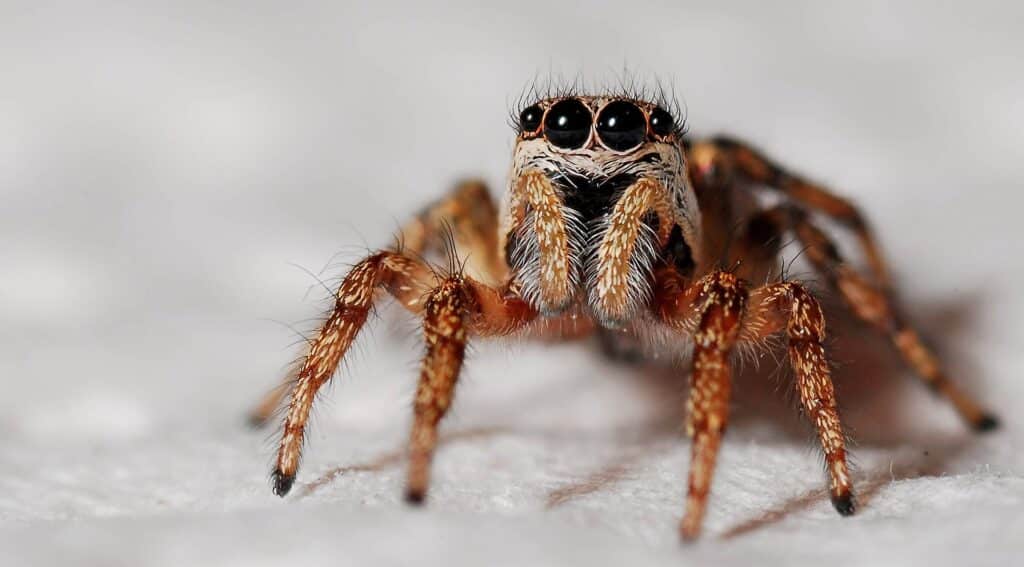
Insect compound eyes consist of multiple independent optical units creating mosaic vision with exceptionally wide fields of view compared to single-lens camera-type eyes found in vertebrates.
Each compound eye contains 100-30,000 ommatidia depending on species, with houseflies (Musca domestica) possessing approximately 4,000 ommatidia per eye while dragonflies (Anisoptera) demonstrate 28,000-30,000 per eye reflecting their specialized predatory lifestyles requiring exceptional visual acuity.
Individual ommatidia measure 10-100 micrometers diameter containing a lens (cornea and crystalline cone), light-sensitive photoreceptor cells (retinula cells), and screening pigments preventing light scatter between adjacent units. Each ommatidium captures light from a slightly different angle—typically 1-2 degrees angular separation—with collective coverage creating complete visual field representation.
Most flying insects demonstrate 300-360 degree horizontal visual coverage with significant dorsal and ventral components, enabling simultaneous monitoring of threats and opportunities from nearly all directions. Flies possess blind spots of just 10-20 degrees directly behind their heads, compared to humans’ 120-degree binocular field with substantial peripheral blind zones.
Flicker, Speed, and the Edge of Perception
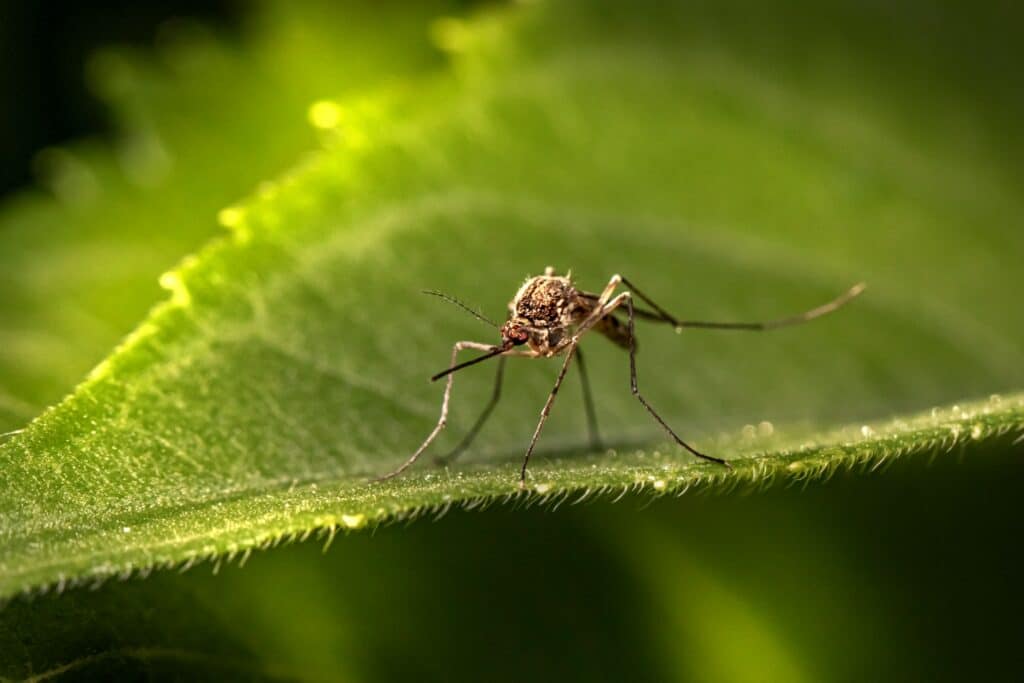
Insects process visual information 3-5 times faster than humans through shortened neural pathways and specialized motion-detecting neurons, enabling perception of rapid movements appearing as continuous blur to vertebrate observers.
- Flicker fusion frequency: Humans perceive continuous motion when light flickers above 50-60 Hz (cycles per second), with faster rates appearing as steady illumination. Flying insects demonstrate flicker fusion thresholds of 200-300 Hz for some species, meaning they perceive individual frames where humans see smooth continuous motion.
- Neural processing efficiency: Insect visual pathways from photoreceptor to motor response span just 20-50 milliseconds compared to human visual-motor responses of 150-250 milliseconds, enabling reflexive responses to threats or opportunities 3-5 times faster than vertebrate systems support.
- Motion-sensitive neurons: Specialized neurons in insect visual systems respond specifically to directional motion, with individual cells tuned to specific velocities and movement directions creating dedicated “motion detection circuits” enabling rapid identification of relevant environmental changes.
- Behavioral implications: High temporal resolution explains why insects successfully evade human attempts at capture—hand movements appearing rapid to humans provide insects with extended reaction windows enabling multiple evasive maneuvers before impact threat materializes.
Color Bands and Seeing What We Can’t
Insect photoreceptors demonstrate peak sensitivities in ultraviolet (300-400nm), blue (400-500nm), and green (500-600nm) wavelengths, creating color perception fundamentally different from human trichromatic vision based on blue, green, and red sensitivity.
- UV vision capabilities: Most insects possess photoreceptors sensitive to wavelengths of 300-380nm invisible to humans, revealing patterns on flowers, other insects, and environmental features completely undetectable by vertebrate vision. Butterflies (Lepidoptera) may possess 4-6 photoreceptor types including multiple UV-sensitive variants enabling color discrimination beyond human capabilities.
- Red blindness: Many insects lack photoreceptors responding to wavelengths above 600nm, rendering red colors as dark or invisible, though some species including certain butterflies and dragonflies evolved additional long-wavelength receptors enabling red detection supporting specialized feeding or mating behaviors.
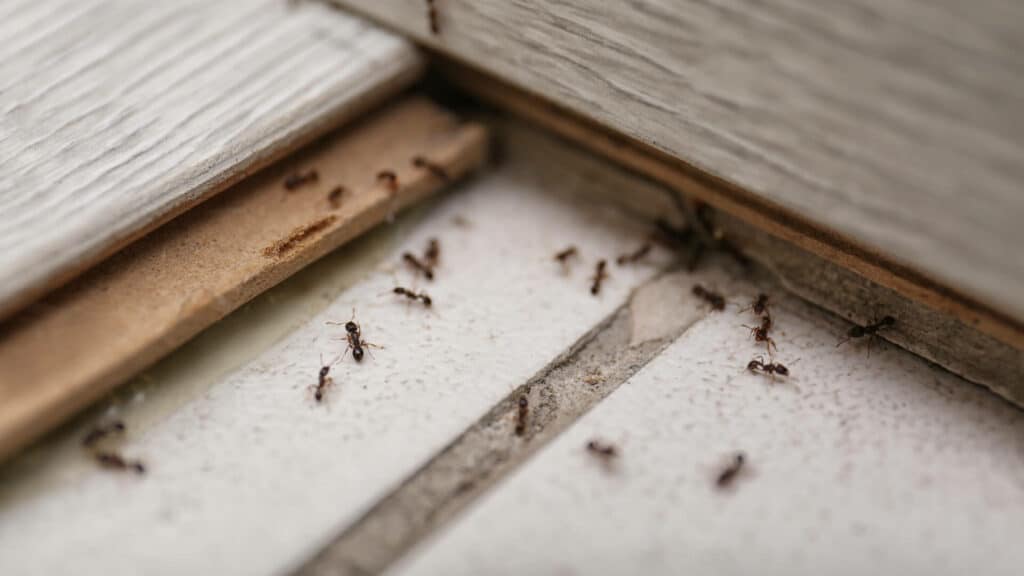
- Polarization detection: Specialized photoreceptor arrangements in dorsal eye regions detect polarized light patterns created by atmospheric scattering, enabling ants, bees, wasps, and other insects to determine solar position for navigation even when direct sun observation remains obscured by clouds or canopy.
- Functional applications: UV vision guides insects to nectar sources through floral patterns invisible to humans, facilitates mate recognition through UV-reflective body patterns, and aids predator avoidance through enhanced contrast detection in shaded environments where UV light penetration differs from visible wavelengths.
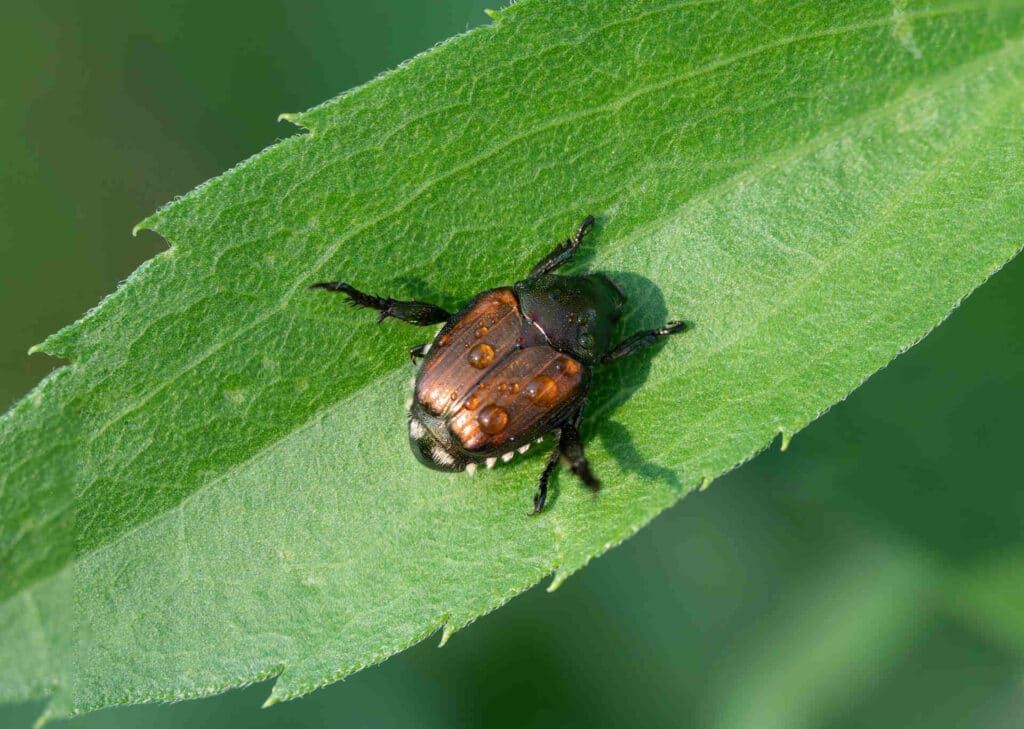
- Iridescence perception: Structural coloration producing iridescent displays on butterfly wings or beetle bodies appears dramatically different to insect vision compared to human perception, with UV components and polarization creating additional information channels supporting species recognition and mate selection.
How Insect Vision Shapes Behavior
Insect visual systems shape fundamental behaviors including predation strategies, escape responses, navigation methods, and social communication through specialized information processing matched to ecological requirements.
- Aerial predation: Dragonflies demonstrate exceptional prey capture success through visual tracking of target insects against complex backgrounds, with specialized neurons calculating interception trajectories enabling pursuit at flight speeds of 10-15 meters per second while maintaining visual lock on prey moving erratically to evade capture.
- Escape responses: Prey insects including flies and crickets possess motion-sensitive “escape neurons” triggering evasive behaviors within 20-30 milliseconds of detecting threatening movements, enabling jumps, rapid flight initiation, or directional evasion before predator strike completion.
- Navigation precision: Ants and bees integrate visual landmarks, polarized light patterns, and path integration (internal distance/direction tracking) creating cognitive maps enabling direct-route returns to nest locations across distances of 100-1,000 meters through complex environments without continuous trail following.
- Mate recognition: Visual signals including wing patterns, body coloration, and courtship displays utilize insect-specific color vision including UV components, with species-specific patterns preventing interspecific mating while enabling conspecific recognition from distances of 5-50 meters depending on signal intensity and background conditions.
- Foraging efficiency: Pollinators including bees and butterflies learn associations between specific color patterns (including UV components) and nectar rewards, demonstrating preference for previously rewarding flowers through visual memory formation requiring just 2-5 reinforced visits for stable learned responses.
When to Contact a Professional
Professional pest control services recognize that effective management requires accounting for pest sensory biology, with approaches incorporating knowledge of visual detection ranges, response times, and attraction cues specific to target species.
If you’re experiencing persistent pest problems with flying insects demonstrating exceptional evasion capabilities, dealing with species requiring specialized monitoring approaches, or need expert guidance on pest biology informing effective management strategies, contact Aptive today for a free quote and comprehensive evaluation with customized solutions regardless of how your specific pest species perceives their environment.