Call Now and Ask About the Winter Deal While it Lasts →

Sign-in to Account
Call Us

(855) 948-5816

aptive_pest_control_lockup-white

Find Service Area

How Fast a Cockroach Can Run (and Why They Change Direction So Suddenly)

Written by Aptive Pest Control December 3, 2025

Cockroaches move with remarkable speed and unpredictable directional changes making them extremely difficult to catch or swat, suggesting specialized locomotion adaptations enabling effective escape from threats. 

Understanding cockroach speed facts and cockroach movement mechanics explains their effectiveness at avoiding threats including humans attempting capture, reveals sophisticated sensory and motor systems enabling their success, and informs cockroach control strategies accounting for their evasive capabilities rather than relying on direct contact methods. The remarkable locomotion abilities cockroaches demonstrate reflect millions of years of predator pressure driving escape response evolution.

Exactly How Fast Can Cockroaches Run?

Precise measurements of cockroach running speeds reveal impressive absolute velocities that become even more remarkable when scaled relative to body size, demonstrating exceptional locomotor performance.

  • Absolute speed measurements: American cockroaches (Periplaneta americana)—the largest common household species—achieve running speeds up to 5.4 km/h (approximately 3.4 mph or 1.5 m/s) during maximum escape responses. While this seems modest in absolute terms, it represents remarkable performance for organisms measuring just 35-40mm body length.
  • Body-length scaling: Expressing speeds in body lengths per second provides size-independent performance metrics enabling comparisons across organisms. Cockroaches running at 1.5 m/s with 40mm bodies travel approximately 50 body lengths per second. For comparison, Olympic sprinters achieve roughly 6 body lengths per second, revealing cockroaches’ proportionally superior performance.
  • Human-scale equivalents: If humans could match cockroach proportional speeds, a 1.7-meter tall person would run approximately 85 meters per second or 306 km/h (190 mph)—faster than Formula 1 race cars. This hypothetical comparison emphasizes the remarkable relative performance cockroaches achieve.
  • Species variation: Different cockroach species demonstrate varying speeds correlating generally with body size. Smaller German cockroaches achieve slightly lower absolute speeds around 3 km/h but similar relative performance, while larger tropical species may exceed American cockroach speeds. Nymphs (juveniles) often demonstrate higher relative speeds than adults given lower body mass.

How Their Bodies Are Built for Speed

Cockroach bodies demonstrate multiple structural specializations optimizing running performance, with anatomy reflecting evolutionary pressures favoring rapid escape capabilities.

  • Leg structure and length: Cockroach legs demonstrate elongated segments particularly the femur and tibia providing extended stride length relative to body size. Long legs enable coverage of greater distances per stride cycle increasing overall speed while maintaining rapid leg cycling rates through efficient muscle leverage.
  • Muscle organization: Leg muscles demonstrate optimal organization for power and speed, with large femoral muscles providing propulsive force while lighter distal segments (tibiae and tarsi) reduce inertial loads enabling rapid leg cycling. This proximal muscle concentration with light distal segments optimizes running efficiency.
  • Exoskeleton properties: The chitinous exoskeleton provides structural support without excessive weight, with American cockroaches weighing just 1-3 grams despite 35-40mm length. Light body mass combined with powerful leg muscles produces high power-to-weight ratios essential for acceleration and top speed.
  • Low center of gravity: Cockroaches maintain dorsoventrally-flattened (top-to-bottom compressed) body forms creating low centers of gravity enhancing stability during high-speed running and rapid directional changes. This body plan prevents tipping during turns enabling aggressive maneuvering at speed.
  • Leg arrangement: Six legs arranged in tripod gait patterns (alternating triangles of three legs providing support) create stable locomotion even at high speeds. This gait enables continuous ground contact with at least three legs supporting body weight maintaining stability throughout stride cycles.

Why Cockroaches Change Direction So Often

The erratic zigzagging characteristic of cockroach escapes reflects evolved strategies confusing predator tracking and interception attempts rather than representing navigational errors.

Predator confusion strategy: Unpredictable direction changes prevent predators from anticipating future positions enabling interception. Straight-line escapes at constant velocity allow predators to predict positions and adjust strikes accordingly, while random turning creates uncertainty frustrating pursuit and capture.

Stochastic motor outputs: Even with identical sensory inputs, cockroach motor responses incorporate variability producing different turning patterns across repetitions. This behavioral stochasticity (randomness) prevents learning by predators who cannot predict specific escape trajectories even with repeated encounters.

Multiple movement phases: Escape responses typically proceed through phases including initial rapid acceleration away from threat, subsequent directional turns often perpendicular to initial direction, and eventual seeking of protective cover (cracks, crevices, darkness). Direction changes reflect transitions between these phases.

Environmental interaction: While neural programs generate basic turning patterns, actual trajectories also reflect environmental constraints including obstacles, surface features, and available shelter. Cockroaches adjust courses during running, integrating sensory information about surroundings with pre-programmed escape patterns.

Speed-maneuverability tradeoff: Maximum running speeds occur during straight-line running, with turns requiring deceleration for directional changes then re-acceleration. Cockroaches balance need for maximum distance from threats against benefits of unpredictable trajectories through strategic turning timing and degree.

What to Do if You Have a Cockroach Infestation

Professional pest control recognizes that impressive cockroach locomotor capabilities including speed, evasion, climbing, and squeezing along with their other resilient traits require comprehensive management approaches.

If you’re experiencing cockroach infestation problems where roaches consistently evade direct control attempts, suggesting established populations, or frustrated by inability to catch or eliminate visible roaches despite efforts, contact Aptive today for a free quote from a quality pest control service.
Learn more about cockroaches

American vs. Oriental Cockroaches - Guide to Identification and Prevention Can Cockroaches Make You Sick?: What You Should Know Can Cockroaches Survive Without Food or Water? Can Roaches Survive in the Cold? Can Roaches Survive in the Refrigerator? Cockroaches in the Dishwasher: Addressing a Hidden Infestation Cockroaches vs. Silverfish: Which Pest Is Tougher to Eliminate? Do Cockroaches Cause Allergies? Do German Cockroaches Live in Walls? Do Roach Bombs and Foggers Work? Does Boric Acid Kill Roaches? German Cockroaches - Identification and Prevention German Cockroaches in Electronics: Safeguarding Your Appliances German Cockroaches in Urban Foundations: What You Need to Know German Cockroaches vs American Cockroaches: What Are the Differences? Getting Rid of Cockroaches and How to Prevent Them  How Do Cockroaches Remember Safe and Unsafe Routes? How Do Cockroaches Survive in Drains After Bleach Cleaning? How Long Can a Cockroach Live Without Its Head? How to Get Rid of Cockroaches in Your Bathroom How to Prevent Cockroach Infestation After Traveling Keeping a Clean House: Why You Might Still Have Cockroaches Smokybrown vs American Roaches: What Are the Differences? Smokybrown vs. Oriental Cockroaches: Know the Difference The Hidden Places Roaches Hide During the Day The Hidden World of Brown-Banded Cockroaches The Impact of Moisture Leaks on Cockroach Infestations in Kitchens Tiny Brown Cockroaches Behind My Fridge: Are They German Cockroaches? What Are the Evolutionary Advantages of a Cockroach Exoskeleton Design? What Attracts American Cockroaches to Clean Homes? What Do Baby Cockroaches Look Like? What do Cockroach Eggs Look Like? What Does Cockroach Poop Look Like? What Roaches Learn from Their Surroundings (and How Fast) What Type of Cockroaches Are the Most Dangerous? What’s That Musty Smell? It Could Be Cockroaches Why Do American Cockroaches Prefer Sewer Systems and Drains? Why Do I Keep Finding Dead Roaches in My Garage? Why Do Oriental Cockroaches Prefer Damp Surfaces? Why Does Your Clean House Have Roaches? Why Roaches Hide Even When Lights Are Off

Curated articles for you, from our pest experts.

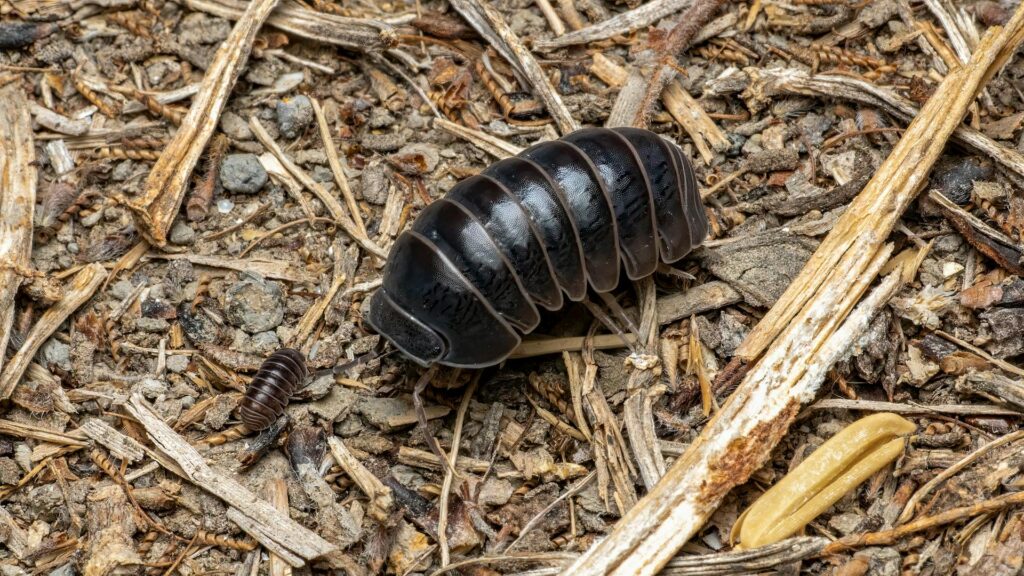
A Detailed Close-Up Image Of A Dark, Segmented Isopod Crawling On A Bed Of Dry Twigs, Leaves, And Soil. A Smaller Isopod Is Visible Nearby, Both Surrounded By Textured Ground Debris.

What Are Isopods in the Garden?

Isopods are beneficial soil-dwelling crustaceans commonly found in gardens where they play important ecological roles breaking down organic matter and contributing to soil health through their decomposition activities. These armor-plated creatures including...

Dec 2, 2025
A Vibrant Blue Wooden Door Framed By A Terracotta Wall And Surrounded By Cascading Green, Yellow, And Purple Vines, With House Number 5 Above The Entrance And A Small Stone Staircase Visible Inside.

The Importance of Sealing Entry Points Before Winter

You recognize that cooling fall temperatures trigger pest movement from outdoor environments into heated structures, with proper timing of exclusion work proving critical for preventing winter infestations.  Sealing entry points before winter proves important...

Dec 2, 2025
Modern Kitchen With White Cabinets, Stainless Steel Appliances, And A Decorative Tile Backsplash, Featuring A Wooden Tray With Decorative Items On The Countertop.

Why You Keep Finding Cobwebs Even After Cleaning

You remove cobwebs from corners, ceilings, and furniture only to discover new webs appearing within days or even hours, suggesting ongoing spider activity rather than residual old webs from previous occupation. Cobwebs keep reappearing after cleaning because active...

Dec 2, 2025
A Close-Up Image Of A Green Lacewing Insect Perched On A Fuzzy Plant Stem, Showing Its Delicate Transparent Wings With Iridescent Purple And Blue Hues And Long Antennae, Set Against A Dark Blurred Background.

Lacewings 101: What Are Lacewings?

Lacewings are among the most valuable beneficial insects in gardens and agricultural systems, with their voracious larvae earning the nickname "aphid lions" for their remarkable predatory capabilities consuming hundreds of pest insects during development. These...

Nov 25, 2025
A White Bookshelf Filled With A Vibrant Assortment Of Hardcover Books Arranged Neatly By Color, With Titles In Various Fonts And Sizes Creating A Visually Striking Rainbow Pattern.

Booklice 101: What Are Booklice?

Booklice are tiny, harmless insects commonly found in homes with moisture problems, feeding on mold, fungi, and microscopic organic matter rather than actually damaging books despite their misleading common name. These minute creatures appear suddenly in humid...

Nov 25, 2025
A Clean, Modern Bathroom Featuring A White Toilet, A Bathtub With A Handheld Showerhead, A Glass-Enclosed Shower Stall, And A Vessel Sink Mounted On A Black Vanity. The Walls Are Tiled, And A Window With Metal Security Bars Allows Natural Light Into The Space.

Why Do Bugs Appear in the Bathroom More Than Anywhere Else

You observe disproportionate pest activity in bathrooms compared to other household rooms, noticing insects including silverfish, cockroaches, and drain flies appearing regularly despite cleaning efforts, suggesting these spaces provide uniquely attractive...

Nov 25, 2025
A Close-Up Image Of A Dead Cockroach Lying On Its Back On A Rough Concrete Surface. Its Legs And Antennae Are Curled Upward, And Its Brown Exoskeleton Is Clearly Visible.

Why Dead Bugs Attract More Bugs

You observe clusters of dead insects in corners or windowsills accompanied by live insects including beetles, flies, or ants, suggesting decomposing insects attract additional pest activity rather than simply accumulating passively.  Dead insects release...

Nov 25, 2025
A Detailed Image Of A Basement Laundry And Utility Room With Exposed Wooden Beams, A Washer And Dryer, A Water Softener, Ductwork, And A Water Heater Unit Against A Brick And Wood-Paneled Wall.

Why Do Basements and Attics Host Different Pest Species

You observe distinct pest types in different vertical zones of your home—moisture-seeking insects in basements while overwintering pests concentrate in attics—suggesting these spaces provide fundamentally different environmental conditions attracting...

Nov 25, 2025
Modern Suburban Home With Beige Siding, Dark Shutters, And A Clean Black Roof, Featuring A Well-Maintained Lawn And A Triple Garage Under A Colorful Evening Sky.

Why Do Pests Return After Moving Out of a Home

You vacate a property expecting pest activity to cease without human occupancy, yet observe infestations reestablishing or intensifying during vacancy periods, suggesting pests exploit conditions created by unoccupied structures rather than requiring active human...

Nov 20, 2025
A Group Of Small Potted Plants, Including A Fuzzy Cactus, A Green Succulent, And A Taller Reddish Succulent, Arranged On A Windowsill With Sheer Lace Curtains Softly Filtering Daylight In The Background.

Why Windowsills Become Hotspots for Insect Activity

You observe disproportionate insect activity concentrated on windowsills compared to other household areas, finding dead and live insects including flies, ladybugs, spiders, and various other species clustered near glass surfaces.  Windowsills attract insects...

Nov 20, 2025

Take back your home with pest control today.