Call now and ask about our Summer Offer

Phone Icon
Phone Icon
Phone Icon
Phone Icon

(855) 948-5816

Aptive Pest Control Logo

Silverfish in My Bathroom: What Attracts Them and How to Get Rid of Them

Written by Aptive Pest Control
Updated: July 1, 2026 Published: July 24, 2024

Silverfish in the bathroom are drawn by one thing above everything else: moisture. These small, silver-gray, teardrop shaped bugs thrive in high-humidity environments, and bathrooms give them exactly what they need — leaky pipes, condensation on cold surfaces, poor ventilation, and damp grout lines that never fully dry. Getting rid of silverfish means cutting off their moisture supply, sealing entry points, and removing the starchy materials they feed on. For infestations that keep returning despite DIY efforts, professional treatment is the most reliable fix.

What are silverfish? 

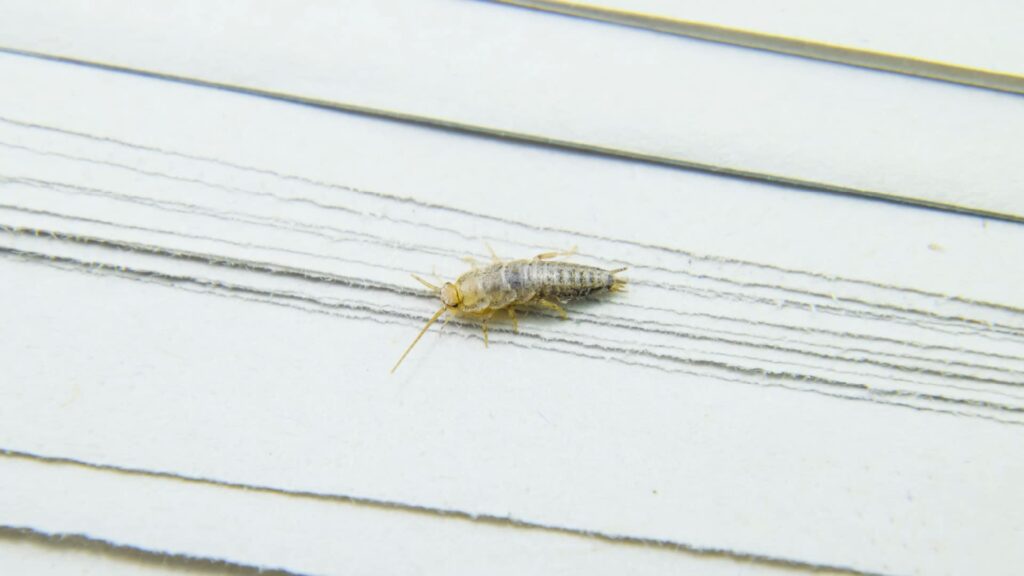
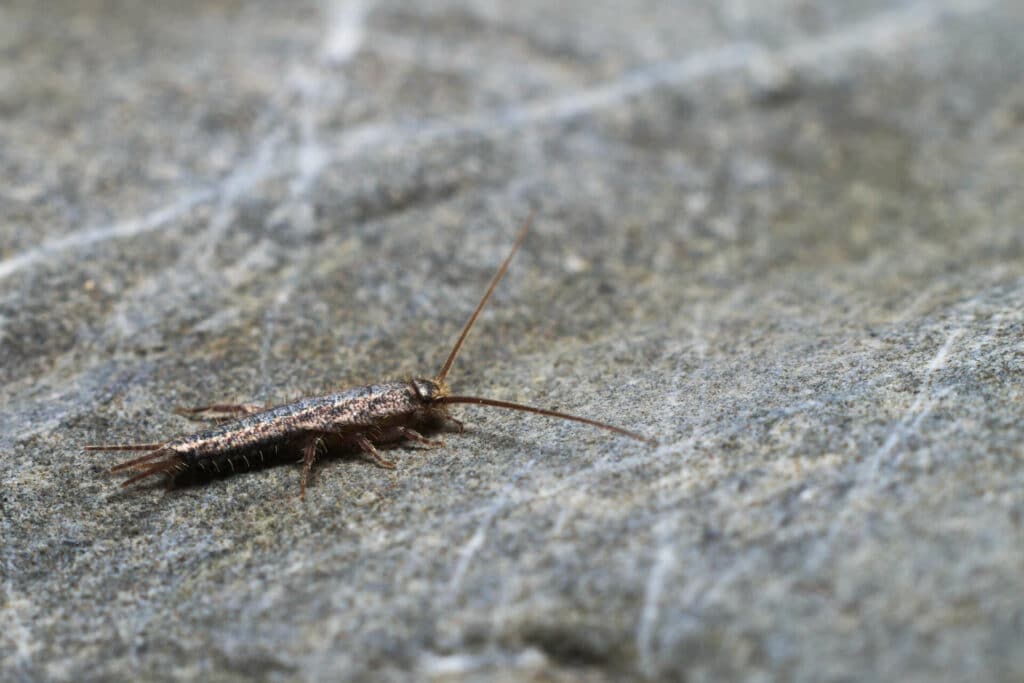
Silverfish are wingless insects about half an inch long, with a flattened, teardrop-shaped body covered in silvery-gray scales. Three bristle-like tails extend from the rear, and two long antennae point forward. When startled, they dart sideways in a quick, wriggling motion that looks like a fish swimming through water. That movement is where the name comes from.

Size-wise, these silver bugs are roughly the length of a fingernail and flat enough to squeeze under baseboards and behind wall tiles. They’re most spotted at night, when they come out to feed.

What attracts silverfish to my bathroom?

Bathrooms attract silverfish because they combine two things these insects need most: humidity and food. Silverfish thrive when humidity climbs above 75%, a level easily reached in a poorly ventilated bathroom during and after showers. 

Their diet is broader than most people expect. Silverfish feed on carbohydrates and starches, including:

  • Toilet paper and paper labels
  • Shampoo and soap residue
  • Linen and cotton towels 
  • Wallpaper glue
  • Dead skin cells 

Poor ventilation is usually the first thing to address when looking to help prevent silverfish. Reducing humidity and clearing out starchy clutter can help to quickly reduce the appeal of your bathroom.

Where do silverfish live in your bathroom?

Silverfish are nocturnal, spending daylight hours in dark, tight spaces near moisture. In bathrooms, common hiding spots include:

  • Behind the toilet and under the bathroom sink
  • Along baseboards and inside wall voids near water pipes
  • Under loose or cracked floor tiles
  • Inside cabinets storing toilet paper, cardboard, or cotton products
  • Around deteriorating caulk and grout where moisture collects

Spotting one silver bug during the day usually means a larger population is hiding close by. Silverfish can live for up to three years and continue reproducing throughout that time, so an overlooked infestation grows steadily.

Do silverfish come from drains?

No, silverfish do not live inside drains. They are attracted to moisture near plumbing, but drains offer no food source and no real shelter. Silverfish in bathtubs or sinks have typically fallen in and can't climb out on the smooth surface — they are not coming up through the pipes.

What are signs of silverfish infestation?

A live sighting is the clearest sign of silverfish infestation, but not the only one. A silverfish infestation also leaves behind physical evidence you can find without seeing the bugs themselves:

  • Yellowish stains on paper, fabric, or wall surfaces near their feeding areas
  • Small, irregular holes in toilet paper rolls, cardboard storage boxes, or any paper products kept in the bathroom
  • Tiny dark droppings, about the size of a fleck of black pepper, along baseboards or under the sink
  • Pale, papery molted skins in hidden corners — silverfish shed their exoskeletons multiple times throughout their lives

Multiple signs together usually mean a silverfish infestation is already past the early stage.

Where do silverfish come from?

Silverfish typically enter homes through cracks in foundations, gaps around pipes, and openings in walls. They often hitchhike indoors inside cardboard boxes, books, or other paper materials. Once inside, they're drawn to areas with high humidity and starchy food sources, which is why bathrooms, basements, and kitchens are their most common hideouts.

How to get rid of silverfish in your bathroom and help prevent them from returning

Getting rid of silverfish requires tackling moisture, access points, and food sources at the same time. Treating just one factor rarely works long-term.

1. Reduce humidity: Run the exhaust fan during showers and for at least 20 minutes afterward. Target indoor humidity below 50%. A small dehumidifier helps in bathrooms without adequate ventilation.

2. Fix leaks: A slow drip under the sink is enough to sustain a silverfish population. Repair pipes, check for condensation on cold water lines, and replace deteriorating caulk around the tub and shower. A moisture meter is useful for identifying problem areas before they become visible.

3. Seal entry points: Caulk gaps around pipes, behind baseboards, and along the floor-wall junction where silverfish enter and nest.

4. Remove food sources: Store toilet paper and other paper products in sealed containers rather than on open shelves. Clear cardboard boxes from under the sink.

5. Inspect entry points seasonally: Silverfish often hitchhike into homes inside cardboard boxes and paper products. Check packages before bringing them inside.

6. Apply diatomaceous earth: Food-grade diatomaceous earth can help work as a natural treatment. Dust lightly along baseboards, behind the toilet, and under the sink. It damages the silverfish's outer shell and causes dehydration. Cedar, peppermint, and citrus essential oils may also help deter silverfish and can be sprayed in similar areas.

When should you call a professional?

Store-bought silverfish spray can kill silverfish they touch, but they rarely reach the eggs or the hidden populations living inside walls, under flooring, or in crawl spaces. Silverfish eggs are tiny, well-concealed, and resistant to most over-the-counter products. If DIY efforts have not reduced activity after a few weeks, a deeper silverfish infestation is almost certainly the reason.

Professional silverfish control reaches the areas standard products cannot. Aptive Pest Control experts identify harborage points, apply targeted treatments in wall voids and hidden areas, and assess the moisture conditions driving the infestation. If you are dealing with a silverfish problem that keeps coming back, contact us for a free quote. Our team will give you a clear plan for how to help get rid of silverfish — and keep them out.

FAQs about silver fish in bathroom 

Q: Why do I have silverfish in my bathroom?

Silverfish are attracted to high humidity and the starchy materials bathrooms tend to have in abundance: toilet paper, cotton towels, shampoo labels, cardboard storage boxes. Poor ventilation, leaky pipes, and condensation all keep moisture levels high enough for silverfish to survive. If you are seeing them regularly, a moisture source has almost certainly not been addressed.

Q: Should I be worried if I see a silverfish?

Silverfish don't bite, don't carry disease, and aren't directly dangerous to people. One visible silverfish, though, often signals a larger hidden population nearby. Over time, they can damage paper products, clothing, books, and wallpaper. The concern is less about the individual bug and more about what a sighting tells you: that humidity in the home is high enough to support them.

Q: Do silverfish come from drains?

No, silverfish don't live inside drains or in standing water. They are attracted to the moisture that collects around bathroom plumbing, but drains offer no food and no nesting space. Silverfish found in bathtubs or sinks have usually fallen in while exploring the bathroom at night and can't climb back out on smooth surfaces.

Q: What naturally kills silverfish in the bathroom?

Food-grade diatomaceous earth is a natural option. Sprinkled along baseboards and behind the toilet, it damages the outer shell of silverfish and dehydrates them without chemical sprays. Cedar oil, peppermint oil, and citrus essential oils can also act as deterrents when applied to common hiding areas. These natural methods work best as part of a broader strategy, however to fully address an infestation and reach hiding spots, professional silverfish control is the recommended long-term solution.

Q: Do silverfish bite or sting?

No, silverfish have no stinger, and their mouthparts are designed for chewing soft materials like paper and starch, not for biting people. There are no recorded cases of silverfish biting humans. 

Curated articles for you, from our pest experts.

A Detailed Image Of A Norway Rat Walking Across A Log Surrounded By Ivy And Dead Leaves In An Outdoor Setting.

The Top 6 Most Common Pests in Georgia

Georgia’s pest activity is shaped by a humid subtropical climate, long warm seasons, and a landscape that ranges from barrier islands and salt marshes to the rolling Piedmont and the Blue Ridge foothills.

Jan 21, 2026
A Close-Up Image Of A Brown Roof Rat Perched On A Weathered Green Metal Lantern, With Its Large Ears, Long Whiskers, And Inquisitive Eyes Facing The Camera. The Background Is Softly Blurred With Dappled Light And Trees.

The Top 5 Most Common Pests in California

California's Mediterranean and semi-arid climates with mild winters, extended warm seasons, and diverse microclimates create ideal conditions for numerous pest species remaining active year-round...

Jan 19, 2026

Contact us.

Aptive has silverfish control experts in a city near you. Call us anytime.

silverfish control near me

Aptive has local silverfish control experts ready to serve you. Search for your zip code to find a branch in your area.

Get a quote

Aptive is here to help you build a personalized silverfish control plan based on your needs.

Take back your home with silverfish control today.