Warm temperatures, seasonal humidity, and diverse landscapes make the Southeast an ideal environment for a wide range of arachnids. While spotting them indoors can feel unsettling, most species are simply passing through or seeking shelter as conditions change outdoors.
Below are 10 common arachnids found in the Southeastern U.S., what makes them unique, and where homeowners are most likely to encounter them.
The 10 Common Southeastern Arachnids at a Glance
Here’s a quick reference to some of the most common arachnids homeowners encounter across the Southeast. By comparing habitats and activity patterns, it’s easier to understand why certain species show up where they do, helping you stay comfortable, one home at a time.
| Arachnid Type | Primary Habitat | Web Builder | Most Active Time |
|---|---|---|---|
| Brown recluse | Indoor storage, sheltered outdoor debris | No | Night |
| Black widow | Outdoor structures, shaded corners | Yes | Night |
| Southeastern wandering spider | Yards, wooded edges, or occasionally indoors | No | Night |
| Wolf spider | Ground-level outdoor areas | No | Night |
| Yellow garden spider | Gardens, tall vegetation | Yes | Day |
| Carolina wolf spider | Sandy soil, open areas | No | Night |
| Daddy longlegs | Damp indoor or outdoor spaces | No | Day |
| Jumping spider | Walls, windows, or fences | No | Day |
| Spiny orb-weaver | Shrubs, trees, or gardens | Yes | Day |
| Scorpions | Dry debris, ground-level shelter | No | Night |
1. Brown Recluse Spider (Loxosceles reclusa)
The brown recluse is one of the most recognized spiders in the Southeast. True to its name, it prefers undisturbed areas and typically avoids human activity.
Brown recluses are light brown with a distinct violin-shaped marking on their back. Indoors, they’re most often found in storage spaces such as closets, basements, attics, and rarely used boxes. Outdoors, they may shelter beneath woodpiles, rocks, or debris near the foundation.
These spiders prefer quiet spaces, so reducing clutter and keeping storage areas organized can help limit the number of encounters. Consistent spider activity indoors may also indicate entry points that allow spiders and the insects they pursue to enter.
2. Southern Black Widow Spider(Latrodectus mactans)
The southern black widow is easily identified by its glossy black body and red hourglass marking on the underside of its abdomen. This species is widespread across the Southeast, particularly in warm, shaded environments.
Black widows typically build irregular webs in low-traffic outdoor areas such as sheds, crawl spaces, woodpiles, utility boxes, and beneath outdoor furniture. They usually remain hidden and avoid disturbance whenever possible. Keeping exterior storage areas tidy and limiting clutter near the home’s foundation can help reduce suitable harborage sites.
3. Southeastern Wandering Spider (Anahita punctulata)
The southeastern wandering spider stands out because it doesn’t rely on webs to catch prey. Instead, it actively hunts, which means homeowners may see it moving across floors, walls, or patios.
These spiders are generally brown or gray with long legs and strong vision. In the Southeast, they are most commonly found in wooded areas and landscaped yards, and sometimes indoors during warmer months or during seasonal shifts. Because wandering spiders are mobile, sealing gaps around doors, windows, and foundations is important for limiting indoor sightings.
4. Wolf Spider (Family Lycosidae)
Wolf spiders are among the most commonly encountered spiders in the Southeastern U.S. They are large, fast-moving, and often mistaken for more concerning species due to their size.
These spiders prefer outdoor environments like lawns, mulch beds, gardens, and wooded areas. Indoors, they’re most likely to appear in garages, basements, or ground-level rooms, especially as temperatures fluctuate.
Wolf spiders don’t build webs and typically move along the ground. Keeping vegetation trimmed back from the home and reducing moisture around the foundation can help discourage activity in the area.
5. Yellow Garden Spider (Argiope aurantia)
The yellow garden spider is one of the most visually striking arachnids in the Southeast. With bold black-and-yellow markings and large circular webs, it’s often spotted in gardens, tall grass, and landscaped areas during late summer and early fall.
These spiders tend to stay outdoors and remain in their webs, rebuilding them regularly. They’re rarely found inside homes and generally keep to quiet outdoor spaces. Routine yard maintenance can help manage where webs appear, particularly near walkways or outdoor seating areas.
6. Carolina Wolf Spider (Hogna carolinensis)
The Carolina wolf spider is the largest wolf spider species in North America and is common throughout the Southeast. It prefers sandy soils, open fields, and wooded edges. This species is primarily nocturnal, which means homeowners may notice it crossing driveways, patios, or garage floors at night.
Like other wolf spiders, it hunts rather than builds webs. Managing exterior lighting that attracts insects and sealing gaps around garages can help reduce nighttime encounters near the home.
7. Daddy Longlegs (Harvestmen – Order Opiliones)
Often mistaken for spiders, daddy longlegs are actually a different type of arachnid. They are extremely common throughout the Southeast and are frequently found in damp, shaded areas.
Indoors, they may appear in basements, crawl spaces, garages, or utility rooms. Outdoors, they’re often found beneath leaves, logs, or stones. Since they’re drawn to moisture, addressing humidity issues and improving ventilation can help reduce their presence indoors.
8. Jumping Spider (Family Salticidae)
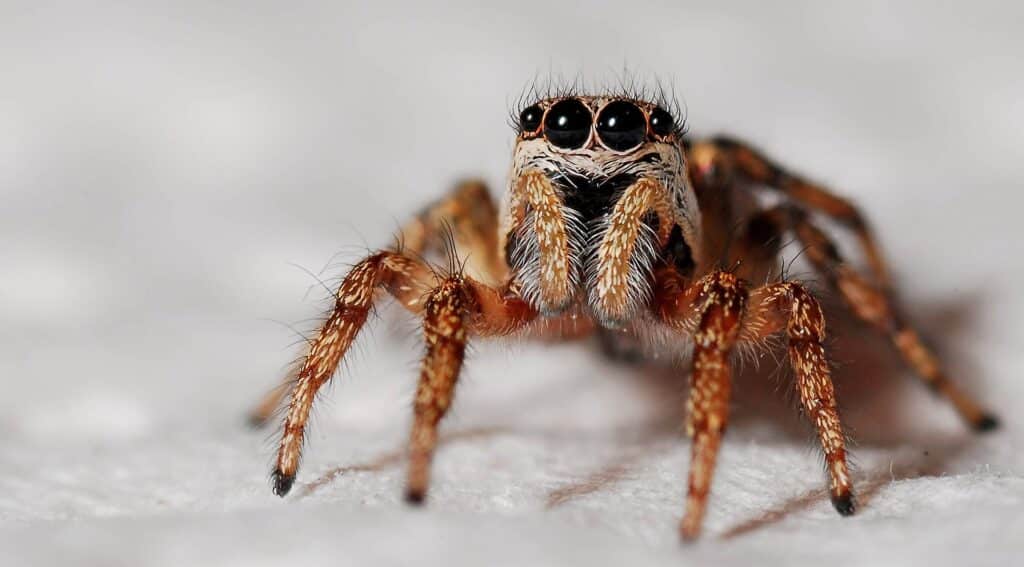
Jumping spiders are small, compact arachnids known for their quick movements and distinctive eye patterns. They’re active during the day and are commonly seen on walls, windowsills, decks, and fences.
Rather than building webs, jumping spiders rely on sight and short jumps to catch prey. Their curiosity sometimes brings them into visible indoor spaces. Sealing window frames and maintaining exterior surfaces can help limit entry points.
9. Spiny Orb-Weaver (Gasteracantha cancriformis)
The spiny orb-weaver is one of the most unique-looking spiders in the Southeast. Its brightly colored body and short spines make it easy to identify, and its orb-shaped web is often found between shrubs or tree branches.
This species is most active during warmer months and typically remains outdoors. Webs may appear overnight in gardens or along pathways. Regular landscaping and trimming back shrubs near walkways can help manage web placement.
10. Scorpions
While less common than spiders, scorpions are still part of the arachnid population in some Southeastern areas, particularly in dry or rural environments.
Scorpions prefer to hide under rocks, logs, and debris and are most active at night. Indoors, they may appear in basements or ground-level spaces when conditions outside change. Reducing outdoor clutter and sealing foundation gaps can help limit activity near the home.
Where Arachnids Are Most Commonly Found Around Homes
Different parts of a property support arachnid activity in different ways. Understanding where sightings happen can help explain why they’re occurring.
- Near foundations: Cracks, expansion joints, and shaded edges
- Garages and basements: Low traffic and stable conditions
- Landscaped areas: Mulch, shrubs, ground cover, and garden borders
- Outdoor structures: Sheds, fences, decks, and utility boxes
Homes with dense landscaping or consistent moisture nearby tend to see higher outdoor activity.
Why Arachnids Appear Around Southeastern Homes
Arachnids are often drawn to homes for the same reasons as other pests: shelter, moisture, and food sources. Seasonal changes, landscaping features, and small structural gaps can all influence how often they’re seen.
Spiders found indoors often follow insects that have already entered the home. That’s why spider activity can sometimes point to broader pest pressure rather than a standalone issue.
Seasonal Activity Patterns to Know
Arachnid sightings in the Southeast tend to follow predictable seasonal rhythms:
- Spring: Increased outdoor movement as insects become more active
- Summer: Peak visibility, especially web-building species
- Fall: Higher chance of indoor sightings as temperatures fluctuate
- Winter: Reduced activity, though sheltered spaces may still host occasional movement
These patterns are influenced more by environmental conditions than by population growth.
How to Reduce Arachnid Activity Around Your Home
Small environmental adjustments can influence how often arachnids appear near living spaces:
- Keep shrubs and mulch pulled back from exterior walls
- Limit outdoor lighting that attracts insects close to entry points
- Store firewood and materials away from the structure
- Address drainage issues that create damp zones
Frequently Asked Questions About Southeastern Arachnids
Q. What makes arachnids different from insects commonly found in homes?
Arachnids differ from insects in both structure and behavior. They have 8 legs, no antennae, and 2 main body sections, whereas insects have 6 legs, antennae, and 3 body segments.
This distinction affects how arachnids move, hunt, and interact with indoor environments, which is why their presence often feels different from that of typical household pests.
Q. Why does the Southeastern U.S. support such a wide variety of arachnids?
The Southeast offers long, warm seasons, moderate winters, and higher humidity, all of which support stable insect populations. Since arachnids rely on insects as a food source, these conditions create an environment where many species can thrive year-round rather than seasonally.
Q. Do certain home layouts increase the chance of arachnid encounters?
Homes with crawl spaces, garages, or attached storage areas tend to experience more sightings because these areas provide stable temperatures and lower disturbance. These spaces act as transitional zones between outdoor and indoor environments.
Q. How small an opening can arachnids use to enter a home?
Many arachnids can pass through openings as small as a few millimeters. Tiny gaps around door frames, window seals, vents, or utility penetrations can be enough for them to enter, especially during seasonal shifts.
Q. How likely is it to be bitten by a spider indoors?
Spider bites indoors are relatively uncommon because spiders generally avoid contact with people. Most bites happen when a spider is accidentally trapped in clothing, shoes, bedding, or storage items. Casual contact, such as seeing a spider on a wall or floor, rarely leads to a bite.
Q. Are arachnids attracted to specific building materials?
Arachnids are not attracted to materials themselves, but rough or layered surfaces such as brick, stone, and wood siding offer more shelter and travel paths. These surfaces can also support insects, indirectly increasing arachnid activity.
Q. Do arachnids avoid brightly lit areas?
Yes, bright lighting exposes arachnids to predators and disrupts their hunting strategies. Since many prey insects gather around lights, arachnids often stay just outside illuminated areas where conditions are darker and more stable.
Providing Arachnid & Pest Control Solutions, One Home at a Time
Occasional sightings of arachnids are common in Southeastern homes. However, repeated indoor appearances, activity concentrated in living spaces, or sightings paired with those of other pests may indicate conditions warranting closer attention.
A pest control professional can help identify the arachnids present and assess factors like access points or insect activity that may be contributing. If arachnids keep returning, or if you want help managing conditions around your home, reach out to Aptive for a quote and to explore your options for effective spider control.