Parasitoid wasps are beneficial insects that parasitize other arthropods by laying eggs inside or on host insects, with wasp larvae consuming hosts from within, ultimately killing them while providing valuable natural pest control services in gardens, agricultural fields, and natural ecosystems.
These fascinating wasps represent thousands of species worldwide that have evolved highly specialized relationships with specific host insects including caterpillars, aphids, beetle larvae, and flies, making them important biological control agents.
What are parasitoid wasps?
Parasitoid wasps are insects belonging to several families within order Hymenoptera that reproduce by laying eggs inside or on other arthropod hosts, with developing larvae feeding on host tissues eventually killing hosts while completing their development.
Unlike true parasites that feed on hosts without killing them, parasitoids invariably kill their hosts during or upon completing development, functioning as specialized predators with extended juvenile feeding periods. Major parasitoid wasp families include braconid wasps, ichneumonid wasps, chalcid wasps, and trichogramma wasps, collectively comprising tens of thousands of species with incredibly diverse host specializations.
These wasps play crucial roles in natural pest control, with many species commercially bred for biological control programs targeting agricultural pests including caterpillars, aphids, whiteflies, and beetle larvae. Adult parasitoid wasps feed on nectar, honeydew, and pollen rather than hunting prey, with only their larvae functioning as parasitoids.
What do parasitoid wasps look like?
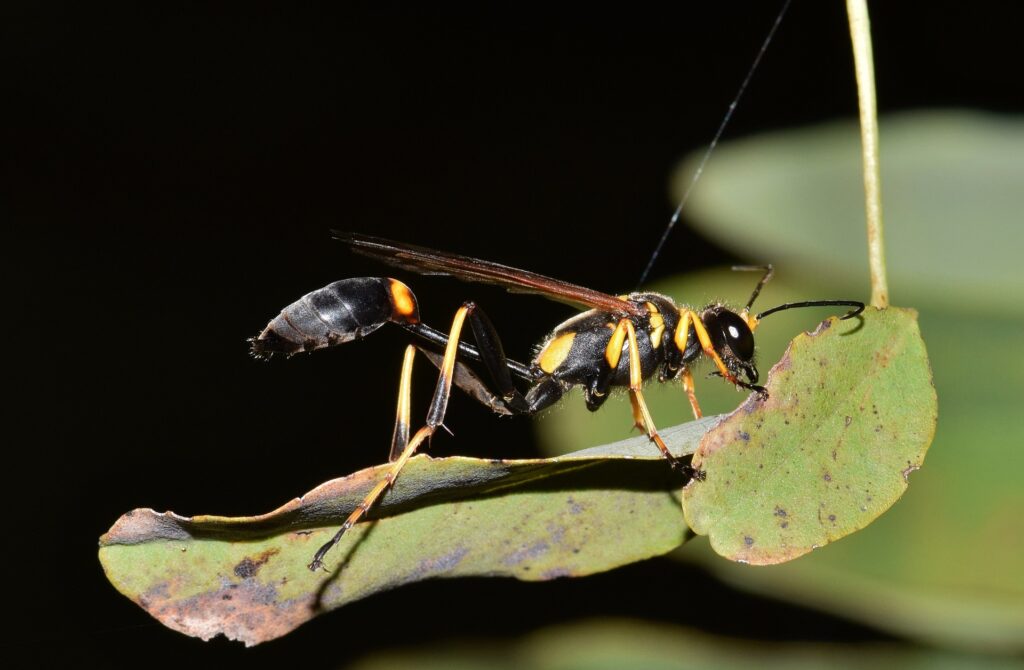
Parasitoid wasps vary dramatically in appearance depending on family and species, ranging from tiny wasps barely visible to the naked eye measuring less than 1mm to large ichneumonid wasps exceeding 2 inches with extremely long ovipositors used for reaching hosts hidden in wood.
Most parasitoid wasps have slender bodies with narrow “waists” connecting thorax and abdomen, long antennae, and thread-like or club-shaped ovipositors extending from abdomen tips used for depositing eggs in or on hosts. Coloration ranges from metallic blue, green, or bronze in chalcid wasps to black, brown, or orange patterns in braconid and ichneumonid species.
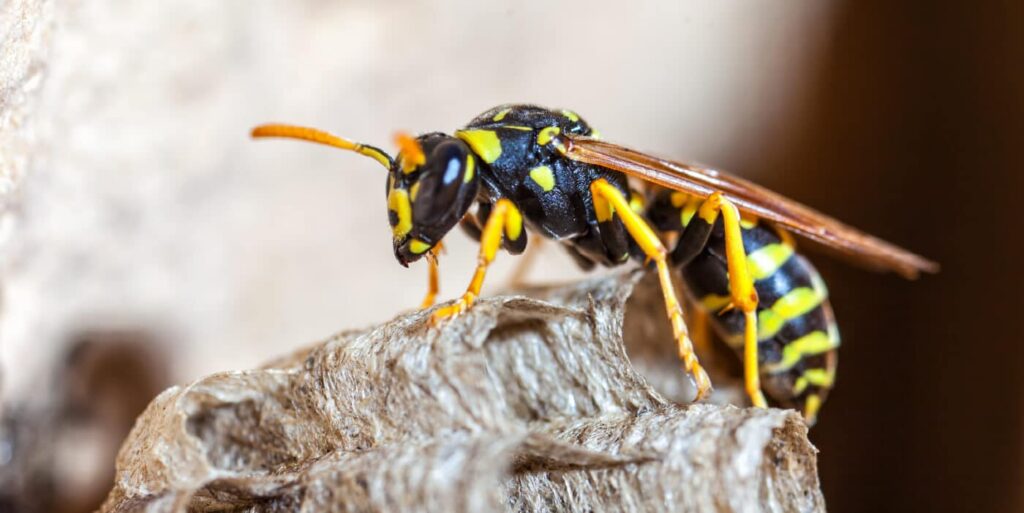
Many parasitoid wasps possess delicate, transparent wings with distinctive venation patterns, though some species are wingless. Their generally small size, slender builds, and non-aggressive behavior distinguish them from robust stinging wasps like yellow jackets and paper wasps that actively defend nests.
Are parasitoid wasps dangerous?
No, parasitoid wasps are not dangerous to humans or pets, with most species incapable of stinging people and those possessing stingers rarely using them defensively, instead reserving stinging capability exclusively for paralyzing or subduing insect hosts.
The vast majority of parasitoid wasp species have ovipositors modified for egg-laying rather than venom delivery, making them physically incapable of stinging vertebrates. Larger species including some ichneumonid wasps possess ovipositors that could theoretically pierce skin if handled roughly, though they lack venom causing significant pain or reactions and almost never attempt defensive stinging.
Parasitoid wasps don’t build colonial nests defended by aggressive workers like social wasps, don’t seek out sugary foods attracting them to human activities, and generally ignore people entirely while searching for specific insect hosts. Their presence indicates healthy ecosystems with diverse insect populations rather than pest problems requiring control.
Where are parasitoid wasps found?
Parasitoid wasps inhabit virtually every terrestrial ecosystem worldwide from tropical rainforests to arctic tundra, wherever suitable insect hosts exist to support their specialized parasitic lifestyles, with highest diversity occurring in warm temperate and tropical regions.
These wasps frequent gardens, agricultural fields, forests, meadows, and even urban landscapes where flowering plants provide adult nectar sources and diverse insect populations supply hosts for reproduction. Parasitoid wasps actively search vegetation, leaf litter, soil surfaces, and tree bark seeking specific host species through chemical cues, visual signals, and vibrations produced by feeding larvae hidden within plant tissues or soil.
Some species parasitize household pest insects including clothes moth larvae, pantry pest beetles, and indoor flies, occasionally appearing inside structures while hunting these hosts. Their presence correlates strongly with abundant flowering plants supporting adult wasps and diverse arthropod communities providing parasitism targets throughout development.
What are the differences between parasitoid wasps and paper wasps?
Parasitoid wasps differ fundamentally from paper wasps in size, behavior, colony structure, and threat level, with parasitoid wasps being generally smaller solitary insects that parasitize other insects and rarely interact with humans, while paper wasps are larger social wasps building distinctive paper nests defended aggressively with painful stings.
Paper wasps measure 3/4 to 1 inch with brown, black, and yellow banded coloration, building exposed umbrella-shaped paper nests under eaves and in protected locations, while most parasitoid wasps are much smaller, often metallic or uniformly colored, and don’t construct nests.
Paper wasps are social insects living in colonies with reproductive queens and worker castes defending nests aggressively, whereas parasitoid wasps are typically solitary with each female independently seeking hosts without colonial cooperation. Paper wasps pose legitimate stinging threats to humans and pets near nests, while parasitoid wasps are harmless beneficial insects deserving protection.
What are the differences between parasitoid wasps and yellow jackets?
Parasitoid wasps differ dramatically from yellow jackets in appearance, behavior, aggression, and ecological roles, with parasitoid wasps being beneficial solitary parasites of pest insects that ignore humans, while yellow jackets are aggressive social wasps building large underground colonies and defending territories with coordinated painful stinging attacks.
Yellow jackets are robust wasps measuring 1/2 to 5/8 inch with distinctive black and bright yellow banded patterns, building paper nests containing thousands of workers that swarm defensively when disturbed. Parasitoid wasps vary in size but generally appear more delicate with slender bodies, lack bold yellow-black warning coloration, and exist as solitary individuals rather than defensive colonies.
Yellow jackets scavenge human foods and sugary drinks, creating nuisance problems at outdoor gatherings, while parasitoid wasps feed only on nectar and pollen, never approaching human foods. Yellow jackets represent legitimate pest control concerns requiring professional management, whereas parasitoid wasps provide free biological pest control services warranting protection.
How to know if you have a parasitoid wasp infestation
Parasitoid wasp presence indicates beneficial pest control rather than true infestations, though recognition helps identify them:
- Small wasps observed on vegetation: You might notice tiny to medium-sized slender wasps actively searching plants, appearing to investigate leaves and stems methodically while seeking host insects rather than gathering nest materials.
- Wasps visiting flowers frequently: It’s common to observe parasitoid wasps feeding on flower nectar throughout gardens, particularly on small-flowered plants including yarrow, dill, and fennel providing accessible nectar sources for diminutive species.
- Parasitized pest insects appearing: You’ll likely discover caterpillars with white cocoons attached externally, aphid “mummies” with circular emergence holes, or other dead/dying pest insects showing evidence of parasitoid development.
- No nest construction observed: You might notice these wasps present without any associated nest building, paper structures, or aggressive territorial defense typical of social wasps, confirming their solitary beneficial nature.
How to prevent a parasitoid wasp infestation
Preventing parasitoid wasps is unnecessary and counterproductive since they’re beneficial, but reducing their presence if desired:
- Reduce flowering plants near structures: Limit nectar-producing flowers immediately adjacent to buildings reducing adult parasitoid wasp foraging near entry points, though this eliminates their pest control benefits.
- Control pest insect populations: Eliminate aphids, caterpillars, and other potential host insects through appropriate management reducing parasitoid wasp attraction to properties seeking reproductive hosts.
- Seal structural entry points: Install screens on windows and doors, seal cracks and gaps preventing accidental indoor entry by parasitoid wasps searching for hosts, though they rarely enter intentionally.
- Consider preserving their benefits: Recognize parasitoid wasps as valuable biological control agents providing free pest management services, making their presence desirable rather than problematic in gardens and landscapes.
When to talk to the professionals
When dealing with wasp concerns around your property, professional pest control services offer accurate species identification distinguishing beneficial parasitoid wasps from aggressive stinging wasp species requiring wasp control and management. Our pest control technicians will perform a detailed inspection to assess the situation and develop a customized treatment plan based on the specific wasp species present, ensuring beneficial parasitoid wasps are preserved while problematic paper wasps, yellow jackets, or hornets are safely eliminated.
If you’re experiencing problems with wasps around your property, need expert identification to determine whether wasps require control or should be preserved for their benefits, or have discovered aggressive wasp nests requiring safe removal, contact Aptive today for a free quote.
FAQs about parasitoid wasps
Here are some commonly-asked questions from homeowners about parasitoid wasps.
Q: Do parasitoid wasps sting humans?
Most parasitoid wasps cannot sting humans as their ovipositors are modified exclusively for egg-laying in insect hosts rather than venom delivery, lacking the anatomical structures necessary for defensive stinging.
Some larger species including certain ichneumonid wasps possess ovipositors theoretically capable of piercing skin if roughly handled, though they lack painful venom and almost never attempt defensive stinging even when captured. Parasitoid wasps are solitary insects without nests to defend, eliminating the aggressive territorial behavior driving stinging responses in social wasps.
Their docile nature and focus on hunting specific insect hosts rather than interacting with humans makes stinging incidents extraordinarily rare even when parasitoid wasps are abundant.
Q: Are parasitoid wasps beneficial?
Yes, parasitoid wasps are extremely beneficial insects providing valuable biological pest control by naturally regulating populations of caterpillars, aphids, flies, beetles, and other pest insects that damage crops and gardens.
These wasps kill millions of pest insects annually without requiring pesticide applications, reducing agricultural losses and minimizing chemical inputs in farming systems. Many parasitoid wasp species are commercially bred and released for biological control programs targeting specific agricultural pests including tomato hornworms, cabbage worms, whiteflies, and various crop-damaging caterpillars.
Their presence indicates healthy ecosystems supporting diverse beneficial insect communities. Protecting parasitoid wasps through reduced pesticide use and providing nectar sources maximizes their pest control benefits in gardens and agricultural landscapes.
Q: What attracts parasitoid wasps?
Parasitoid wasps are attracted to flowering plants providing nectar and pollen for adult feeding, and to chemical cues released by their specific insect hosts or by plants damaged by those hosts signaling parasitism opportunities.
Many parasitoid wasps require flower nectar for energy and reproduction, with small-flowered plants including yarrow, dill, fennel, alyssum, and Queen Anne’s lace being particularly attractive to tiny species. Plants under attack by caterpillars or aphids release volatile chemical signals that parasitoid wasps detect from considerable distances, guiding them to infested areas where hosts are concentrated.
Some parasitoid wasps respond to host insect pheromones, frass, or feeding vibrations helping locate hidden larvae within plant tissues or soil for parasitism.