Wasps often build their nests close to homes, especially in areas that provide shelter and easy access to food and water, such as eaves, wall voids, in attics, sheds, or outdoor structures. Some wasps may even build nests in burrows underground or in trees. While many species look similar, their nesting habits can vary depending on the type of wasp and the environment around them. Understanding where do wasps live and build nests can help homeowners spot activity early and reduce the chances of a wasp infestation.
What does a wasp nest look like?
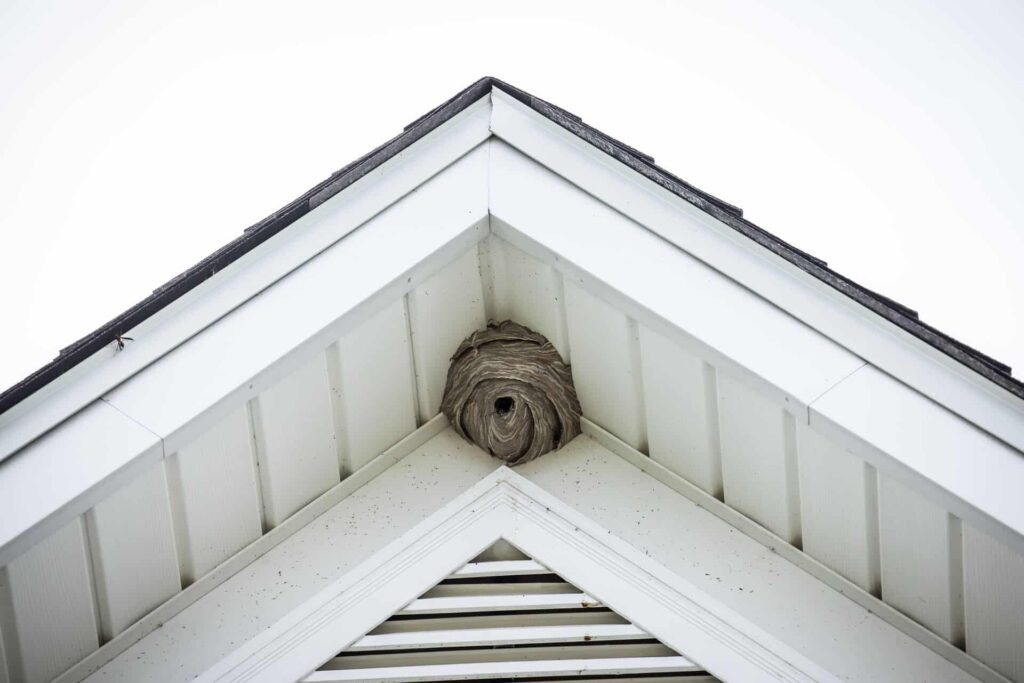
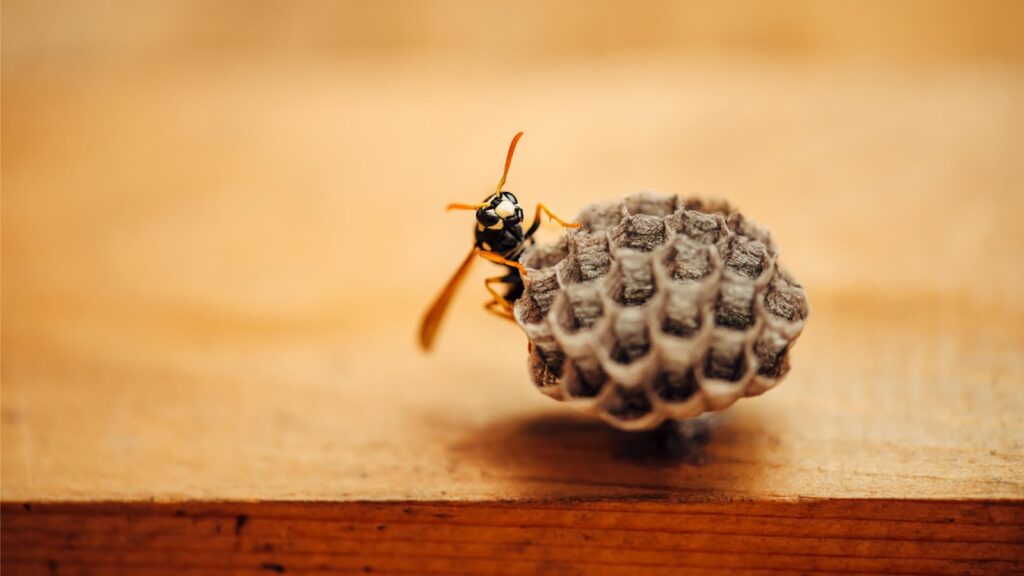
A wasp nest is typically made from a gray or tan, paper-like material that wasps create by chewing wood fibers and mixing them with saliva. Most nests have a rounded or umbrella-like shape and contain visible hexagonal cells, similar to a honeycomb.
Early in the season, a wasp nest may be as small as a golf ball; but as the colony grows, it can expand to several inches – or even larger – by late summer. Some wasp species build open, exposed nests, while others create enclosed, ball-shaped structures with a single entrance hole.
Where do wasps nest?
Wasps look for protected areas that allow them to safely build and expand their nests. These locations often provide shelter from weather, nearby food sources, and materials like wood fibers or mud that they use to construct nests.
Because of this, many wasp nests appear around structures such as homes, sheds, garages, play structures, and outdoor living areas. Identifying these common nesting spots, and what attracts wasps, can help homeowners detect early signs of activity and address potential problems before colonies grow larger.
Common places wasps nest around homes
Wasps may build nests in a variety of locations around residential properties. Some areas offer better protection and nesting conditions than others.
Under roof eaves and overhangs
Roof eaves, porch ceilings, and overhangs are common nesting spots for wasps. These areas provide shelter from rain and wind while still allowing easy access in and out of the nest. Paper wasps frequently build their small nests in these locations.
Inside wall cavities and attics
You may find wasp nests in attics, wall cavities, roof voids, or other inside structural spaces. Yellow jackets are especially known for nesting in hidden areas like these, where colonies can grow large without being noticed.
Underground burrows
Certain wasp species, particularly yellow jackets, commonly build nests underground. They often use abandoned rodent burrows or natural soil cavities to create their nests. Ground nests can be difficult to spot and may become dangerous if they are accidentally disturbed.
Trees and shrubs
Some wasps build hanging nests attached to tree branches or shrubs. These aerial nests may appear as gray, paper-like structures suspended from branches or other elevated surfaces.
Garage, sheds, and decks
Outdoor structures such as garages, playgrounds, sheds, and decks can also provide ideal nesting locations. These sheltered areas protect nests from weather and predators while allowing wasps easy access to nearby food sources.
Where different types of wasps live
Different wasp species prefer different nesting environments. Knowing which types of wasp nests you’re dealing with can help you identify the wasp species and understand their behavior.
Paper wasps
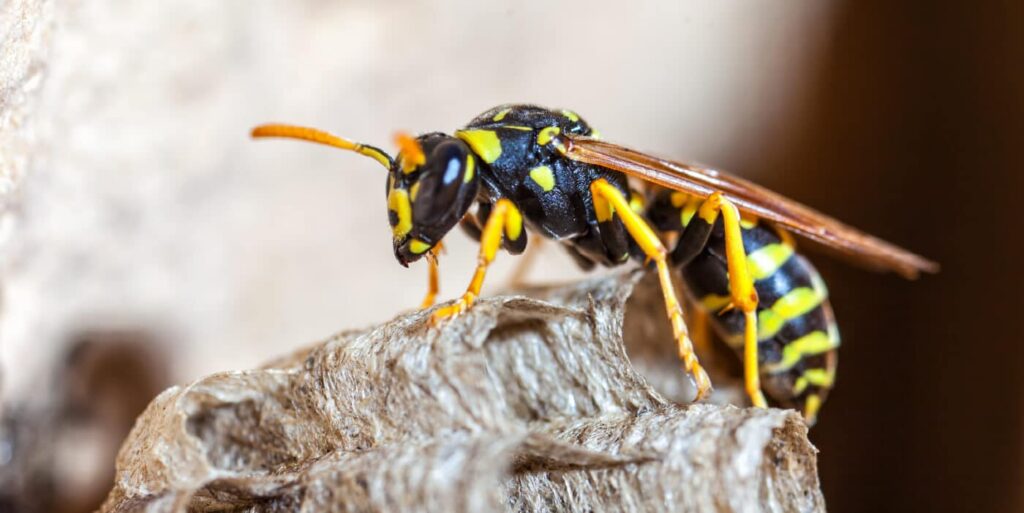
Paper wasps typically build small, open-faced nests that resemble an umbrella or exposed honeycomb. These nests are commonly found under eaves, porch ceilings, railings, and other sheltered structures.
Yellow jackets
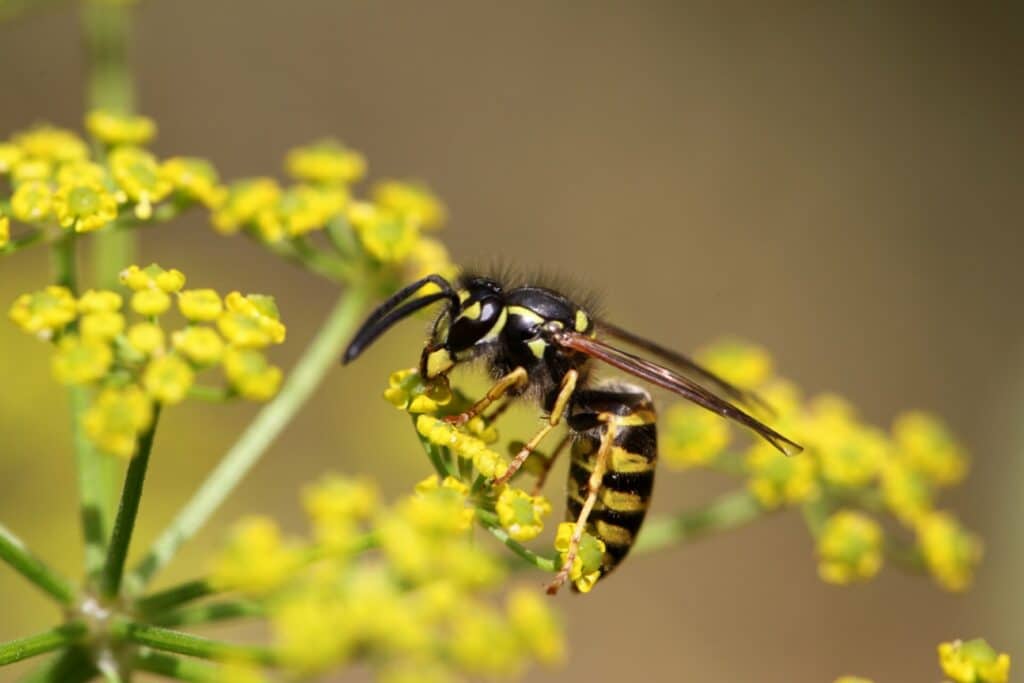
Yellow jackets often build nests underground, though they may also nest inside walls, attics, or structural voids. Their colonies can grow quickly and may become aggressive if disturbed.
Mud daubers
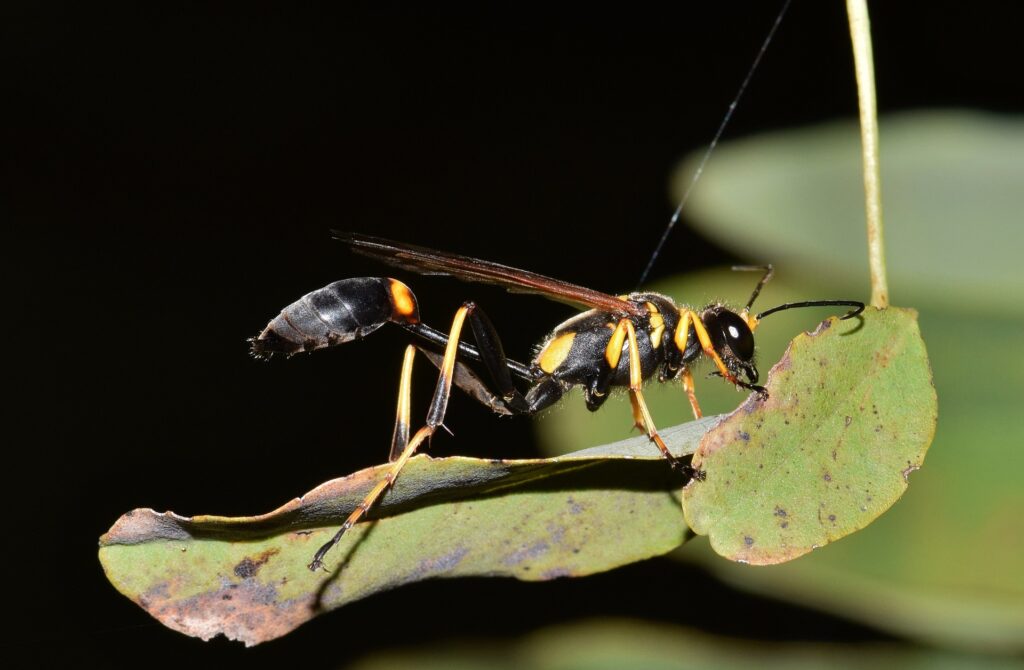
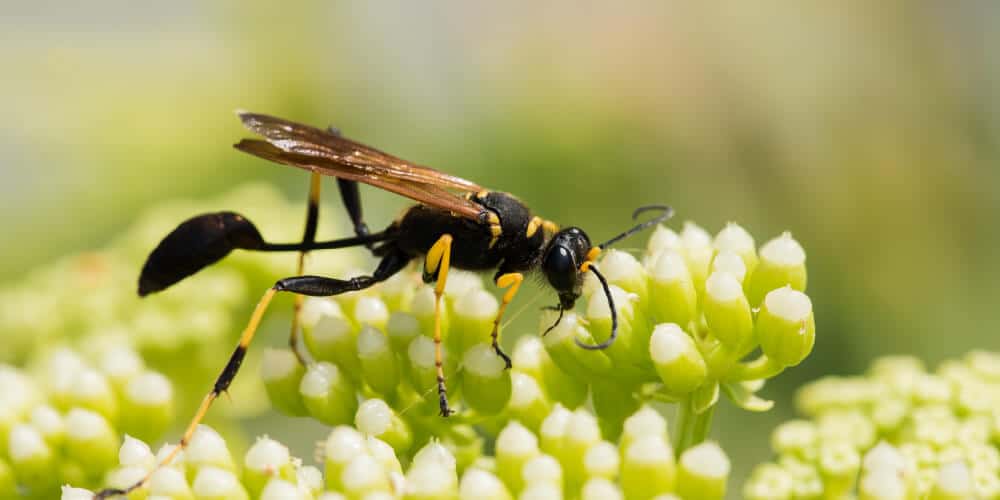
Mud daubers are solitary wasps that build tube-shaped nests made from mud. Their nests are often attached to walls, ceilings, garages, sheds, or other sheltered surfaces.
Signs of a wasps nest near your home
Sometimes wasp nests are easy to spot, but in other cases they may be hidden inside structures or underground. Watching for certain signs can help identify potential nesting activity early.
One common sign is increased wasp activity in a specific area. If you notice wasps frequently flying in and out of the same location, there may be a nest nearby. Wasps entering small openings in siding, rooflines, or the ground may also indicate hidden nests. Visible nests under eaves, trees, or outdoor structures are another clear indicator that wasps have begun building a colony.
Regularly inspecting these areas can help homeowners spot wasp nests before they grow larger. If you do discover a nest, it’s important to identify the type of nest and wasps you’re dealing with before taking any action.
When to call a professional for wasp nest removal
While small wasp nests may sometimes be addressed early, larger nests or aggressive species can be dangerous to handle on your own. Nests located inside walls, roofs, underground, or in trees may also require professional wasp nest removal.
Professional wasp control services can safely identify and remove a wasp nest while helping homeowners address conditions that may attract wasps. Aptive Pest Control offers year-round pest control services provided by trained professionals who can help manage wasp activity and protect your home from future infestations.
Where do wasps live FAQs
What wasps live in the ground?
Yellow jackets are the most common ground-nesting wasps. They strip old wood to create large, paper-like subterranean colonies in abandoned rodent burrows or hollow garden cavities. These nests can be difficult to spot until they are disturbed, which can cause wasps to aggressively defend their single entrance hole in the grass or soil.
Where do wasps go in the winter?
Most worker wasps and the old queen die off as temperatures drop, while newly mated queens seek shelter in protected areas like hollow logs, under loose bark, or within wall voids to enter a dormant state called diapause. These resilient queens remain hidden until spring, when they emerge to find a suitable location to begin building a new colony.
How long can a wasp live indoors?
A worker wasp typically lives for 12 to 22 days inside a house, though it will likely die much sooner without access to the food and water sources found outdoors. If you see a wasp in your home during the winter, it’s likely a hibernating queen that can survive for several months in a dormant state within wall voids or attics.
Can wasps live in house walls?
Certain species – like yellow jackets – are known for nesting within wall cavities, attics, or structural voids. They often enter through small gaps in siding or rooflines, where their colonies can grow significantly before being detected.
Do wasps nest in trees?
Many social wasp species – including paper wasps – build aerial nests suspended from sturdy tree branches or hidden within dense hollows for protection. These nests are constructed from a durable, paper-like pulp and are often strategically placed near reliable food sources like garden insects or fallen fruit.
What attracts wasps to build nests in a specific spot?
Wasps are drawn to locations that offer protection from the elements, such as roof eaves or dense shrubs, and proximity to resources like wood fibers and water. Areas near consistent food sources, such as outdoor trash cans or gardens with high insect populations, are also primary targets for new wasp nests.