California’s Mediterranean and semi-arid climates with mild winters, extended warm seasons, and diverse microclimates create ideal conditions for numerous pest species remaining active year-round unlike temperate regions experiencing winter dormancy reducing pest pressures.
Understanding these top pests in California enables recognition of warning signs, informs species-specific prevention measures, and reveals when professional pest control in California becomes necessary for effective management given challenging environmental conditions favoring pest establishment.
The Conditions That Attract Pests in California
Mild Mediterranean climate: Most of California experiences Mediterranean climate characterized by mild wet winters and warm dry summers with limited temperature extremes. Coastal areas maintain moderate temperatures year-round (10-25°C/50-77°F typically) while inland valleys experience hotter summers but still-mild winters.
This climate pattern prevents the prolonged freezing temperatures that kill or force dormancy in pest populations in colder regions, enabling continuous activity and reproduction throughout the year creating persistent pest pressures requiring year-round vigilance rather than seasonal concerns.
Extended breeding seasons: Mild conditions enable extended or continuous breeding for many species. While some pests demonstrate peak reproduction during optimal seasons, they never enter complete dormancy allowing populations to build continuously.
Rodents breed year-round in temperate California climates, cockroaches maintain indoor populations reproducing continuously in heated structures, termites remain active year-round given soil temperatures rarely dropping to inhibitory levels, and various insects demonstrate multiple annual generations rather than single seasonal cycles.
Water availability paradox: Despite California’s drought-prone reputation, urban areas provide concentrated water through irrigation systems, leaking pipes, condensation, and various artificial sources creating oases supporting moisture-dependent pests in otherwise-dry regions.
The Most Common Pests in California
Here are some of the most common types of pests you are likely to encounter in California.
1. Roof Rats
Roof rats (Rattus rattus), also called black rats or ship rats, represent the dominant rat species in California particularly in coastal and urban areas, contrasting with Norway rats (Rattus norvegicus) more-common in other U.S. regions. Their introduction during California’s settlement established populations that subsequently flourished given favorable conditions and limited natural predators.
Identification and behavior: Roof rats measure 30-45cm (12-18 inches) total length including 19-25cm (7.5-10 inch) tails exceeding body length, distinguishing them from Norway rats with shorter tails. They demonstrate sleek slender builds weighing 150-250g, black to gray-brown dorsal coloration with lighter ventral surfaces, large prominent ears, and pointed snouts. They’re excellent climbers preferring elevated locations including tree canopies, attics, upper building stories, and overhead utilities.
Access routes and entry points: California’s urban forest canopy provides natural highways with tree branches overhanging roofs creating direct access, utility lines (power, cable, telephone) connecting trees to structures, climbing vines and landscaping providing vertical access, and various architectural features including decorative trim and rough siding enabling climbing.
Once at roof level, rats exploit gaps under roof edges and eaves, damaged or missing roof vents, gaps around utility penetrations, broken attic vents and screens, and various structural openings.
Damage and health risks: Roof rats create multiple problems including structural damage through gnawing wood framing, insulation, and stored items, electrical fire hazards from chewing wire insulation creating short-circuit risks, contamination from urine and feces contaminating attic spaces and insulation.
They also cause disease transmission including leptospirosis, salmonellosis, and rat-bite fever (though direct transmission to humans remains uncommon), and secondary pest introduction through parasites (fleas, mites) seeking new hosts.
Detection signs: Roof rat presence manifests through distinctive evidence including droppings (12-18mm length, capsule-shaped with pointed ends) in attics, along rafters, and near food sources. You might also see grease marks (rub marks) along travel routes from body oils, gnaw marks on wood, wires, and various materials.
Scratching and scurrying sounds at night are also common in attics and walls, nests constructed from shredded insulation, paper, and plant materials, and occasional direct sightings particularly of juveniles that are less cautious than adults.
2. German Cockroaches
German cockroaches (Blattella germanica) represent California’s most-problematic indoor cockroach species despite several other species occurring in the state. They demonstrate an exclusive indoor lifestyle unlike peridomestic American and Oriental cockroaches occasionally entering from outdoors.
Identification: Adults measure 12-16mm (½-⅝ inch) appearing light tan to medium brown with two distinctive dark parallel stripes on pronotum behind head. Both sexes possess fully developed wings though they rarely fly, preferring rapid running. Their small size enables exploitation of tiny harborage spaces other species cannot access.
Reproduction and population growth: German cockroaches demonstrate extraordinarily rapid reproduction with females producing 30-40 offspring per egg case, 4-6 cases over lifetimes, egg-to-adult development in 6-12 weeks, and females carrying egg cases until near-hatching ensuring high offspring survival.
This reproductive capacity enables small founding populations to become major infestations within months, particularly problematic in California’s year-round warm conditions eliminating cold-season population reductions occurring in temperate climates.
Habitat and distribution: They concentrate in kitchens and bathrooms seeking warmth, moisture, and food, hiding behind appliances (refrigerators, stoves, dishwashers), inside cabinets and drawers, around sinks and plumbing, in wall voids near warmth sources, and various tight spaces throughout structures. Multi-family housing including apartments enables rapid spread through shared walls, plumbing, and electrical chases.
Health concerns: Beyond aesthetic revulsion, German cockroaches create legitimate health concerns through allergen production triggering asthma (40-60% of urban asthmatic children demonstrate cockroach sensitivity), mechanical pathogen transmission contaminating food and surfaces with bacteria from unsanitary environments, and psychological distress affecting quality of life.
California-specific challenges: California’s urban density, aging housing stock with numerous multi-family buildings, and mild climate create particularly challenging German cockroach control environments. Mediterranean climate enables outdoor survival of small populations entering structures, while dense housing facilitates rapid spread through connected units. Many California buildings’ age provides abundant structural gaps and harborage.
3. Termites
Multiple subterranean termite species occur in California with western subterranean termites (Reticulitermes hesperus) most-common throughout the state, desert subterranean termites (Heterotermes aureus) in arid regions, and invasive Formosan subterranean termites (Coptotermes formosanus) establishing in some coastal areas.
Biology and behavior: Subterranean termites maintain colonies in soil accessing wood through mud tubes constructed across exposed surfaces, with colonies containing 60,000 to over one million individuals depending on species and age.
They feed on wood cellulose leaving thin shells creating hollow-sounding wood, require soil moisture contact for survival, and swarm in spring (typically February-May in California) when mature colonies produce winged reproductives (alates) establishing new colonies.
California’s termite risk factors: Several factors create particularly high termite risks in California including Mediterranean climate with mild winters enabling year-round activity. Expansive soils (particularly clay) common in many areas also create foundation cracks providing entry routes, along with wood construction common in California housing.
Damage and detection: Termite damage develops silently within structural wood with minimal external evidence until substantial compromise occurs. Warning signs include mud tubes on foundations or walls providing visible evidence, discarded swarmer wings near windows following spring flights, wood damage including hollowing and surface blistering, and sagging floors or doors.
4. Ants
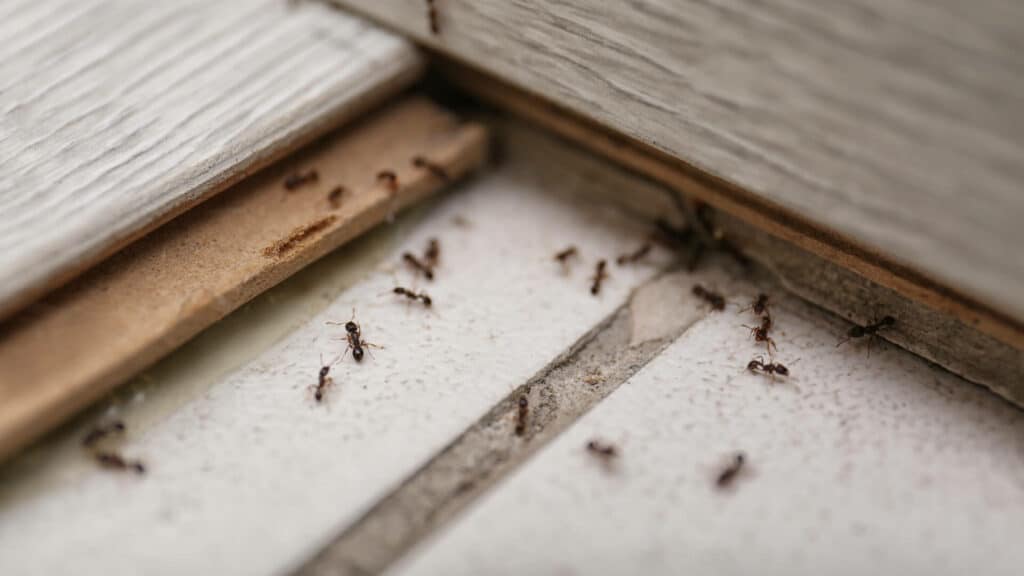
California hosts numerous ant species with several creating frequent household problems. Argentine ants (Linepithema humile) form massive invasive supercolonies dominating urban landscapes, displacing native species, and invading structures in overwhelming numbers. Odorous house ants (Tapinoma sessile) establish throughout the state creating persistent indoor problems. Pavement ants (Tetramorium caespitum) nest beneath paved surfaces. Carpenter ants (Camponotus species) excavate wood particularly in moisture-damaged areas. Fire ants (Solenopsis invicta) establish in southern California creating stinging hazards.
Argentine ant dominance: This invasive species demonstrates particular prevalence in California, establishing in the 1890s then spreading throughout the state. They form supercolonies with millions of workers, thousands of queens, and interconnected nests spanning landscapes.
Their year-round activity in California’s climate, aggressive displacement of native ants, and tendency to invade structures in massive numbers make them California’s most-problematic ant. Control proves extremely challenging given supercolony structure with treated areas quickly recolonized from untreated portions.
Seasonal patterns: While California ants remain active year-round, invasion patterns demonstrate seasonality with increased indoor activity during hot dry summer periods when outdoor moisture becomes scarce and during rainy winter periods when outdoor nests flood. Spring swarms of winged reproductives alarm homeowners though represent normal colony reproduction rather than sudden new problems.
Management challenges: California’s mild climate enables continuous outdoor ant activity eliminating winter population reductions. Urban density creates continuous ant habitat from property to property preventing isolated control.
Many California ant species including Argentine ants and odorous house ants form polygyne (multiple-queen) colonies or supercolonies making elimination extremely difficult compared to single-queen species. Effective management requires long-term commitment, comprehensive approaches, and often a professional pest control service intervention particularly for Argentine ant infestations.
5. Spiders
California hosts diverse spider species with several commonly encountered indoors. Black widow spiders (Latrodectus hesperus) represent California’s primary medically-significant spider occurring throughout the state, constructing irregular webs in protected outdoor locations though occasionally entering structures.
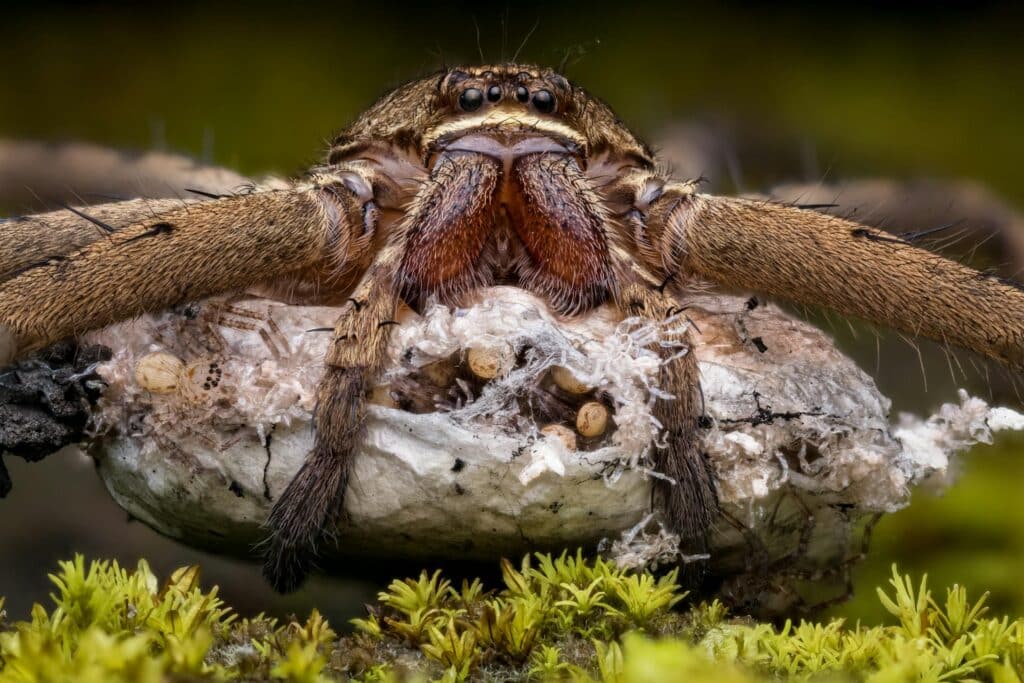
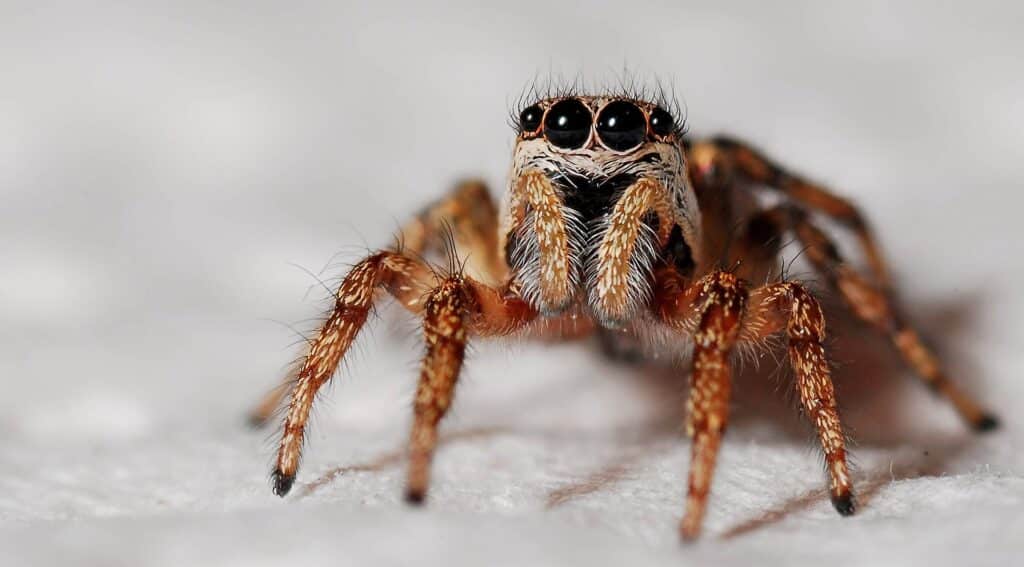
Cellar spiders (Pholcidae) are harmless beneficial predators common in basements and garages. Cobweb spiders (Theridiidae) build characteristic irregular webs throughout structures. Jumping spiders (Salticidae) actively hunt on walls and windows. Wolf spiders (Lycosidae) hunt on floors and ground surfaces.
Black widow concerns: While bites remain uncommon, black widows’ presence in California creates legitimate medical concerns given neurotoxic venom potentially causing severe symptoms. They prefer outdoor locations including yard clutter, woodpiles, meter boxes, and storage areas though occasionally enter structures or garages. Females demonstrate distinctive glossy black coloration with red hourglass ventral marking.
Beneficial aspects: Most California spiders are harmless, beneficial predators consuming pest insects including flies, mosquitoes, moths, and various other insects. Complete spider elimination proves both impossible and unnecessary given ecological benefits. Management should target reduction to acceptable levels rather than attempted eradication.
Choosing the Right Pest Control Support
Given California’s unique pest challenges including year-round activity, diverse problematic species, urban density facilitating spread, and environmental conditions favoring establishment, professional pest control services in California provide valuable expertise through species identification, appropriate product selection for California populations and regulations.
If you’re experiencing problems with pests in California or want preventive protection against most common pests in California, contact Aptive today for a free quote.