Call Now and Ask About the Winter Deal While it Lasts →

Sign-in to Account
Call Us

(855) 948-5816

aptive_pest_control_lockup-white

Find Service Area

What Are the Most Effective Ways to Deal with Mice in the Attic?

Written by Aptive Pest Control July 24, 2024

Mice in attic situations are often hidden from view, allowing the problem to escalate before detection.

Eliminating mice in your attic is possible with effective strategies. This guide will equip you with the knowledge to address this issue and restore peace to your home. 

Why Are Mice Drawn to My Attic? 

A Close-Up Image Of A Small Brown Mouse Standing On Green Moss, With Its Front Paws Raised And Black Eyes Looking Directly At The Camera.

Attics provide an ideal environment for mice, offering: 

  • Shelter: Attics are typically undisturbed and protected from the elements, providing a safe haven for mice to build nests. 
  • Warmth: Attics can retain heat, especially during colder months, creating a comfortable environment for these warm-blooded creatures. 
  • Accessibility: Entry points like gaps around vents, rooflines, or eaves can provide easy access for mice to enter your attic.

The Risks of Mice in the Attic 

Beyond the nuisance factor, a mice in attic infestation presents several dangers: 

  • Property damage: Mice will chew through anything, and their gnawing can damage electrical wires, insulation, and stored belongings. This can lead to electrical hazards and costly repairs. 
  • Disease transmission: Mice carry and transmit diseases through their droppings, urine, and parasites like fleas and ticks. These diseases can pose health risks to humans and pets. 
  • Allergens: Mouse droppings and dander can trigger allergies and asthma symptoms, especially in children and individuals with sensitivities. 

How to Get Rid of Mice in My Attic 

A Close-Up Of A Deer Mouse Sitting On Green Moss With A Blurred Leafy Background.

Eradicating mice in your attic requires a multi-step approach. Here’s a breakdown of potentially effective strategies: 

Seal Entry Points 

Mice can squeeze through surprisingly small openings. Conduct a thorough inspection of your attic and exterior walls, paying close attention to: 

  • Gaps around vents, soffits, and rooflines 
  • Holes around utility lines entering the attic
  • Cracks in the foundation or exterior walls 

Once identified, seal these entry points with appropriate materials like caulk, steel wool, or metal mesh. 

Eliminate Food Sources 

Mice are resourceful scavengers, but limiting their access to food sources within your home can discourage them. Here are some tips: 

  • Store food: Keep all food items in sealed containers, including pet food. 
  • Clean spills: Promptly clean up crumbs, spills, and food debris from floors and countertops. 
  • Garbage disposal: Maintain clean garbage cans with tight-fitting lids. 

Set Traps Strategically 

Traps can be an effective way to eliminate existing mice. Here are some key considerations: 

  • Trap selection: Choose snap traps or live traps depending on your preference and local regulations. 
  • Trap placement: Position traps along walls and in corners, where mice tend to travel. 
  • Bait selection: Use peanut butter, chocolate, or other enticing bait to attract mice. 
  • Trap monitoring: Check traps daily to remove captured mice and reset them as needed. 

Keep in mind, traps can be dangerous to you, kids, and pets. It’s always safer to contact a professional pest control provider. Many pros will dissuade from using poison inside a home.  A poisoned rodent can then die later in areas that cannot easily be gotten to and the smell from the rotting carcass can be overwhelming , requiring extraction from behind walls etc., which can be costly. Tread carefully when using baits or other DIY solutions with mice and rodents in the home. 

Consider Natural Repellents 

While not a guaranteed solution, some natural repellents may deter mice. These include: 

  • Peppermint oil: The strong scent of peppermint oil can discourage mice. Place cotton balls soaked in peppermint oil near potential entry points. 
  • Diatomaceous earth: This powder dehydrates mice and can be sprinkled around entry points (be sure to follow all safety precautions). 

Get Professional Help 

If the mice in attic problem persists despite your efforts, consider seeking professional pest control for mice. Professionals have the expertise and resources to effectively eliminate mice and prevent future infestations. They can: 

  • Identify the type of mice: Different mice species may require specific treatment methods. 
  • Implement targeted solutions: Experts use professional-grade products and exclusion techniques to address the infestation effectively. 
  • Offer long-term prevention plans: They can recommend strategies to minimize the risk of future infestations. 

Don’t Wait to Take Action 
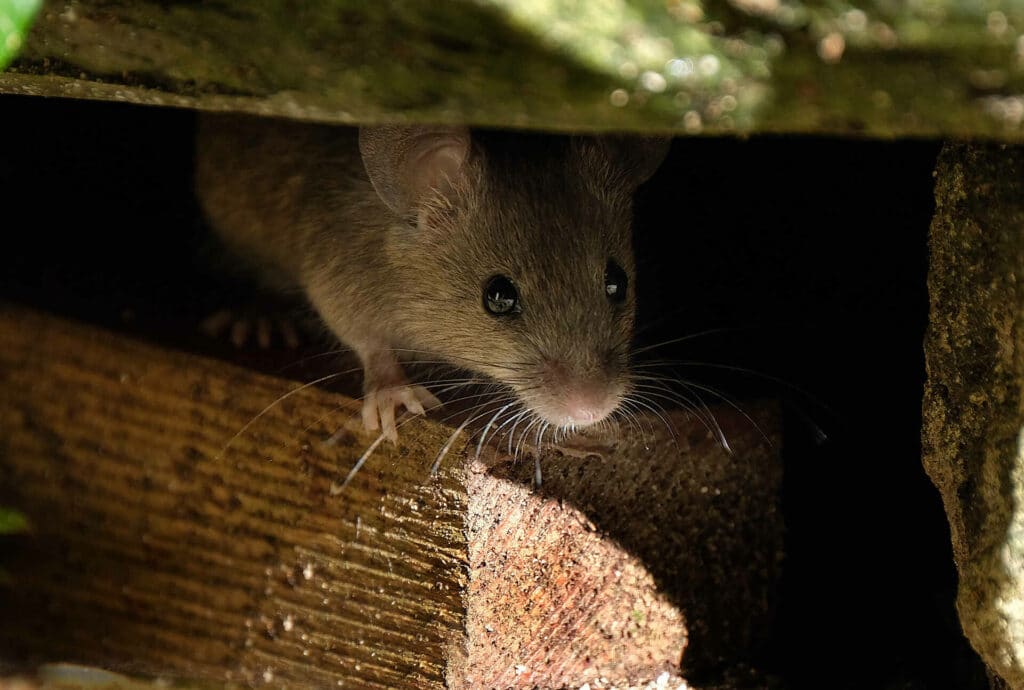
A Close-Up Image Of A Brown House Mouse Peeking Out From Underneath A Wooden Structure, With Its Whiskers, Eyes, And Fur Clearly Visible Against The Dark Background.

By following these steps and remaining vigilant, you can successfully address a mouse infestation and reclaim your attic space. 

Remember, a proactive approach is key. Early detection and intervention can prevent a minor problem from growing into a costly and hazardous situation. 

If you have more questions about rodent pest control or require professional pest control services, contact our team today. 
Curated articles for you, from our pest experts.

A Detailed Close-Up Image Of A Dark, Segmented Isopod Crawling On A Bed Of Dry Twigs, Leaves, And Soil. A Smaller Isopod Is Visible Nearby, Both Surrounded By Textured Ground Debris.

What Are Isopods in the Garden?

Isopods are beneficial soil-dwelling crustaceans commonly found in gardens where they play important ecological roles breaking down organic matter and contributing to soil health through their decomposition activities. These armor-plated creatures including...

Dec 2, 2025
A Vibrant Blue Wooden Door Framed By A Terracotta Wall And Surrounded By Cascading Green, Yellow, And Purple Vines, With House Number 5 Above The Entrance And A Small Stone Staircase Visible Inside.

The Importance of Sealing Entry Points Before Winter

You recognize that cooling fall temperatures trigger pest movement from outdoor environments into heated structures, with proper timing of exclusion work proving critical for preventing winter infestations.  Sealing entry points before winter proves important...

Dec 2, 2025
Modern Kitchen With White Cabinets, Stainless Steel Appliances, And A Decorative Tile Backsplash, Featuring A Wooden Tray With Decorative Items On The Countertop.

Why You Keep Finding Cobwebs Even After Cleaning

You remove cobwebs from corners, ceilings, and furniture only to discover new webs appearing within days or even hours, suggesting ongoing spider activity rather than residual old webs from previous occupation. Cobwebs keep reappearing after cleaning because active...

Dec 2, 2025
A Close-Up Image Of A Green Lacewing Insect Perched On A Fuzzy Plant Stem, Showing Its Delicate Transparent Wings With Iridescent Purple And Blue Hues And Long Antennae, Set Against A Dark Blurred Background.

Lacewings 101: What Are Lacewings?

Lacewings are among the most valuable beneficial insects in gardens and agricultural systems, with their voracious larvae earning the nickname "aphid lions" for their remarkable predatory capabilities consuming hundreds of pest insects during development. These...

Nov 25, 2025
A White Bookshelf Filled With A Vibrant Assortment Of Hardcover Books Arranged Neatly By Color, With Titles In Various Fonts And Sizes Creating A Visually Striking Rainbow Pattern.

Booklice 101: What Are Booklice?

Booklice are tiny, harmless insects commonly found in homes with moisture problems, feeding on mold, fungi, and microscopic organic matter rather than actually damaging books despite their misleading common name. These minute creatures appear suddenly in humid...

Nov 25, 2025
A Clean, Modern Bathroom Featuring A White Toilet, A Bathtub With A Handheld Showerhead, A Glass-Enclosed Shower Stall, And A Vessel Sink Mounted On A Black Vanity. The Walls Are Tiled, And A Window With Metal Security Bars Allows Natural Light Into The Space.

Why Do Bugs Appear in the Bathroom More Than Anywhere Else

You observe disproportionate pest activity in bathrooms compared to other household rooms, noticing insects including silverfish, cockroaches, and drain flies appearing regularly despite cleaning efforts, suggesting these spaces provide uniquely attractive...

Nov 25, 2025
A Close-Up Image Of A Dead Cockroach Lying On Its Back On A Rough Concrete Surface. Its Legs And Antennae Are Curled Upward, And Its Brown Exoskeleton Is Clearly Visible.

Why Dead Bugs Attract More Bugs

You observe clusters of dead insects in corners or windowsills accompanied by live insects including beetles, flies, or ants, suggesting decomposing insects attract additional pest activity rather than simply accumulating passively.  Dead insects release...

Nov 25, 2025
A Detailed Image Of A Basement Laundry And Utility Room With Exposed Wooden Beams, A Washer And Dryer, A Water Softener, Ductwork, And A Water Heater Unit Against A Brick And Wood-Paneled Wall.

Why Do Basements and Attics Host Different Pest Species

You observe distinct pest types in different vertical zones of your home—moisture-seeking insects in basements while overwintering pests concentrate in attics—suggesting these spaces provide fundamentally different environmental conditions attracting...

Nov 25, 2025
Modern Suburban Home With Beige Siding, Dark Shutters, And A Clean Black Roof, Featuring A Well-Maintained Lawn And A Triple Garage Under A Colorful Evening Sky.

Why Do Pests Return After Moving Out of a Home

You vacate a property expecting pest activity to cease without human occupancy, yet observe infestations reestablishing or intensifying during vacancy periods, suggesting pests exploit conditions created by unoccupied structures rather than requiring active human...

Nov 20, 2025
A Group Of Small Potted Plants, Including A Fuzzy Cactus, A Green Succulent, And A Taller Reddish Succulent, Arranged On A Windowsill With Sheer Lace Curtains Softly Filtering Daylight In The Background.

Why Windowsills Become Hotspots for Insect Activity

You observe disproportionate insect activity concentrated on windowsills compared to other household areas, finding dead and live insects including flies, ladybugs, spiders, and various other species clustered near glass surfaces.  Windowsills attract insects...

Nov 20, 2025

Take back your home with pest control today.