Phone Icon

(855) 948-5816

Aptive Pest Control Logo

Tiny Jumping Spiders in My Houseplants: Are They Harmful?

Written by Aptive Pest Control
Updated: May 22, 2026 Published: July 23, 2024

Have you noticed tiny leaping spiders in your indoor garden? There are likely jumping spiders in your houseplants. 

Despite their agility, jumping spiders are often misunderstood creatures. This article will explore their nature and address the common question, "Are jumping spiders dangerous?" It'll also provide insights on how to manage their presence around your indoor plants. 

Jumping Spiders in My Houseplants
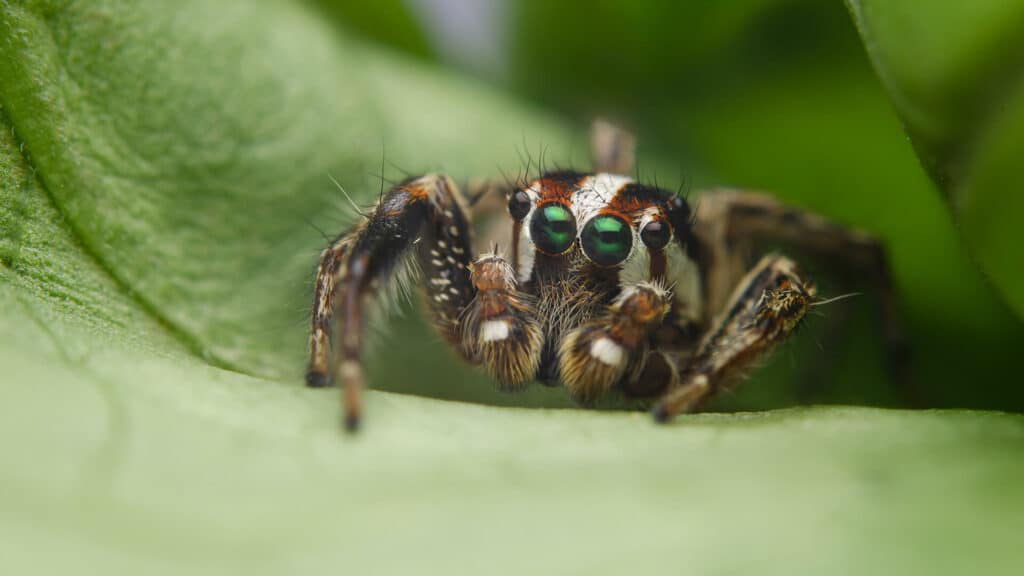
A Detailed Close-Up Image Of A Jumping Spider With Large, Bright Green Eyes And Distinctive Markings, Perched On A Green Leaf.

Jumping spiders are small, typically measuring between 1/8 to 3/4 of an inch. They have a compact shape and a distinctive pattern of four pairs of eyes, which give them excellent vision. In houseplants, these spiders are often seen sunning themselves on leaves or leaping from plant to plant in search of prey. 

You can identify jumping spiders by looking for: 

  • Sudden Movement: They're noticeable by their quick, jerky movements as they jump across spaces. 
  • Silken Retreats: Look for tiny silk retreats in the joints of plant leaves where they hide at night or during molting. 
  • Vivid Colors and Patterns: Many jumping spiders are brightly colored or have unique patterns. 

Are Jumping Spiders Dangerous?

 Contrary to common fears, jumping spiders are not dangerous to humans. They are non-aggressive toward people, and their bite is rare, typically only occurring if they are provoked and unable to escape. The bite of a jumping spider is usually harmless, with effects comparable to those of a mosquito bite in terms of irritation and redness. 

Do Spiders Impact My Plants' Health? 

Jumping spiders are predatory by nature, feeding on a variety of common household pests, such as gnats, aphids, and fruit flies. This makes them beneficial, as they help control pest populations that could otherwise damage your houseplants. They do not feed on the plants themselves and are unlikely to cause any harm to your greenery. 

Should I Get Rid of Jumping Spiders? 

Given their beneficial role in controlling pests, there is usually no need to remove jumping spiders from your houseplants unless their presence is excessive. Coexisting with these spiders can be advantageous for your indoor garden. 

Understanding Other Common Spiders Around Your Home
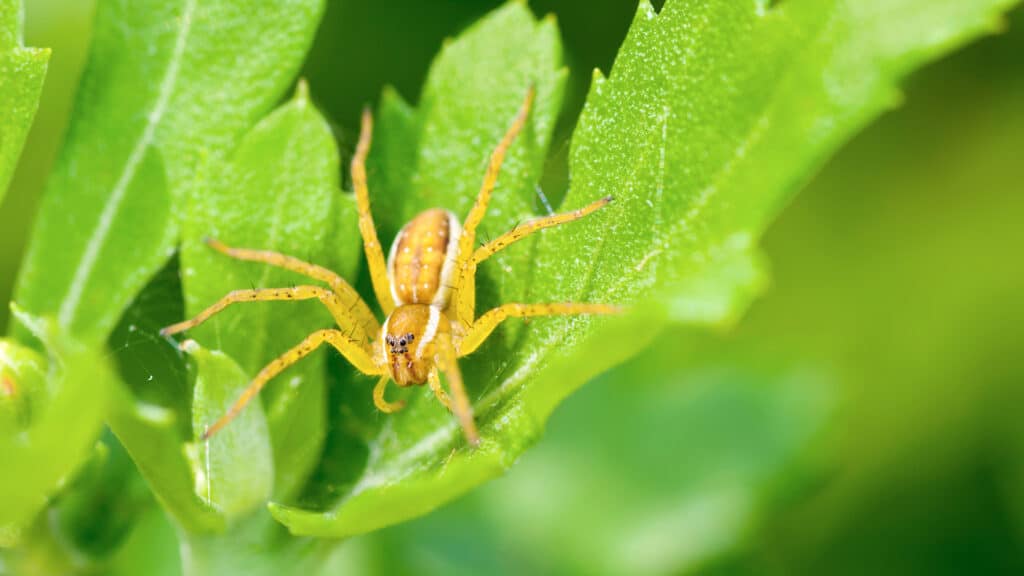
A Detailed Close-Up Image Of A Brown Recluse Spider With Distinctive Markings On Its Body, Resting On A Vibrant Green Leaf.

While jumping spiders in your houseplants can be beneficial, being familiar with other spiders you might encounter around your home is equally important. 

Common types of household spiders include: 

  • American House Spider: Typically found in dark, secluded areas, these spiders are known for spinning tangled webs. They pose no harm to humans and actively contribute to controlling flies, mosquitoes, and other small insects. 
  • Wolf Spiders: Often mistaken for tarantulas due to their large size and hairy bodies, wolf spiders are ground dwellers that do not spin webs but instead hunt their prey on foot. They are generally harmless and tend to avoid human interactions. 
  • Cellar Spiders: Commonly seen in damp, cool places like basements or cellars, these spiders are easily recognized by their long, skinny legs and the messy, irregular webs they create. They are harmless and prey on small insects and other spiders, including venomous species. 
  • Brown Recluse: Recognizing this spider is critical because of its venomous bite. Marked by a distinctive violin-shaped figure on its back, the brown recluse prefers secluded, undisturbed areas. Although not aggressive, it can bite when threatened, which requires cautious handling. 

Managing Spiders in Your Home
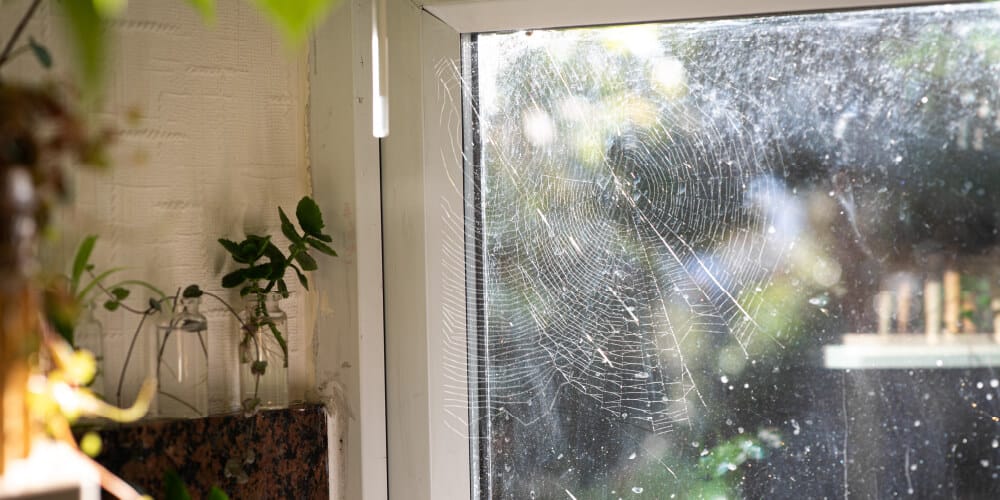
A Spider Web Covering The Inside Of A Window With Sunlight Streaming In, Plants On A Windowsill, And A Blurred View Outside.

Reducing clutter in areas like attics, garages, and basements can prevent spiders from settling in. Regular cleaning and careful storage of items in sealed containers also discourage spiders from making themselves at home. Being mindful of these simple housekeeping tasks can help reduce the presence of spiders and provide peace of mind. 

If you're still unsure about the spiders in your houseplants or need more guidance on pest control in your home, don't hesitate to reach out to Aptive Pest Control. 
Learn more about spiders

3 Things You Didn't Know About Household Spiders 5 Surprising Spider Superpowers Are All Spiders Venomous? Are Daddy Long Legs Spiders? Black Widow vs Brown Widow: What Are the Differences? Black Widows vs Brown Recluse: What Are the Differences? Black Widows vs Hobo Spiders: What Are the Differences? Brown Recluse Spider: Facts, Bites & Control Common Spiders Found in St. Louis Do All Spiders Make Webs? Do Brown Recluse Spiders Build Webs? Signs of a Potential Infestation Good vs Bad Spiders Ground vs Web Spiders in Basements How Black Widows Choose Nesting Spots How Do Jumping Spiders See in Color How Do Spiders End Up Inside Light Fixtures and Lampshades How Do Spiders Stick to Walls? How to Get Rid of Brown Recluse Spiders: Identification & Control How to Get Rid of Spiders in the House How to Get Rid of Wolf Spiders How to Identify a Spider: 5 Signs to Consider and When to Take Action How to Identify and Deal with a Brown Recluse Spider Infestation Identifying Spider Webs Around Your House Indoor Spider Control: What Attracts Spiders to Indoor Corners and How to Prevent Them Joro Spiders vs Golden Silk Orb Weaver Spiders: How Are They Different? Jumping Spider Control: Effective Methods to Eliminate and Prevent Mosquito Bite or Spider Bite? Most Common Types of Spiders in Gardens Orb Weaver Spider Control: Facts, Control & Tips Protecting Against Spiders: The Where and When of Spider Activity Spider Egg Sacs: What to Do When You Find One Spider Infestation: Signs, Causes & How to Get Rid of Spiders in Your Home Spider Repellent and Deterrent: How to Keep Spiders Out of Your Home Spiders that Look like Brown Recluses Spiders That Look Like Brown Recluses But Aren't The Difference Between Spider Egg Sacs and Dust Clumps The Difference Between Web-Building and Hunting Spiders The Engineering Logic Behind Spider Web Geometry The Peak of Spiders Indoors: 4 Tips to Manage Spider Activities The Role of House Spiders in Your Home Ecosystem The Role of Yellow Garden Spiders in Pest Control: Friend or Foe? The Science Behind Spider Silk’s Flexibility The Ultimate Guide to Wolf Spiders: Identification, Prevention, and Elimination Three of the Most Dangerous Spiders Top Spiders That Are Often Mistaken for Black Widows What Are Candy Stripe Spiders and Where Are They Found? What Are Funnel Weaver Spiders? Identification, Risks & How to Get Rid of Them What are Joro Spiders and how to Identify them What Are the Signs of a Black Widow Infestation? What Are the Top 10 Most Common Spiders Found in Basements? What Attracts Spiders to Your Home and How to Minimize These Factors What Is a False Widow? What to know About Hobo Spider Bites Why Attics Provide the Perfect Microclimate for Spiders Why Do Hobo Spiders Build Funnel Webs in Basements and Crawl Spaces? Why Lights Outside Can Bring Spiders In Why Some Spiders “Balloon” Through the Air on Threads of Silk Why Spiders Like the Basement Why Spiders Rebuild Their Webs Every Night Yellow Garden Spider vs Joro Spider: What Are the Differences? Your Comprehensive Guide to Jumping Spiders

Curated articles for you, from our pest experts.

A Detailed Image Of A Norway Rat Walking Across A Log Surrounded By Ivy And Dead Leaves In An Outdoor Setting.

The Top 6 Most Common Pests in Georgia

Georgia’s pest activity is shaped by a humid subtropical climate, long warm seasons, and a landscape that ranges from barrier islands and salt marshes to the rolling Piedmont and the Blue Ridge foothills.

Jan 21, 2026
A Close-Up Image Of A Brown Roof Rat Perched On A Weathered Green Metal Lantern, With Its Large Ears, Long Whiskers, And Inquisitive Eyes Facing The Camera. The Background Is Softly Blurred With Dappled Light And Trees.

The Top 5 Most Common Pests in California

California's Mediterranean and semi-arid climates with mild winters, extended warm seasons, and diverse microclimates create ideal conditions for numerous pest species remaining active year-round...

Jan 19, 2026

Take back your home with spider control today.