Call Now and Ask About the Winter Deal While it Lasts →

Call Now and Ask About the Winter Deal While it Lasts →

Sign-in to Account
Call Us

(855) 948-5816

aptive_pest_control_lockup-white

Find Service Area

How Do Spiders Stick to Walls?

Written by Aptive Pest Control December 15, 2025

Spiders possess remarkable wall-climbing abilities allowing them to effortlessly scale vertical surfaces and walk upside-down on ceilings through specialized anatomical adaptations that generate adhesive forces strong enough to support their body weight against gravity. 

These capabilities enable spiders to access prey, escape predators, and inhabit three-dimensional spaces throughout structures that other arthropods cannot reach. Understanding the mechanisms behind spider wall adhesion reveals fascinating biomechanical principles that have inspired technological applications including climbing robots and advanced adhesives.

How do spiders stick to walls?

Spiders stick to walls using millions of microscopic hair-like structures called setae covering their feet, which create adhesive forces through van der Waals interactions—weak molecular attractions between spider foot hairs and surface molecules. 

Each spider foot contains thousands of setae that further divide into even smaller branches ending in triangular tips measuring only nanometers across, maximizing surface contact area with walls and ceilings. When these microscopic hairs press against surfaces, electrons in spider foot structures and wall molecules create temporary attractive forces sufficient to support spider body weight. 

The cumulative effect of millions of contact points generates substantial adhesion allowing spiders to climb smooth vertical surfaces including glass. Additionally, some spiders supplement these dry adhesive forces with sticky secretions from specialized glands, though most rely primarily on physical van der Waals forces for wall climbing without chemical adhesives.

Which types of spiders stick to walls?

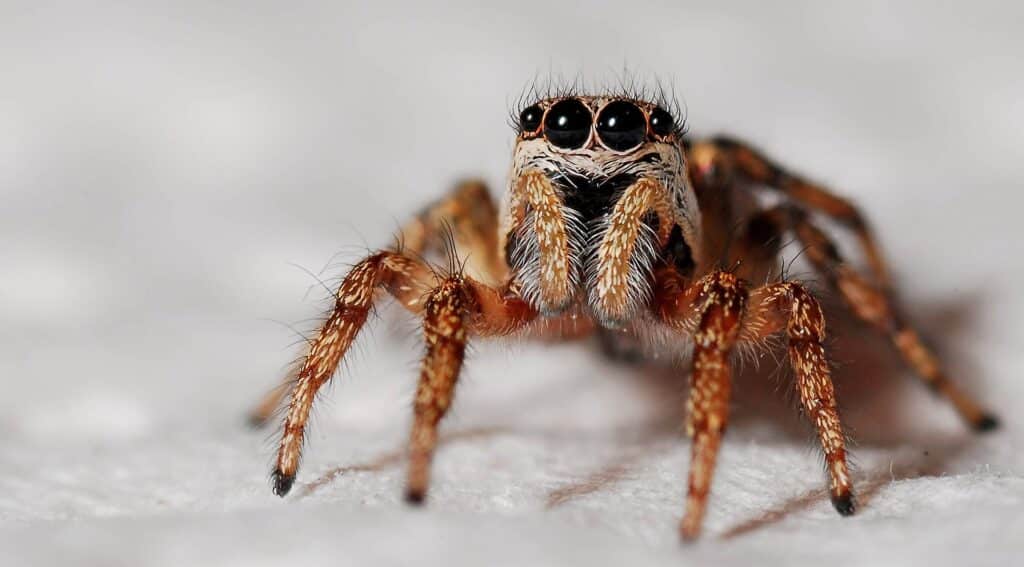
Virtually all spider species can stick to walls to varying degrees, though hunting spiders including jumping spiders, wolf spiders, and huntsman spiders demonstrate the most impressive climbing abilities on smooth vertical surfaces including glass and polished metal. 

Web-building spiders like house spiders, cellar spiders, and orb weavers also climb walls effectively but typically use their climbing abilities primarily for web construction and maintenance rather than active hunting. Larger, heavier spiders including tarantulas possess proportionally fewer adhesive setae relative to their body mass, limiting their ability to climb extremely smooth surfaces though they navigate textured walls effectively. 

Smaller, lighter spiders demonstrate superior climbing performance on all surfaces since adhesive forces scale more favorably with reduced body size, allowing tiny spiders to effortlessly walk on glass while large spiders may struggle on the smoothest substrates.

How long can spiders stick to walls?

Spiders can remain attached to walls indefinitely as long as they maintain muscular tension controlling their leg positions and setae contact with surfaces, with resting periods lasting hours to days depending on species and circumstances. 

Wall adhesion requires minimal energy expenditure once positioned, allowing spiders to wait motionlessly for extended periods while hunting or hiding from predators. However, spiders must actively engage their adhesive setae through leg positioning and pressure, meaning unconscious or dead spiders lose wall adhesion and fall. 

Environmental factors including humidity, temperature, and surface cleanliness affect adhesion duration, with dusty or oily surfaces reducing contact effectiveness over time requiring spiders to relocate for better adhesion.

How to know if you have a spider infestation

Spider infestations create distinctive signs throughout affected structures:

  • Numerous visible spiders and webs: You might notice multiple spiders on walls, ceilings, and corners accompanied by extensive cobwebs throughout rooms indicating established populations beyond normal occasional spider presence.
  • Egg sacs in corners and crevices: It’s common to find silk egg sacs containing dozens to hundreds of developing spiderlings attached to ceilings, behind furniture, or in undisturbed areas signaling breeding activity.
  • Abundant prey insects present: You’ll likely observe high numbers of flies, mosquitoes, moths, or other insects attracting and supporting large spider populations feeding on readily available prey.
  • Spider molts and remains: You might discover discarded spider exoskeletons from molting and dead spider bodies accumulating in corners indicating ongoing population turnover and high spider density beyond sustainable levels.

How to get rid of a spider infestation

Eliminating spider infestations requires comprehensive approaches targeting both spiders and their prey:

  • Remove webs and egg sacs regularly: Vacuum or sweep away all visible webs, egg sacs, and spiders throughout structures, focusing on corners, ceilings, and undisturbed areas where spiders concentrate their activity.
  • Reduce prey insect populations: Address underlying insect problems attracting spiders by improving sanitation, sealing food sources, fixing screens, and reducing outdoor lighting that attracts flying insects spiders feed upon.
  • Seal entry points and cracks: Caulk gaps around windows, doors, utility penetrations, and foundation cracks preventing spiders from entering structures while reducing access to hiding spots and egg-laying locations.
  • Reduce clutter and hiding spots: Remove boxes, stored items, and debris providing spider habitat, particularly in basements, garages, and storage areas where undisturbed conditions encourage spider establishment and reproduction.

When to talk to the professionals

If you’re having problems dealing with spiders throughout your home, or when you need expert assessment of spider populations exceeding normal levels, professional pest control services can provide accurate species identification and appropriate management solutions. At Aptive, our pest control experts can distinguish between harmless beneficial spiders controlling insect populations and problematic spider infestations requiring intervention.

If you’re experiencing excessive spider activity throughout your property, need help identifying whether spiders in your home are harmless species or potentially dangerous varieties, or want guidance on spider control while addressing underlying insect problems attracting them, don’t wait—contact Aptive today for a free quote.
Learn more about spiders

3 Things You Didn't Know About Household Spiders 7 Ways on How to Get Rid of Spiders in Your Home Are All Spiders Venomous? Are Daddy Long Legs Spiders? Black Widow vs Brown Widow: What Are the Differences? Black Widows vs Brown Recluse: What Are the Differences? Black Widows vs Hobo Spiders: What Are the Differences? Brown Recluse Spider: Facts, Bites & Control Do All Spiders Make Webs? Do Brown Recluse Spiders Build Webs? Signs of a Potential Infestation Good vs Bad Spiders Ground vs Web Spiders in Basements How Black Widows Choose Nesting Spots How Do Jumping Spiders See in Color How Do Spiders End Up Inside Light Fixtures and Lampshades How to Get Rid of Wolf Spiders How to Identify a Spider: 5 Signs to Consider and When to Take Action How to Identify and Deal with a Brown Recluse Spider Infestation How to Identify and Handle Brown Recluse Spiders Identifying Spider Webs Around Your House Joro Spiders vs Golden Silk Orb Weaver Spiders: How Are They Different? Jumping Spider Control: Effective Methods to Eliminate and Prevent Mosquito Bite or Spider Bite? Most Common Types of Spiders in Gardens Orb Weaver Spider Control: Facts, Control & Tips Protecting Against Spiders: The Where and When of Spider Activity Spider Egg Sacs: What to Do When You Find One Spiders that Look like Brown Recluses Spiders That Look Like Brown Recluses But Aren't The Difference Between Spider Egg Sacs and Dust Clumps The Difference Between Web-Building and Hunting Spiders The Engineering Logic Behind Spider Web Geometry The Peak of Spiders Indoors: 4 Tips to Manage Spider Activities The Role of House Spiders in Your Home Ecosystem The Role of Yellow Garden Spiders in Pest Control: Friend or Foe? The Science Behind Spider Silk’s Flexibility Three of the Most Dangerous Spiders Tiny Jumping Spiders in My Houseplants: Are They Harmful?  Top Spiders That Are Often Mistaken for Black Widows What Are Candy Stripe Spiders and Where Are They Found? What Are Funnel Weaver Spiders? Identification, Risks &  How to Get Rid of Them What are Joro Spiders and how to Identify them What Are the Signs of a Black Widow Infestation? What Attracts Spiders to Indoor Corners What Attracts Spiders to Your Home and How to Minimize These Factors What Is a False Widow? What to know About Hobo Spider Bites Why Attics Provide the Perfect Microclimate for Spiders Why Do Hobo Spiders Build Funnel Webs in Basements and Crawl Spaces? Why Lights Outside Can Bring Spiders In Why Some Spiders “Balloon” Through the Air on Threads of Silk Why Spiders Like the Basement Why Spiders Rebuild Their Webs Every Night Yellow Garden Spider vs Joro Spider: What Are the Differences? Your Comprehensive Guide to Jumping Spiders

Curated articles for you, from our pest experts.

A Close-Up Of Several Small Black Ants Crawling Along The Edge Of A Wooden And Tiled Surface.

4 Insects That Are Hard to Get Rid Of

When experiencing recurring pest problems despite repeated pest control attempts, understanding which insects demonstrate greatest persistence is crucial for implementing appropriate comprehensive strategies rather than ineffective quick fixes.  Certain hard to get...

Dec 17, 2025
A Detailed Close-Up Of A Cicada Perched On A Green Leaf, Displaying Its Intricate Wings And Textured Body Against A Vibrant, Blurred Background.

What Is the Definition of Insect?

When encountering small arthropods in homes and attempting to identify them for appropriate control measures, understanding the scientific definition of insect is crucial for distinguishing true insects from other superficially-similar creatures requiring different...

Dec 11, 2025
A Newly Emerged Cicada With Bright Red Eyes Clings To A Small Tree Branch, Next To Its Discarded Exoskeleton. The Cicada’s Translucent Wings And Vibrant Body Contrast Against The Brown Background, Highlighting Its Recent Molt During Metamorphosis.

What Is Insect Molting?

When discovering papery translucent shells on floors, stuck to walls, or hidden in corners, understanding what these remains represent is crucial for recognizing pest activity and assessing infestation severity. Insect molting (ecdysis) is the process whereby...

Dec 11, 2025
A Group Of Small Potted Plants, Including A Fuzzy Cactus, A Green Succulent, And A Taller Reddish Succulent, Arranged On A Windowsill With Sheer Lace Curtains Softly Filtering Daylight In The Background.

What Are Those Tiny White Bugs on Plants?

When discovering small white insects on houseplants or garden plants, accurate identification is crucial for implementing appropriate control measures and preventing widespread damage to plant collections.  Tiny white bugs on plants typically represent one of...

Dec 11, 2025
An Angled View Of An Open Luxury Car Door Revealing A High-End Black Leather Interior With Quilted Stitching, Spacious Rear Seats, And Built-In Entertainment Screens Mounted Behind The Front Seats. The Exterior Of The Vehicle Is Glossy Black With Chrome Wheel Details, Parked Indoors Under Modern Lighting.

Why Do You Have Bugs in Your Car?

When discovering insects in your vehicle, understanding what attracts bugs in car environments is crucial for implementing pest control strategies and eliminating recurring problems.  Cars provide conditions many insects actively seek including shelter from weather...

Dec 11, 2025
A Close-Up Photograph Of A Red Ladybug With Black Spots Crawling Along The Edge Of A Green Leaf, Set Against A Softly Blurred Green Background.

Which Insects Hibernate?

When temperatures drop and insect activity seemingly disappears, understanding how different species survive winter is crucial for predicting seasonal pest patterns and implementing appropriate year-round control strategies.  While true hibernation (prolonged...

Dec 11, 2025
A Newly Emerged Butterfly With Cream And Dark Brown Patterned Wings Hanging From Its Chrysalis, Surrounded By Multiple Green And Brown Pupae On A Horizontal Branch, Against A Blurred Green Background.

What Is Diapause in Insects?

Diapause represents a critical survival strategy that allows insects to endure unfavorable environmental conditions including extreme temperatures, drought, or lack of food by entering a programmed state of dormancy with suppressed metabolism and arrested...

Dec 2, 2025
A Detailed Close-Up Image Of A Dark, Segmented Isopod Crawling On A Bed Of Dry Twigs, Leaves, And Soil. A Smaller Isopod Is Visible Nearby, Both Surrounded By Textured Ground Debris.

What Are Isopods in the Garden?

Isopods are beneficial soil-dwelling crustaceans commonly found in gardens where they play important ecological roles breaking down organic matter and contributing to soil health through their decomposition activities. These armor-plated creatures including...

Dec 2, 2025
A Vibrant Blue Wooden Door Framed By A Terracotta Wall And Surrounded By Cascading Green, Yellow, And Purple Vines, With House Number 5 Above The Entrance And A Small Stone Staircase Visible Inside.

The Importance of Sealing Entry Points Before Winter

You recognize that cooling fall temperatures trigger pest movement from outdoor environments into heated structures, with proper timing of exclusion work proving critical for preventing winter infestations.  Sealing entry points before winter proves important...

Dec 2, 2025
Modern Kitchen With White Cabinets, Stainless Steel Appliances, And A Decorative Tile Backsplash, Featuring A Wooden Tray With Decorative Items On The Countertop.

Why You Keep Finding Cobwebs Even After Cleaning

You remove cobwebs from corners, ceilings, and furniture only to discover new webs appearing within days or even hours, suggesting ongoing spider activity rather than residual old webs from previous occupation. Cobwebs keep reappearing after cleaning because active...

Dec 2, 2025

Take back your home with pest control today.