You notice a spider scurrying across your bathroom floor, then spot another lurking in the hallway corner, followed by yet another near your kitchen sink. Despite keeping windows closed and maintaining excellent home cleanliness, these eight-legged visitors keep appearing with puzzling regularity. Before you start wondering if your home has some mysterious spider-attracting quality, consider looking outside for the real culprit.
The answer may lie with your outdoor lighting system. Spider control frequently begins by understanding the relationship between exterior lights, flying insects, and the predators that hunt them. Your well-intentioned porch lights, patio illumination, and security lighting create an inadvertent food court that draws spiders closer to your home’s entry points, eventually leading them inside.
Outdoor Lights Attract Insects
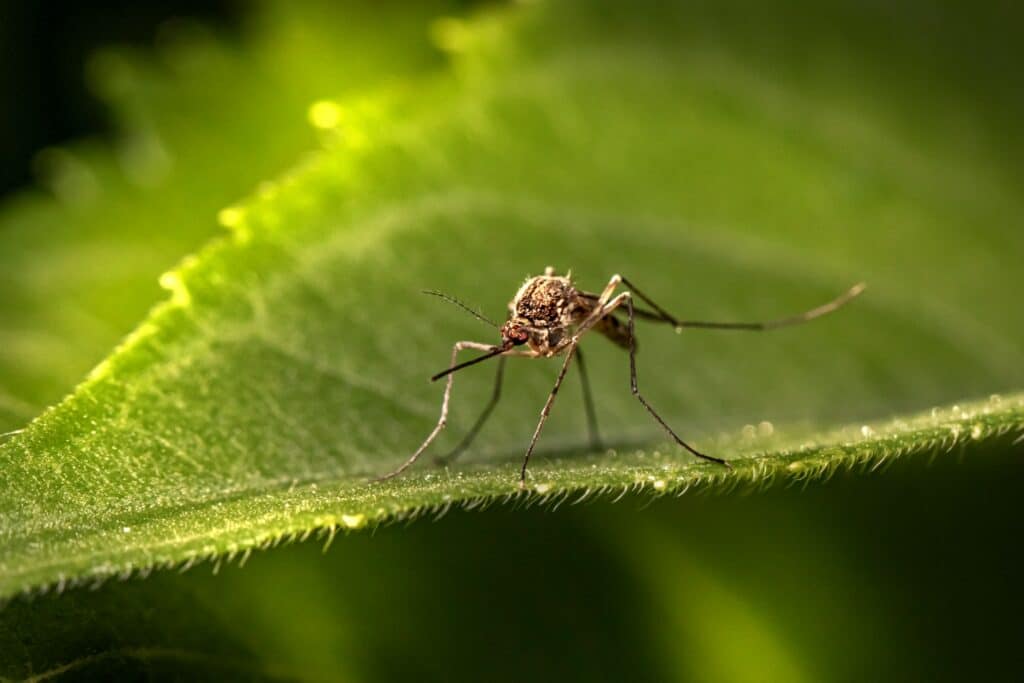
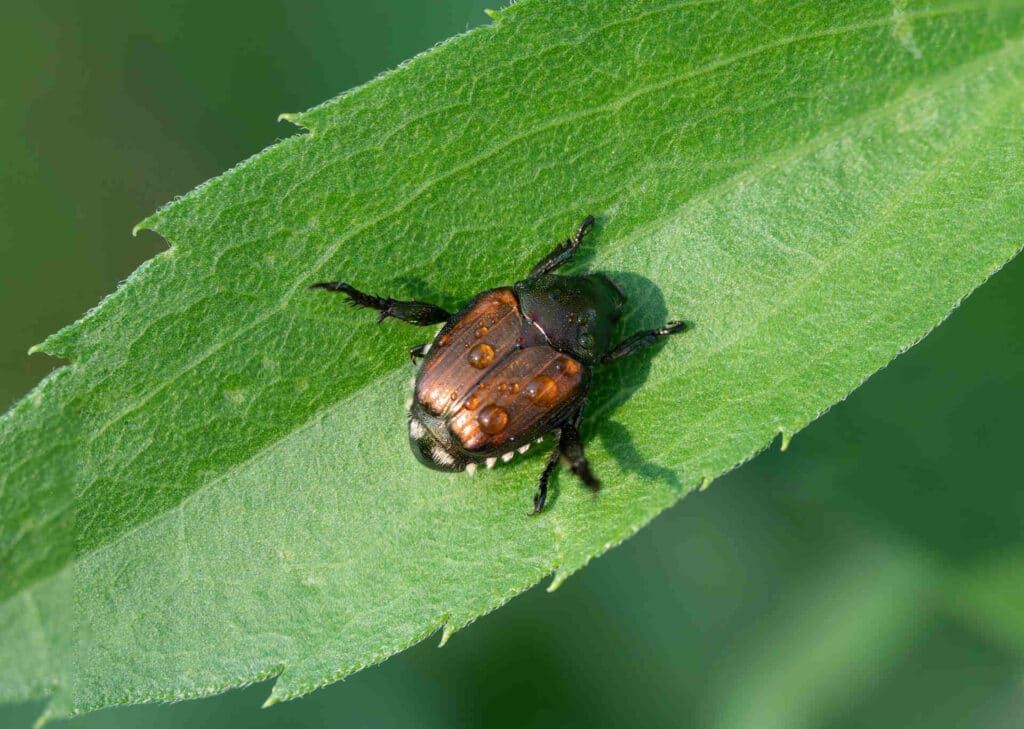
Most flying insects demonstrate phototactic behavior, meaning they instinctively move toward light sources, particularly those emitting white or blue-spectrum illumination. These species are particularly attracted to outdoor lights:
When you illuminate porch areas, patios, or entryways during evening hours, these insects rapidly congregate around light fixtures. They don’t simply fly by—they hover persistently, land on nearby surfaces, crawl along walls and fixtures, and establish temporary residence near your home’s entry points including windows, doors, and ventilation openings.
Spiders Follow the Food
While spiders show no direct attraction to artificial lighting, they demonstrate remarkable ability to identify and exploit the feeding opportunities that illuminated areas provide. These skilled predators quickly recognize that outdoor light fixtures create consistent, predictable hunting grounds where prey insects concentrate in reliable patterns.
Orb-weavers construct intricate webs positioned strategically between light fixtures and surrounding structures, creating effective insect traps. Funnel-web spiders establish their characteristic funnel-shaped retreats in corners and crevices near illuminated areas. Cellar spiders build irregular, tangled webs in protected spaces around light fixtures where insects frequently rest.
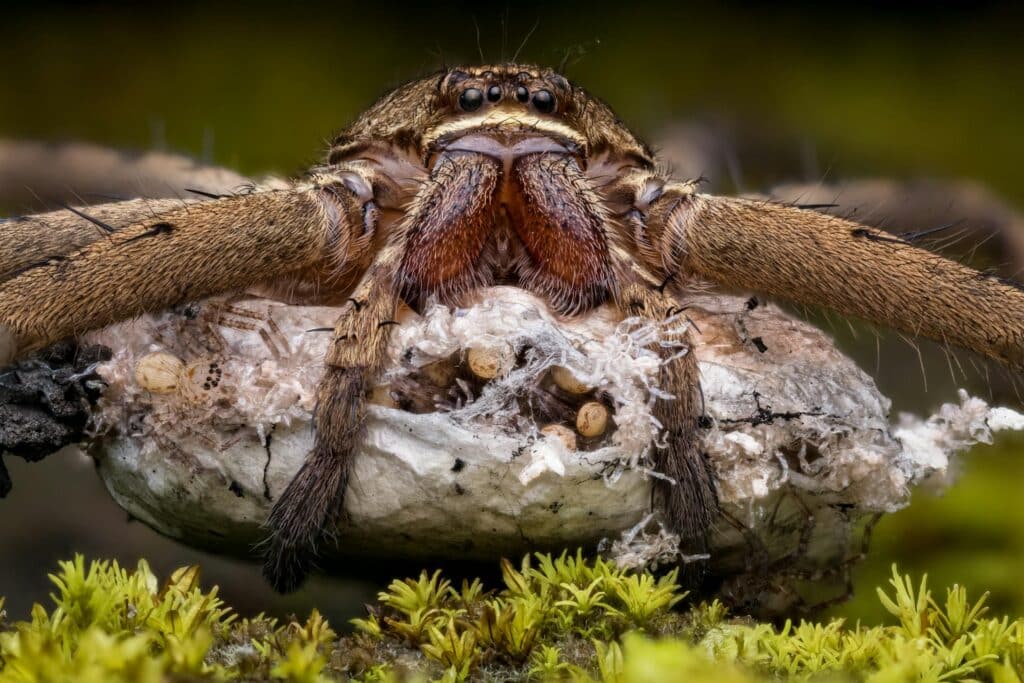
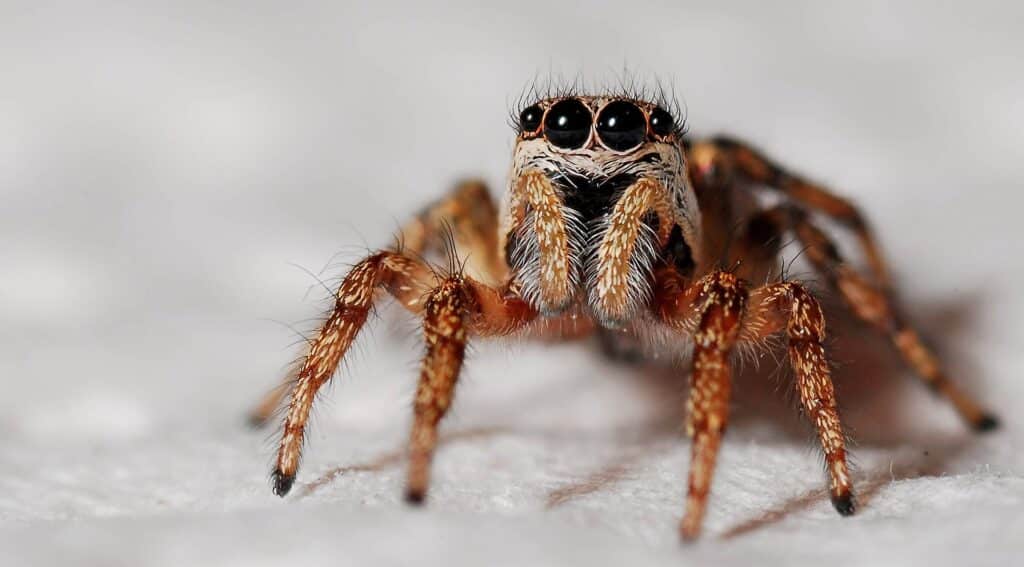
Jumping spiders position themselves on walls and fixtures where they can ambush flying insects attracted to lights. Wolf spiders patrol the ground areas beneath light fixtures, capturing insects that fall or land nearby. Crab spiders camouflage themselves on light-colored surfaces where insects frequently settle.
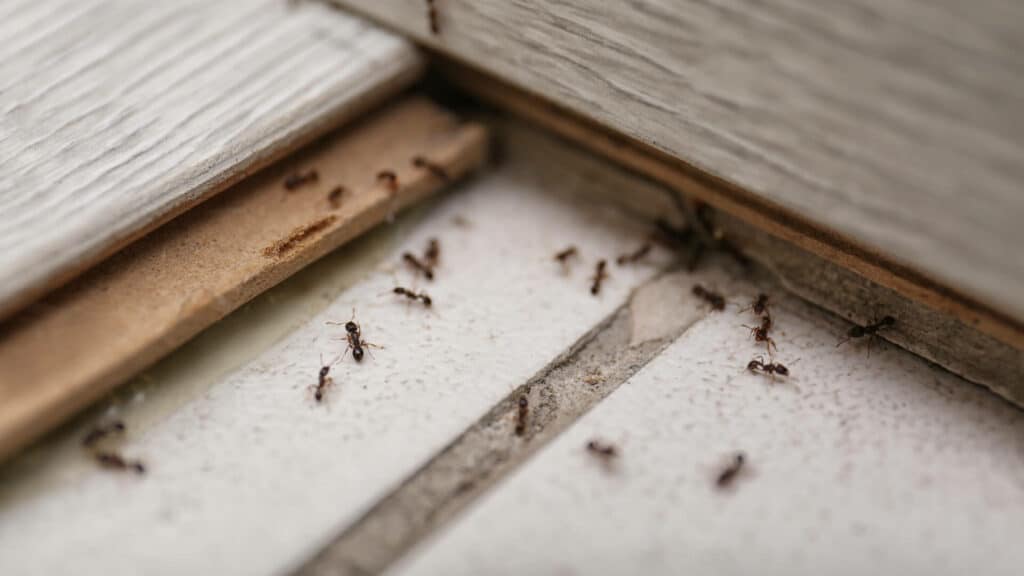
As spider populations establish themselves near your outdoor lighting, they naturally investigate nearby cracks, gaps, and openings that provide access to interior spaces where prey insects also seek shelter.
How Placement and Light Type Matter
Simple adjustments to your outdoor lighting setup can dramatically reduce insect attraction without compromising safety, security, or visibility around your property. Understanding how different lighting characteristics affect insect behavior enables targeted modifications that maintain illumination while reducing spider-attracting prey concentrations.
- Light spectrum considerations: Cool-temperature lighting above 4000K produces blue-white illumination that strongly attracts flying insects, while warm-temperature lighting between 2700K-3000K creates yellow-amber tones that prove less attractive to most flying species. LED bulbs offer significant advantages over traditional incandescent and fluorescent options because they produce minimal ultraviolet emissions and generate less heat—both factors that attract insects.
- Strategic fixture placement: Wall-mounted lights positioned directly beside entry points draw insects immediately to doors and windows, while post-mounted fixtures placed 10+ feet from structures attract insects away from your home’s perimeter. This distance creates separation between insect activity and potential spider hunting territories near entry points.
- Timing and control systems: Continuously illuminated fixtures provide insects with hours to discover and congregate around light sources, while motion-activated systems limit exposure time and reduce overall insect accumulation. Timer controls that activate lighting only when needed further minimize the duration insects have to establish populations near your home.
- Bulb type optimization: Energy-efficient LED technology with warm color temperatures and minimal UV output represents the most spider-friendly lighting choice for reducing insect attraction while maintaining adequate illumination for safety and security purposes.
Check Entry Points Regularly
Outdoor lighting brings potential prey insects close to your home’s exterior surfaces, making entry point security crucial for preventing spider invasion. Systematic inspection and sealing of access routes eliminates pathways that spiders use to transition from exterior hunting territories to interior spaces.
Critical sealing priorities:
- Apply silicone-based caulking around window frames and utility penetrations.
- Install fine-mesh screening over attic vents while maintaining airflow.
- Add or replace door sweeps on exterior doors for complete threshold contact.
- Inspect and replace weatherstripping around doors and windows.
- Seal foundation gaps where concrete meets siding.
- Check garage door frames and automatic door seals for developing gaps.
Even 1/8-inch gaps provide sufficient space for spider entry, making thorough sealing essential for preventing access from outdoor hunting areas near lighting fixtures.
Landscaping Plays a Role Too
The vegetation surrounding your outdoor lighting fixtures significantly influences spider activity and population establishment. Strategic landscaping modifications create less favorable conditions for spider territories while maintaining attractive outdoor spaces.
Effective landscaping practices:
- Trim shrubs and tree branches to maintain 18-inch clearance from exterior surfaces.
- Remove dense groundcover plants immediately adjacent to illuminated areas.
- Clear away accumulated leaf litter, grass clippings, and organic debris around light fixtures.
- Conduct weekly web and egg sac removal around outdoor lighting.
- Sweep walkways, patios, and exterior surfaces regularly to disrupt web-building.
- Eliminate brush piles and dense vegetation that provide spider hiding spots.
Spiders prefer stable, undisturbed environments for hunting and web construction. Regular maintenance activities create disturbance patterns that discourage long-term spider establishment while maintaining attractive outdoor landscaping.
When to Call for Help
When dealing with persistent spider problems despite your best lighting modifications and prevention efforts, Aptive’s pest control experts can help. Our pest control service will perform a detailed inspection to assess the situation and develop a customized treatment plan based on the specific environmental factors attracting spiders to your property. We’ll identify whether you’re dealing with spiders drawn to insect populations around outdoor lighting, established hunting territories near illuminated entry points, or other attraction factors like moisture issues and structural vulnerabilities that require comprehensive treatment approaches.
If you’re continuing to see spiders around your outdoor lighting areas or inside your home despite implementing lighting changes and sealing measures, contact Aptive today for a free quote. Our experts will evaluate your specific conditions and property vulnerabilities, recommending the most effective solutions to eliminate spider populations and prevent future invasions through targeted treatments.
FAQs About Spiders and Outdoor Lights
Here are some commonly-asked questions from homeowners about spiders and your outdoor lighting.
Q: Are there certain types of lights spiders are attracted to?
Spiders aren’t directly attracted to lights—they’re attracted to the insects that lights draw in. Cool-temperature lights (above 4000K), incandescent bulbs, and fluorescent fixtures attract more insects because they emit UV light and heat. This creates larger prey populations that spiders exploit. Warm LED bulbs (2700K-3000K) and yellow/amber lights attract fewer insects, making them less appealing to hunting spiders seeking food sources.
Q: Are spiders attracted to solar lights?
Solar lights typically attract fewer spiders than traditional electric lighting because they’re usually lower intensity and often use warm-colored LEDs. However, if solar lights are bright enough to attract insects, spiders may still establish hunting territories nearby. The key factor isn’t the power source but the light’s ability to draw prey insects. Solar pathway lights generally create minimal spider attraction compared to bright porch or security lighting.
Q: If I remove my outdoor lighting, will the spiders go away?
Removing outdoor lighting will reduce spider activity around your home but won’t eliminate them completely. Spiders also hunt during daylight hours and can find other food sources including insects attracted to indoor lighting through windows. Additionally, established spider populations may persist temporarily even after their primary food source is removed. Complete elimination requires combining lighting modifications with entry point sealing, landscaping changes, and sometimes professional treatment.