You discover numerous spiders and extensive webbing in your attic despite rarely accessing this space, suggesting these upper building levels provide particularly favorable conditions for spider establishment and reproduction.
Attics create ideal spider microhabitats through stable warm temperatures from insulation preventing seasonal extremes, minimal air movement enabling undisturbed web construction, abundant prey insects including silverfish, moths, and beetles attracted to stored materials, extensive harborage among stored boxes and structural elements, and extremely low human disturbance allowing populations to establish across multiple generations without disruption.
The combination of environmental stability and abundant resources makes attics among the most spider-favorable locations in most homes.
Insulation: The Warmth That Draws Spiders In
Attic insulation designed for energy efficiency creates thermal environments maintaining relatively stable warm temperatures year-round, providing conditions spiders prefer compared to more variable temperatures in living spaces.
Modern attics contain substantial insulation—fiberglass batts, blown cellulose, or spray foam—reducing heat transfer between conditioned living spaces and outdoor environments. This insulation maintains attic temperatures warmer than outdoor winter conditions while moderating extreme summer heat, creating year-round habitable conditions.
Unlike outdoor environments experiencing daily temperature swings of 10-20°C (18-36°F) and dramatic seasonal changes, insulated attics demonstrate relatively stable temperatures varying just 5-10°C daily. This stability proves favorable for spiders avoiding metabolic stress from temperature extremes.
As ectotherms (cold-blooded organisms), spider activity levels, metabolism, and reproduction depend on ambient temperatures. Attics maintaining moderate temperatures year-round enable continued activity during winter when outdoor spiders enter dormancy, providing competitive advantages for indoor populations.
Many spider species seek protected overwintering sites in fall, with attics providing ideal refugia. Spiders entering attics in autumn to escape cold often remain year-round discovering abundant food and favorable conditions eliminating need to return outdoors.
While specific temperature preferences vary by species, common attic spiders including cobweb spiders, cellar spiders, and various others demonstrate activity across room temperature ranges, with attic temperatures typically falling within their optimal activity zones.
Still Air: The Secret to Web-Building Success
Attics typically demonstrate poor air circulation compared to living spaces with HVAC systems, creating still-air environments enabling successful web construction and maintenance without wind damage.
Most attics lack the air exchanges present in living areas—no forced-air heating or cooling, minimal window openings, and limited ventilation beyond small ridge or soffit vents. This creates stagnant air conditions where spiders build webs without constant wind disruption.
Spider webs, particularly the delicate strands of cobweb spiders and cellar spiders, tear easily in moving air requiring constant rebuilding, consuming significant time and silk resources. Still attic air enables webs to remain functional for weeks or months without repair, improving hunting efficiency.
Spiders detect prey through web vibrations transmitted when insects contact silk. Air movement creates background vibration “noise” potentially masking prey signals. Still air enables clearer prey detection improving capture success rates.
While less critical than temperature and prey, reduced air movement decreases evaporative water loss from spider bodies. This proves beneficial for species less tolerant of dry conditions, though most attic spiders tolerate relatively low humidity.
Prey Availability: Why Attics Are Never Empty
Attics harbor various insect species providing continuous food sources for spider populations, with prey availability representing critical factors enabling sustained spider establishment.
- Common attic insects: Attics host diverse insect communities including silverfish feeding on paper and cardboard in stored boxes, clothes moths and carpet beetles consuming natural fibers in stored textiles, cockroaches exploiting general organic debris, book lice feeding on mold in humid areas, and various beetles and flies entering through structural gaps.
- Stored materials attract insects: Cardboard boxes provide food for silverfish and habitat for various species, old clothing and fabrics support clothes moths and carpet beetles, paper documents attract silverfish and book lice, and general organic debris including dead insects provides nutrition for scavengers creating diverse prey communities.
- Continuous availability: Unlike outdoor environments with seasonal prey fluctuations, attic insect populations persist year-round given stable temperatures and continuous food sources. This enables spiders to feed consistently across seasons unlike outdoor populations facing winter food scarcity.
- Prey concentration: While individual attic insect populations may remain modest, the enclosed space concentrates prey making encounters more frequent than in open outdoor environments. Spiders establishing near prey-rich areas (stored boxes, textile materials) experience high capture rates.
Low Human Activity
Infrequent attic access compared to daily traffic in living spaces enables spider populations to establish and grow across multiple generations without regular disruption forcing abandonment or mortality.
Most homeowners access attics only occasionally—retrieving seasonal items 2-4 times annually—providing months of undisturbed conditions. This extended stability enables spiders to complete full life cycles including courtship, reproduction, egg incubation, and juvenile development without interruption.
Human activity creates disturbances causing spiders to flee or hide, interrupting normal activities. Minimal attic traffic eliminates this stress enabling spiders to feed, mate, and develop optimally.
While homeowners regularly clean living areas removing webs and eggs, attics rarely receive such maintenance. This allows spider populations to accumulate across years with each generation adding to total numbers rather than periodic removals resetting populations.
Species Commonly Found in Attics
Certain spider species demonstrate particular affinity for attic environments based on their web-building styles, temperature tolerances, and prey preferences.
- Cobweb spiders: Various species in family Theridiidae including common house spiders build irregular three-dimensional cobwebs ideal for attic spaces, tolerating warm dry conditions while capturing diverse prey. Their small size enables easy access through tiny gaps.
- Cellar spiders: Long-legged cellar spiders (daddy longlegs spiders) commonly establish in attics despite the name, building loose irregular webs in corners and along beams. They tolerate warmth well and effectively capture various flying insects.
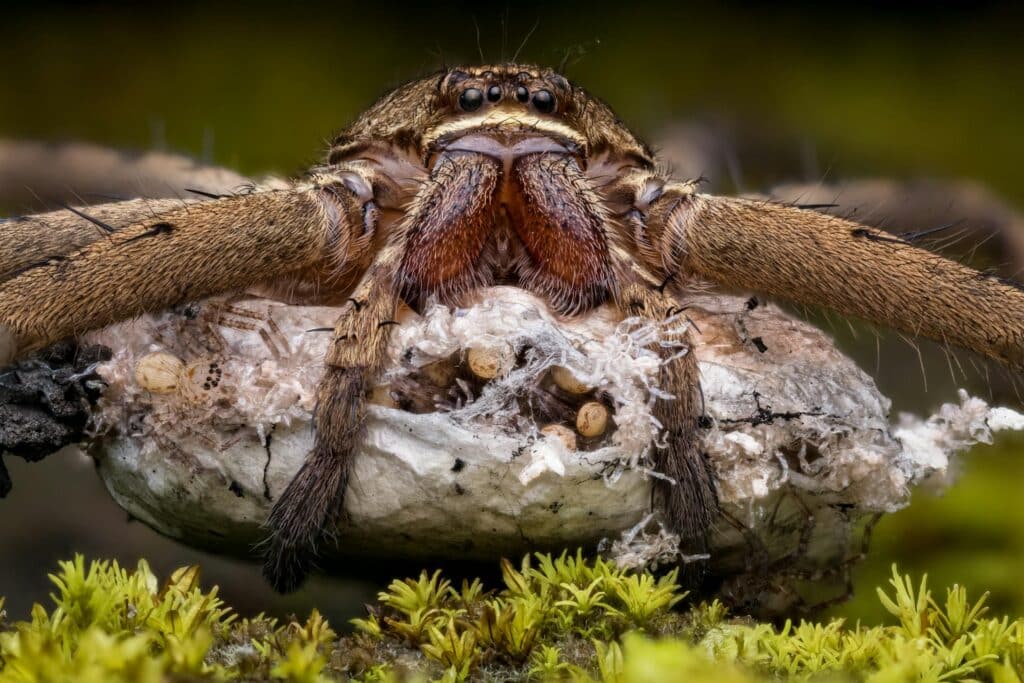
- Wolf spiders: These ground-hunting spiders don’t build catching webs but may use attics as hunting grounds or refugia, particularly in insulation or stored materials providing ground-like habitat. They actively pursue prey rather than waiting in webs.
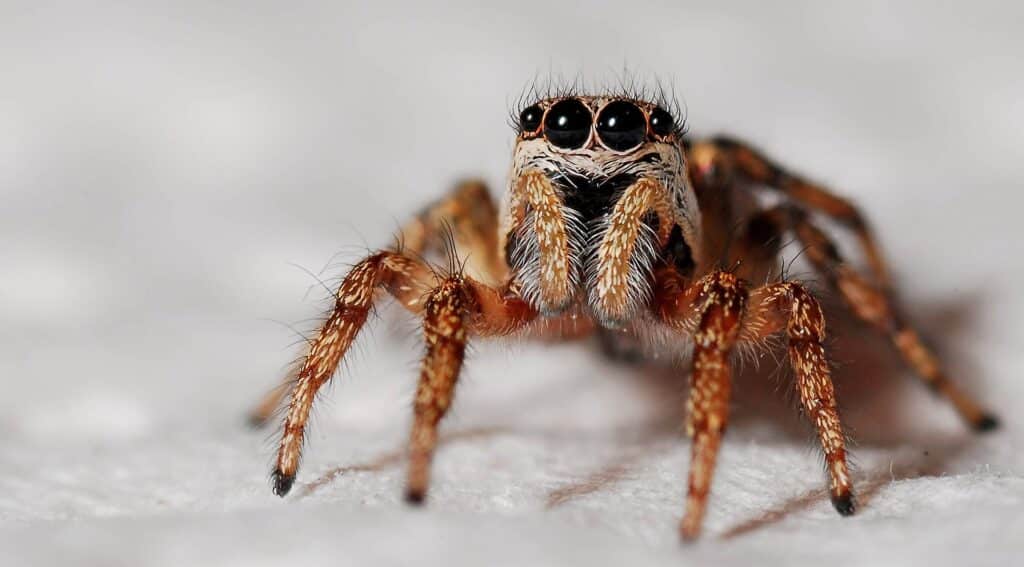
- Jumping spiders: While primarily visual hunters preferring well-lit areas, some jumping spiders establish in attics hunting actively during daylight hours entering through vents or gaps. Their presence typically remains lower than web-building species.
- Sac spiders: Yellow sac spiders build silk retreats rather than catching webs, establishing in protected attic locations including inside rolled insulation, between stored boxes, or along structural members. They hunt nocturnally rather than building webs.
When You Should Call the Professionals
Professional spider control in attics from a pest control service addresses both existing populations and underlying factors enabling establishment, implementing exclusion, sanitation, and when appropriate targeted treatments as needed.
If you’re discovering extensive spider populations and webbing in your attic, observing recurring problems despite regular web removal, or concerned about underlying insect issues attracting spiders, contact Aptive today for a free quote and comprehensive evaluation. We’ll assess your attic conditions, identify factors enabling spider establishment, and recommend pest control strategies addressing both existing populations and environmental conditions creating favorable spider habitat.