You discover small round or oval objects in corners, behind furniture, or along baseboards wondering whether they represent spider egg sacs requiring attention or harmless dust accumulations.
Spider egg sacs differ from dust clumps through multiple distinguishing characteristics including cohesive silk structure maintaining shape when touched versus loose dust that crumbles or disperses easily, deliberate placement in protected locations with visible silk anchor threads, and consistent size and shape within species-specific ranges.
Understanding differences between spider eggs identification and common household debris prevents both over-reaction to harmless dust and under-reaction to actual egg sacs that may release dozens to hundreds of spiderlings requiring spider control.
What Spider Egg Sacs Actually Look Like
Spider egg sacs demonstrate distinctive physical properties reflecting their biological function of protecting developing eggs, with characteristics varying by species but sharing common structural features.
- Material composition and texture: Spider egg sacs consist of multiple layers of tightly woven silk creating cohesive structures that maintain integrity when handled. The outer surface often appears fuzzy, papery, or slightly rough depending on silk density and species, demonstrating fabric-like texture distinctly different from the loose particulate nature of dust. Some species produce smooth silky sacs while others create coarser more heavily textured coverings.
- Size ranges: Egg sac dimensions vary by spider species, typically ranging from 5-15mm diameter (roughly pea-sized) though some species produce larger sacs up to 20mm or small ones under 5mm. Individual species demonstrate relatively consistent sizing, with house spider egg sacs typically 8-10mm, cellar spider sacs 6-8mm, and wolf spider sacs varying more widely based on female size.
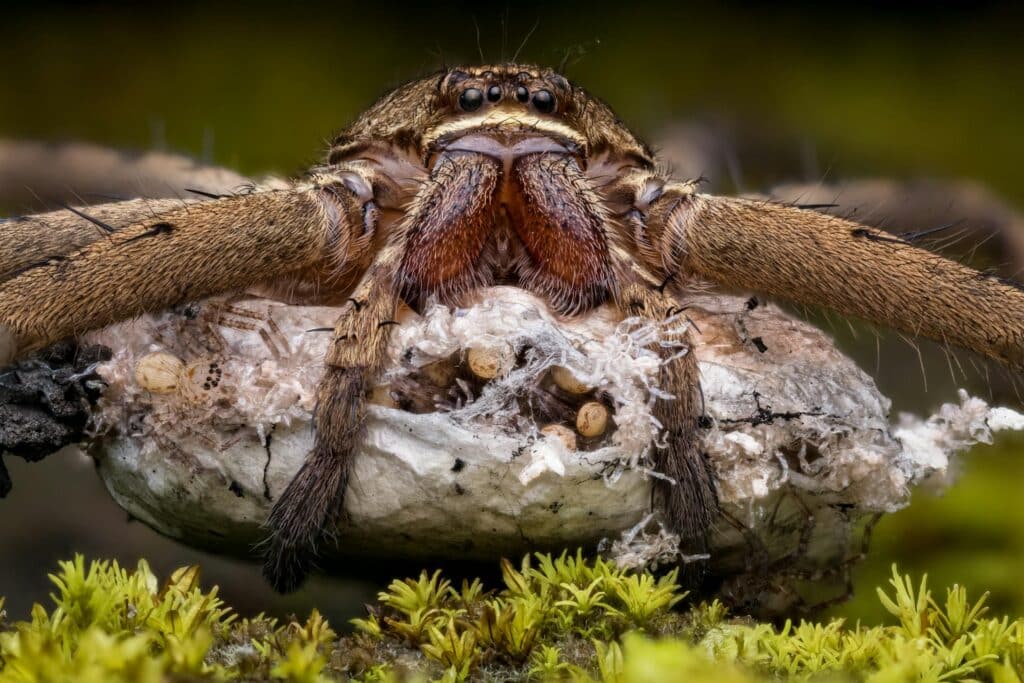
- Shape consistency: Most egg sacs appear spherical or slightly oval, maintaining defined three-dimensional shapes even when disturbed. This contrasts with dust clumps showing irregular amorphous forms. Some species produce distinctive shapes—black widow sacs appear papery and spherical with pointed protrusion, brown recluse sacs show flattened disc-like appearance, and wolf spiders carry spherical sacs attached to spinnerets.
Why Spiders Hide Egg Sacs in Hard-to-Reach Places
Spider egg sacs and dust clumps accumulate in characteristically different locations, with placement patterns reflecting either intentional biological site selection versus passive physical deposition.
Egg sac strategic placement: Spiders select egg sac locations providing protection from disturbance, predators, and environmental extremes. Common sites include ceiling-wall corners above typical cleaning reach, behind stored items or furniture rarely moved, within structural gaps and crevices, inside cabinets or storage boxes, and in attics, basements, or crawl spaces experiencing minimal traffic. These placements demonstrate purposeful selection of secure protected microhabitats.
Silk attachment evidence: Egg sacs attach to surfaces via additional silk threads creating visible anchoring, often with small silk mats or platforms beneath sacs providing additional support. Multiple anchor threads extend from sac surfaces to surrounding structures, and nearby webbing or silk remnants may indicate spider activity in areas. This deliberate attachment contrasts with dust merely resting on surfaces without fastening.
Dust accumulation patterns: Dust collects wherever air currents slow and particles settle, including along baseboard tops where rising air currents from floor convection deposit particles, in room corners where circulation decreases, on horizontal surfaces in undisturbed rooms, behind electronics where static attracts particles, and in ventilation grilles where forced air deposition occurs. These patterns reflect physics rather than biological intent.
Species-Specific Egg Sac Characteristics
Different spider species produce distinctively-shaped, sized, and textured egg sacs enabling species identification and informing appropriate management responses.
- House spider egg sacs: Common house spiders (Parasteatoda tepidariorum) produce spherical papery egg sacs 8-10mm diameter, tan to brown coloration, loosely-woven texture appearing slightly fuzzy, typically suspended within cobwebs in corners or near ceiling-wall junctions, with females producing multiple sacs containing 100-400 eggs each creating potential for substantial spiderling emergence from single reproductive female.
- Black widow egg sacs: Black widow spiders produce distinctive spherical sacs 12-15mm diameter, smooth papery texture, cream to tan coloration, often with small pointed protrusion, containing 200-900 eggs representing potentially very large spiderling emergence. These sacs’ presence indicates potentially-dangerous spider species warranting professional assessment.
- Brown recluse egg sacs: Brown recluse spiders create flattened disc-shaped sacs 8-10mm diameter, off-white coloration, containing 20-50 eggs, often hidden in undisturbed dark locations including storage boxes, behind furniture, or within wall voids. Discovery suggests potentially medically-significant spiders requiring professional identification and management.
- Wolf spider egg sacs: Female wolf spiders produce spherical sacs 10-15mm diameter attached to their spinnerets and carried continuously until eggs hatch. Sacs appear white to bluish-green, tightly woven appearing solid, containing 100+ eggs. Discovery of detached wolf spider sacs indoors suggests female entry or indoor hunting though these spiders typically remain outdoors.
What to Do If You Spot a Nest
Proper response to suspected spider egg sacs depends on accurate identification, location, species involved, and household circumstances requiring balanced assessment of actual risk.
Initial identification confirmation: Before acting, confirm suspected object represents actual egg sac rather than dust through characteristic assessment including structural integrity when gently touched, presence of silk attachments, location in protected spot suggesting deliberate placement, and associated spider evidence. If uncertainty remains, photograph suspected sac for professional identification rather than immediate removal.
Immediate removal if confirmed: Confirmed egg sacs should be removed promptly before hatching releases spiderlings dispersing throughout structures. Vacuum egg sacs directly using appropriate attachments, carefully scrape attached sacs into sealed containers or bags, or use disposable materials picking up sacs then immediately sealing in plastic bags. Dispose of collected sacs in exterior trash preventing any escaped spiderlings from reentering structures.
Inspection for additional sacs: Discovery of single egg sac warrants thorough inspection for additional sacs in the same room and adjacent areas. Check corners, behind furniture, in storage areas, within closets, and other protected locations. Multiple sacs indicate established spider populations requiring more comprehensive intervention beyond simple sac removal.
Get Pest Control for Spiders
For properties with recurring spider problems or previous egg sac discoveries suggesting persistent populations, professional pest control for spiders provides regular monitoring detecting new activity early, preventive treatments reducing spider establishment likelihood, and comprehensive approaches addressing both spiders and prey insects supporting their presence.
If you’re discovering objects you suspect might be spider egg sacs, finding multiple sacs suggesting established populations, or concerned about species potentially producing egg sacs, contact Aptive today for a free quote and professional evaluation from a pest control service.