You encounter spiders in different household locations demonstrating varying behaviors—some remaining stationary in webs while others actively move across surfaces—suggesting fundamental differences in hunting strategies and habitat use.
Spiders divide into two broad ecological categories: web-building species constructing silk structures capturing prey passively while spiders remain in or near webs detecting vibrations signaling prey capture, and hunting species actively pursuing prey without reliance on capture webs using vision, speed, or ambush tactics locating and subduing prey through direct contact, with these different strategies determining preferred microhabitats, activity patterns, and likelihood of human encounters within structures.
Understanding differences between web vs. hunting spiders explains their distinct behaviors and locations within homes, reveals why certain species appear in specific areas, and informs management approaches appropriate for each group’s ecology. The fundamental distinction in prey capture strategy cascades through virtually every aspect of spider biology and behavior.
Web Builders and Their Everyday Patterns
Web-building spiders construct silk structures serving as both hunting tools and habitat, with species remaining largely sedentary once establishing productive web locations.
- Web types and functions: Different web-building families construct distinctive web architectures. Orb weavers create classic spiral wheel-shaped webs with radial support threads and sticky spiral capture strands, cobweb spiders build three-dimensional irregular tangles particularly effective in corners and structural angles, sheet web spiders construct horizontal platforms with knockdown threads above, and funnel weavers build sheet webs with tubular retreats at edges.
- Prey capture mechanism: Web-building spiders detect prey through vibrations transmitted through silk when insects contact web strands. These vibrations provide information about prey location, size, and struggle intensity enabling spiders to assess whether prey warrants approach or poses potential danger (large struggling wasps may be cut free avoiding injury risk).
- Sedentary lifestyle: Once establishing productive web locations, web-builders remain in or immediately adjacent to webs for extended periods—days to weeks—only relocating when prey capture rates decline, web damage becomes excessive, or disturbances force abandonment. This sedentary nature means individual spiders occupy very limited space compared to hunting species.
- Reduced visual dependence: While possessing eyes, most web-building spiders demonstrate relatively poor vision relying primarily on vibration detection through specialized leg mechanoreceptors. This sensory emphasis suits their hunting strategy where prey location comes through web vibrations rather than visual detection.
- Common indoor web-builders: Common house spiders (Parasteatoda tepidariorum) build cobwebs in corners, ceiling-wall junctions, and behind furniture. Cellar spiders construct loose irregular webs in basements, garages, and undisturbed rooms. Some orb weavers occasionally build webs near outdoor lights attracting prey, with webs extending to nearby walls or windows.
Hunting Spiders and Their Ground-Level Patterns
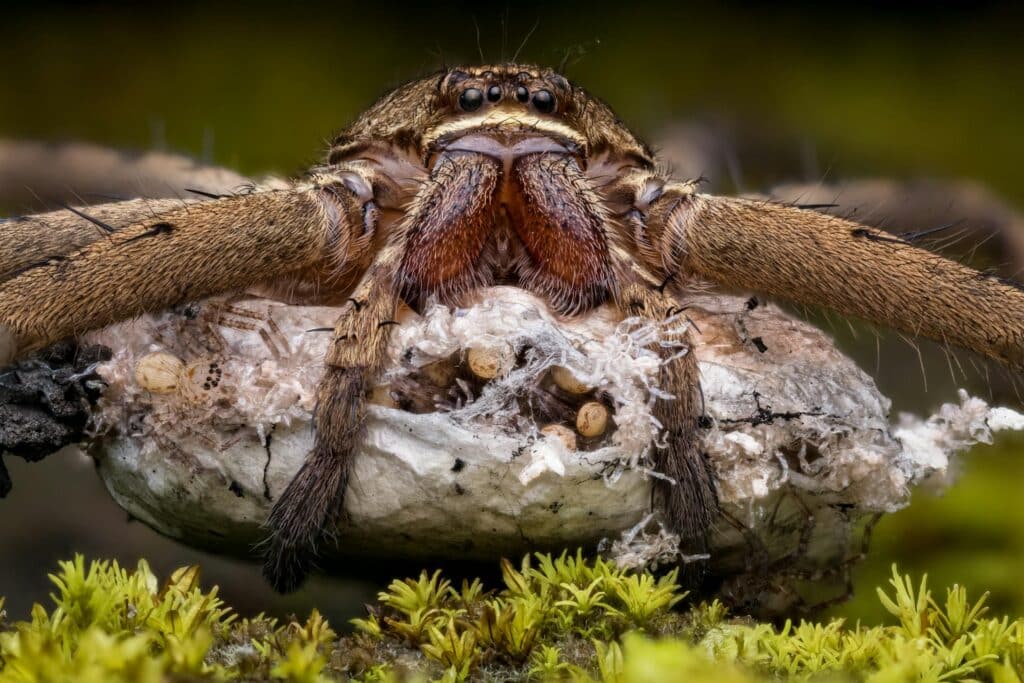
Hunting spiders actively pursue or ambush prey without constructing capture webs, demonstrating higher mobility, enhanced sensory capabilities, and more conspicuous behaviors bringing them into frequent human view.
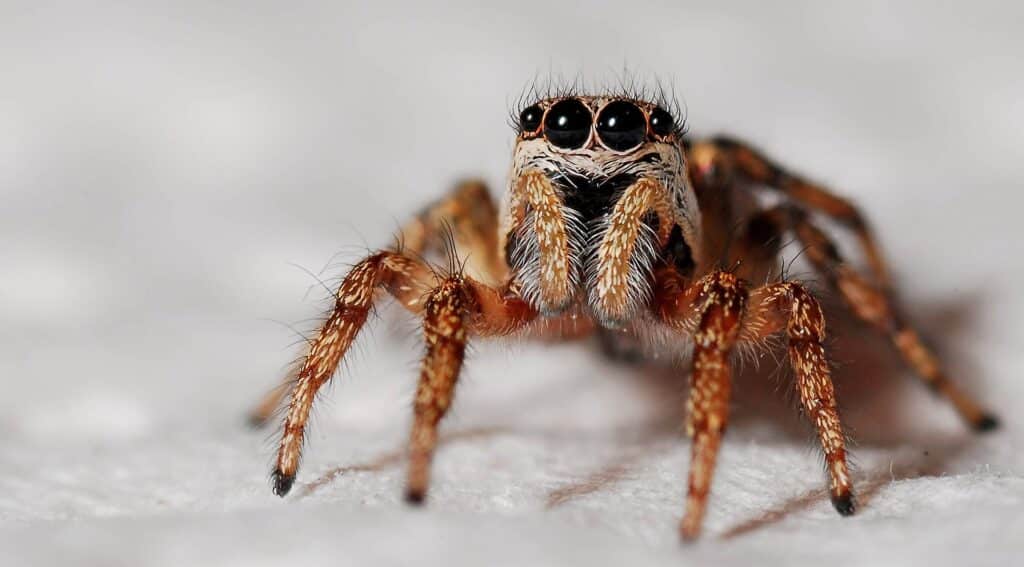
- Active hunting strategies: Different hunting spider families employ varying pursuit strategies. Wolf spiders actively chase prey across ground surfaces using speed and endurance, jumping spiders stalk prey using exceptional vision then pounce from short distances, fishing spiders wait at water edges detecting surface vibrations from struggling insects, and crab spiders ambush prey from flowers or foliage using camouflage.
- Enhanced vision: Hunting spiders, particularly jumping spiders, possess remarkably developed vision among arthropods with large forward-facing principal eyes providing high-resolution color vision enabling prey identification and distance assessment. This visual capability proves essential for hunting strategies requiring accurate prey localization before pursuit or pounce.
- High mobility: Hunting spiders roam extensively searching for prey rather than waiting in fixed locations. Individual wolf spiders may patrol areas spanning several square meters nightly, while jumping spiders demonstrate exploratory behavior investigating potential prey items across diverse surfaces.
- Silk use differences: While hunting spiders produce silk, they use it primarily for safety lines during jumps or falls, creating egg sacs, and building temporary retreats rather than constructing prey capture structures. Some hunting species don’t build recognizable webs at all beyond draglines trailing behind during movement.
- Common indoor hunters: Wolf spiders occasionally enter structures hunting ground-dwelling prey including crickets and other spiders. Jumping spiders frequently appear on walls and windows hunting flies and other small insects. Sac spiders hunt nocturnally along walls and ceilings, building silk retreats in corners during daytime.
What These Patterns Mean for Homeowners
The fundamental difference in hunting strategy drives distinct microhabitat selection, with web-builders favoring structural complexity while hunters occupy more open hunting grounds.
Web-builder locations: Web-building spiders require anchor points for silk attachment, favoring corners where multiple surfaces meet, ceiling-wall junctions providing three-dimensional structure, behind furniture offering protected attachment points with reduced disturbance, near lighting attracting flying prey, and in basements, attics, or garages with stable conditions and minimal traffic.
Structural requirements: Web construction requires appropriate spacing and geometry—orb weavers need open areas spanning web diameter, cobweb spiders utilize tight angles and corners, and all web-builders benefit from reduced air currents that damage delicate silk structures. Indoor locations meeting these requirements concentrate web-builder activity.
Hunter habitat use: Hunting spiders occupy more varied microhabitats reflecting their mobility. Ground hunters including wolf spiders traverse floors, particularly along baseboards where prey often travels. Jumping spiders scale vertical surfaces including walls and windows where flies rest. Hunters appear wherever prey concentrates rather than requiring specific structural features.
What to Do if Spiders Keep Showing Up
Professional pest control includes species identification determining whether web-building or hunting species predominate, inspection identifying conducive conditions and entry points, prey insect assessment and management, and implementation of appropriate control measures accounting for spider ecology and homeowner preferences.
If you’re observing spiders throughout your home and are uncertain whether they represent web-building or hunting species or hunting spiders, contact Aptive today for a free quote and comprehensive evaluation from a pest control service.