Basements provide ideal spider habitats with darkness, humidity, undisturbed areas, and abundant insect prey, making them prime locations for discovering various spider species seeking shelter from weather extremes and predators. These underground spaces attract both web-building spiders that construct elaborate traps in corners and ceiling joists, and hunting spiders that roam floors and walls stalking prey without building webs.
Understanding which spiders commonly inhabit basements helps homeowners distinguish harmless beneficial species controlling insect populations from rare venomous species requiring professional attention and spider control.
The most common type of spiders found in basements
Basements attract diverse spider species based on moisture levels, insect availability, hiding spots, and structural features providing suitable microhabitats, with the most common species varying by geographic region and basement conditions.
Cobweb-building spiders including house spiders and false widows dominate corners and ceiling areas, while hunting spiders like wolf spiders patrol floors and walls. Some basements harbor dangerous species including black widows and brown recluses requiring identification and professional management. The following ten species represent the most frequently encountered basement spiders across North America.
1. American house spider
American house spiders (Parasteatoda tepidariorum) are the most common basement spiders, measuring 1/4 to 3/8 inch with brown, tan, or grayish bodies featuring darker chevron patterns on rounded abdomens, building characteristic cobwebs in corners and along ceiling joists.
These prolific web-builders create messy, three-dimensional webs throughout basements, garages, and other structures, capturing various flying and crawling insects. House spiders are completely harmless to humans despite their ubiquitous presence, with bites extremely rare and causing only minor localized irritation comparable to mosquito bites. Their webs accumulate dust becoming unsightly, though the spiders themselves provide valuable pest control services eliminating flies, mosquitoes, and other nuisance insects.
2. Wolf spider
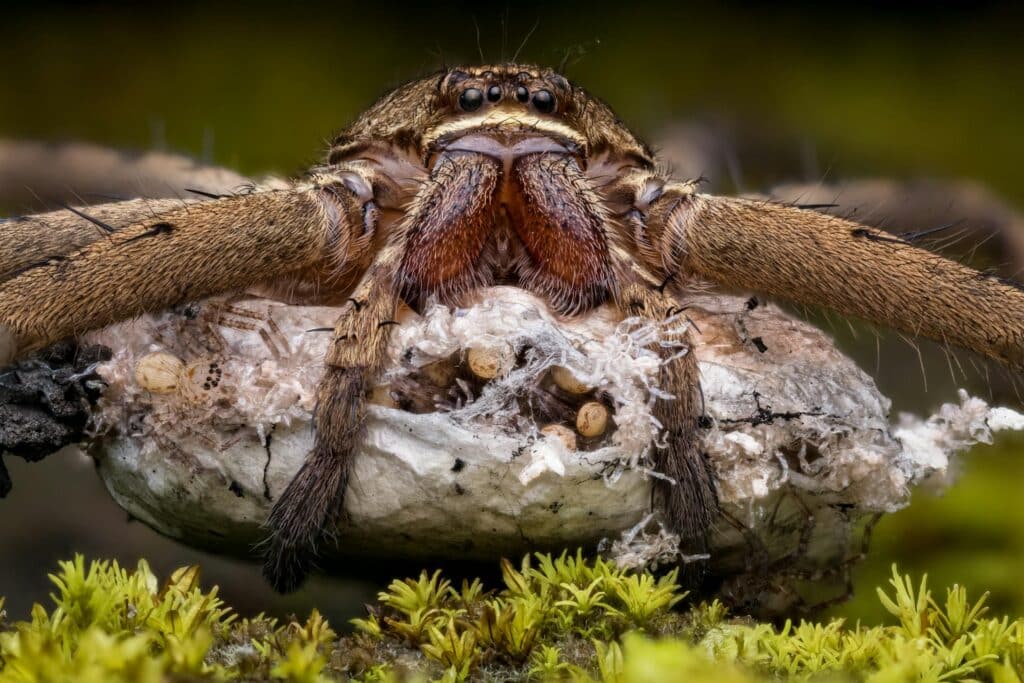
Wolf spiders are large, robust hunting spiders measuring 1/2 to 1 inch with brown or gray hairy bodies, prominent eyes arranged in three rows, and impressive speed, commonly found on basement floors and walls where they actively hunt prey without building webs.
These ground-dwelling spiders enter basements through foundation cracks, door gaps, and utility penetrations seeking shelter, moisture, and insect prey including crickets, cockroaches, and other basement-dwelling arthropods. Wolf spiders appear intimidating due to their size and rapid movements when disturbed, though they’re not aggressive toward humans and their venom causes only minor localized reactions. Females carry egg sacs attached to spinnerets and later transport dozens of spiderlings on their backs.
3. Black widow spider
Black widow spiders are venomous spiders measuring 1/2 to 1 inch with distinctive glossy black bodies and red hourglass markings, occasionally inhabiting dark, undisturbed basement corners, window wells, and storage areas where they construct irregular cobwebs.
These medically significant spiders prefer outdoor locations but sometimes establish territories in basements offering suitable conditions including darkness, minimal disturbance, and accessible prey. Black widows are non-aggressive, biting only when threatened or accidentally contacted, though their neurotoxic venom causes severe symptoms requiring medical attention.
Their presence in basements warrants professional pest control intervention due to safety concerns, particularly in homes with children, pets, or individuals with health conditions making envenomation more dangerous.
4. Brown recluse spider
Brown recluse spiders (Loxosceles reclusa) are venomous spiders measuring 1/4 to 1/2 inch with tan to brown coloration and distinctive dark violin-shaped markings on their cephalothorax, inhabiting basements in south-central and southeastern United States where they hide in dark, undisturbed areas.
These reclusive hunting spiders prefer cardboard boxes, stored clothing, behind furniture, and other sheltered locations, emerging at night to hunt small insects without building webs. Brown recluses possess necrotic venom causing potentially serious tissue damage requiring medical evaluation, though bites are uncommon due to their non-aggressive nature.
Their limited geographic distribution means most basement spiders identified as brown recluses are actually harmless look-alikes requiring expert confirmation.
5. Brown spider
Brown spiders, encompassing various brown-colored species including different house spider varieties, are common basement inhabitants measuring 1/4 to 1/2 inch with variable brown, tan, or grayish coloration and rounded abdomens, building cobwebs in corners and along foundations.
These general “brown spiders” represent numerous harmless species frequently misidentified as dangerous spiders due to their coloration and basement habitat preferences. Most build irregular webs capturing basement insects including flies, moths, and crickets, providing beneficial pest control.
Brown spiders are completely harmless with insignificant venom, though their abundant presence and messy webs create aesthetic concerns. Their prevalence makes them the most commonly encountered spiders in most basements.
6. Daddy longlegs spiders
Daddy longlegs spiders (Pholcidae family), also called cellar spiders, are delicate spiders with extremely long, thin legs and small bodies measuring 1/4 inch, building loose, irregular webs in basement corners where they vibrate rapidly when disturbed.
These spiders hang upside-down in their webs, appearing as tiny bodies suspended on impossibly long legs that can span several inches. Daddy longlegs are completely harmless despite persistent myths about potent venom, with their weak venom and tiny fangs posing no threat to humans.
They’re beneficial predators consuming other spiders including black widows and house spiders, along with various insects, making them valuable basement residents despite their somewhat unsettling appearance.
7. Hobo spider
Hobo spiders (Egestis hobo) are brown funnel-web spiders measuring 1/2 to 5/8 inch with long legs and chevron patterns on abdomens, building funnel-shaped webs in basement window wells, corners, and along foundations primarily in Pacific Northwest regions.
These ground-dwelling spiders construct horizontal sheet webs with funnel retreats where they hide awaiting prey vibrations, running rapidly across webs to capture insects. Despite previous concerns about their venom, hobo spiders are now recognized as relatively harmless with bites causing only minor localized reactions similar to other common spiders. They’re often confused with more dangerous spiders due to their brown coloration and basement habitat, though accurate identification reveals them as typical nuisance species.
8. Jumping spider
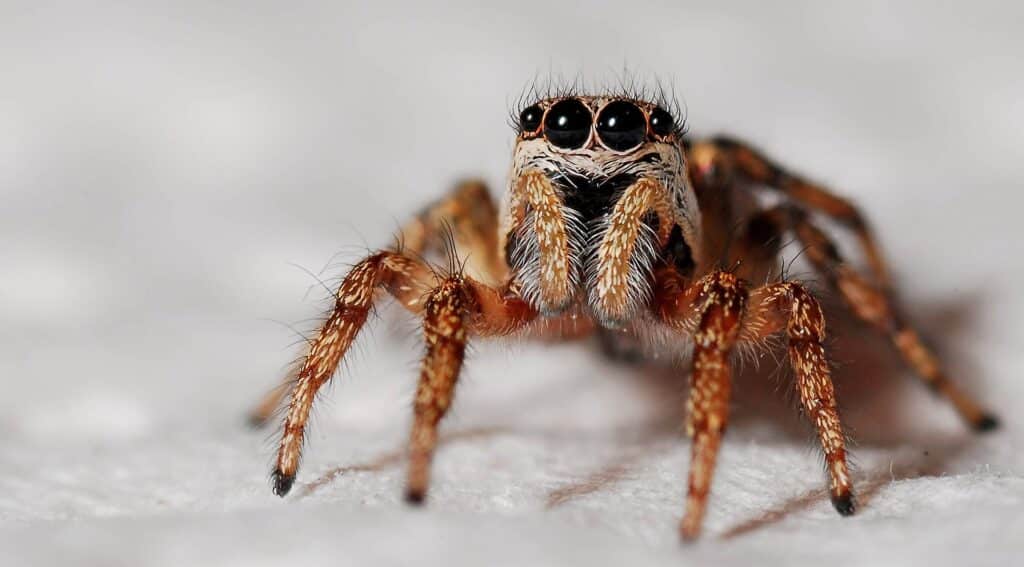
Jumping spiders are compact, fuzzy spiders measuring 1/4 to 1/2 inch with large forward-facing eyes, stocky bodies, and impressive jumping abilities, occasionally found on basement walls and windows where they hunt prey with excellent vision rather than building webs.
These active hunters are among the most intelligent spiders, stalking and pouncing on prey with precision jumps spanning many times their body length. Jumping spiders are completely harmless and often considered charismatic due to their large eyes and curious behavior, sometimes appearing to watch humans with their prominent vision.
Their presence in basements is usually temporary as they prefer areas with more light and insect activity than typical dark basements provide.
9. Yellow sac spider
Yellow sac spiders (Cheiracanthium species) are pale yellow to beige spiders measuring 1/4 to 3/8 inch with long legs and dark tips on their palps and feet, building silken sac retreats in basement ceiling corners and along wall-ceiling junctions rather than traditional webs.
These nocturnal hunting spiders emerge at night to patrol walls and ceilings seeking prey, returning to their silken sacs during daylight hours. Yellow sac spiders are mildly venomous with bites causing localized pain, redness, and occasional necrotic reactions, though they’re significantly less dangerous than brown recluses despite superficial similarities. They’re common household spiders frequently responsible for indoor spider bites due to their wandering behavior and tendency to hide in bedding or clothing.
10. Orb weaver spiders
Orb weaver spiders are large, colorful spiders measuring 1/2 to 1 inch with bulbous abdomens featuring distinctive patterns, occasionally building their characteristic circular webs near basement windows, window wells, or exterior basement entries where flying insects are accessible.
These spiders construct elaborate spiral webs with radial supports, typically rebuilding entire webs daily in locations with consistent insect traffic. Orb weavers are completely harmless garden spiders that sometimes establish webs in basement areas with window light attracting prey, though they prefer outdoor locations. Their impressive size and bold markings can startle homeowners, but they’re beneficial predators with no aggression toward humans and insignificant venom effects.
When to contact a professional
When dealing with spider concerns in your basement and need expert identification to distinguish harmless common spiders from dangerous species including black widows or brown recluses, professional pest control services can provide accurate identification and appropriate management solutions.
At Aptive, our pest control experts understand the biology and behavior of various spider species, which is crucial for implementing correct control strategies, ensuring that venomous spiders are targeted immediately for safety while beneficial spiders controlling basement insect populations are managed appropriately.
If you’re experiencing spider problems in your basement, have discovered what you believe might be dangerous species requiring immediate professional attention, or are dealing with persistent spider infestations despite your control efforts, don’t wait—contact Aptive today for a free quote.
Frequently Asked Questions about basement spiders
Here are some commonly-asked questions from homeowners about spiders found in basements.
Q: What is the most dangerous type of basement spider?
Black widow spiders and brown recluse spiders are the most dangerous basement spiders, both possessing medically significant venom requiring immediate medical attention if bites occur.
Black widows with neurotoxic venom cause severe systemic symptoms including muscle cramps, pain, and breathing difficulties, while brown recluses produce necrotic venom causing tissue damage and slow-healing wounds. However, both species are relatively uncommon in most basements, with brown recluses limited to specific geographic regions and black widows preferring outdoor locations.
Q: Can having spiders in my basement be a good thing?
Yes, having spiders in your basement provides significant pest control benefits as they consume numerous nuisance insects including flies, mosquitoes, moths, crickets, cockroaches, and other arthropods that would otherwise proliferate in these undisturbed spaces.
Most basement spiders are completely harmless to humans while efficiently controlling insect populations that could become problematic without natural predators present. A single spider consumes hundreds of insects annually, reducing pest pressure throughout your home. While excessive spider populations or presence of dangerous species warrant management, moderate numbers of common harmless spiders like house spiders and daddy longlegs represent beneficial residents providing free, continuous pest control services.
Q: How long can spiders live in the basement?
Spider lifespans in basements vary dramatically by species, with most common basement spiders living 1-2 years, though some species survive significantly longer under favorable conditions with adequate food, moisture, and shelter.
House spiders typically live about one year, while wolf spiders may survive 1-2 years and females often live longer than males. Daddy longlegs can live 2-3 years in protected basement environments. Black widows potentially survive 1-3 years with females living considerably longer than males who die shortly after mating.
Q: What other types of pests attract basement spiders?
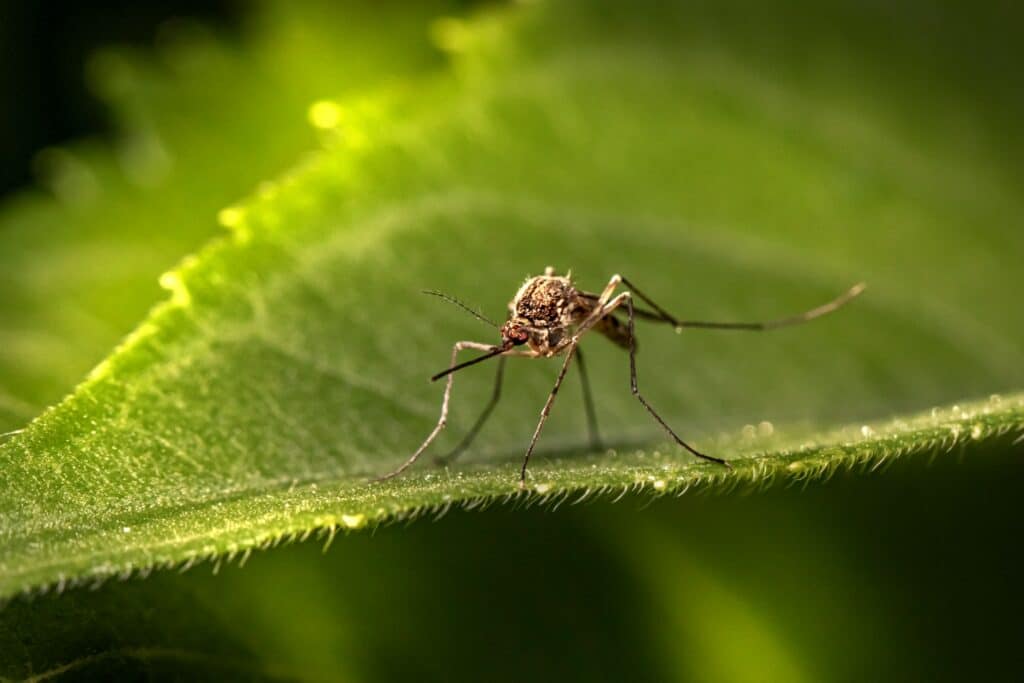
Spiders are attracted to basements by abundant insect prey including flies, mosquitoes, moths, crickets, cockroaches, silverfish, centipedes, millipedes, and various other arthropods that inhabit these dark, humid spaces providing consistent food sources.
Flying insects entering through basement windows, foundation cracks, and utility penetrations attract web-building spiders, while ground-dwelling insects like crickets and cockroaches draw hunting spiders including wolf spiders.
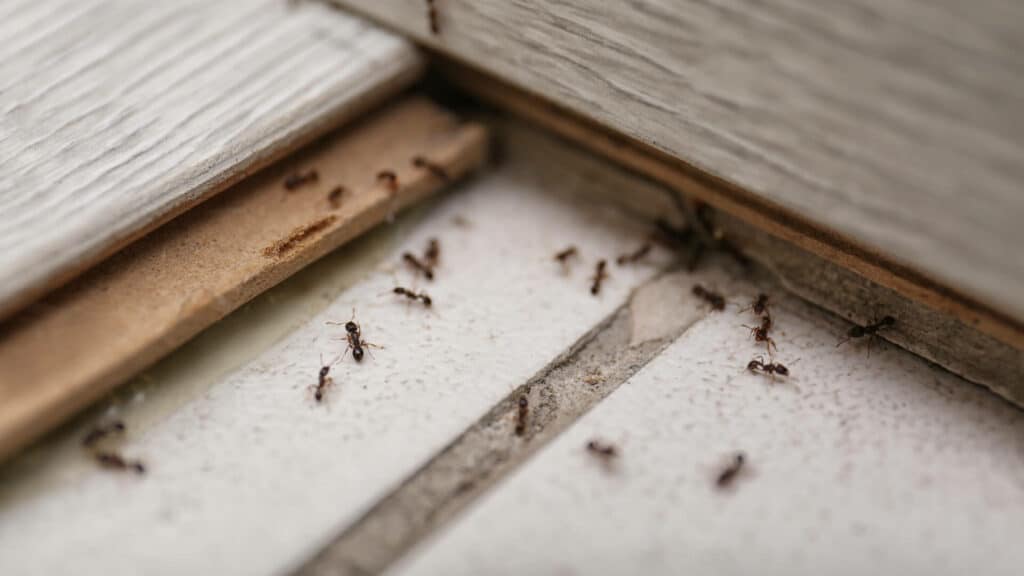
Moisture-loving pests such as silverfish and springtails thrive in damp basements, creating prey-rich environments supporting spider populations. Reducing basement insect populations through dehumidification, sealing entry points, and proper sanitation eliminates spider food sources, naturally decreasing spider presence without direct spider control.