You notice thin silk strands drifting through air or appearing across outdoor surfaces, sometimes carrying tiny spiders suspended beneath them, demonstrating a remarkable dispersal behavior called ballooning.
Spider ballooning occurs when small spiders—primarily juveniles but occasionally small-bodied adults—climb to elevated positions, release silk threads that catch air currents or electrostatic fields, and become airborne traveling distances.
Understanding spider ballooning explains how spiders colonize isolated areas, reveals mechanisms behind seasonal spider abundance patterns, and informs expectations about spider prevention given their aerial arrival capabilities. It can also help you pick a quality pest control service who specializes in spider control.
What Spider Ballooning Actually Is
Ballooning represents a complex behavior involving specific silk production, body positioning, and environmental condition assessment enabling spiders to become airborne and travel substantial distances.
- Pre-flight behavior: Spiders preparing to balloon demonstrate characteristic “tiptoeing” behavior where they stand on their leg tips elevating their bodies as high as possible. They orient toward light or assess wind conditions through sensory cues including air movement detected by setae (sensory hairs) and electrostatic fields sensed through specialized organs.
- Silk release: Once conditions appear favorable, spiders point their abdomens upward and release silk from spinnerets. Rather than producing single strands, ballooning spiders often release multiple fine threads that spread through electrostatic repulsion creating fan-like structures with greater surface area catching air currents more effectively than single strands.
- Takeoff mechanisms: Traditional explanations emphasized wind as the sole lifting force, requiring sufficient breeze to overcome spider weight. However, recent research demonstrates electrostatic forces—electrical charge differences between ground and atmosphere—can provide substantial or primary lifting force, enabling ballooning even during calm conditions when wind seems insufficient for aerodynamic lift.
- Flight duration and distance: Ballooning spiders travel distances from just meters (short-distance dispersal within fields or between trees) to hundreds of kilometers when caught in strong updrafts or jet streams. Most ballooning events prove relatively short-distance, though exceptional dispersal enables spider colonization of remote oceanic islands and ships at sea.
- Landing: Spiders lack active steering capabilities during flight, essentially becoming passive cargo carried by atmospheric forces. Landing occurs when descending air currents bring spiders to surfaces, silk contacts vegetation or structures causing entanglement, or spiders actively reel in silk reducing surface area and inducing descent when conditions appear favorable.
Why Spiders Balloon in the First Place
Ballooning serves multiple ecological functions beyond simple movement, representing adaptive strategy shaped by natural selection across millions of years.
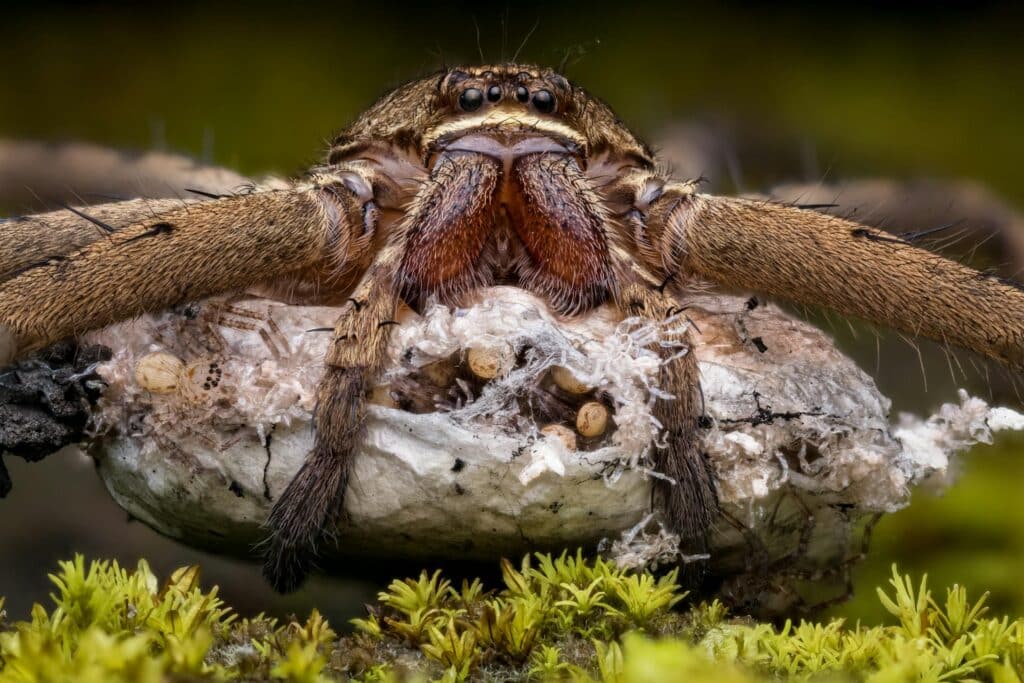
- Dispersal from natal sites: Following egg hatching, spiderlings emerge in dense aggregations with hundreds or thousands of siblings occupying limited space. Ballooning enables dispersal, reducing sibling competition for food and space. This proves particularly important for species producing large egg sacs deposited in single locations creating extreme local crowding.
- Colonization of new habitats: Ballooning enables spiders to colonize new areas including disturbed habitats, newly-available resources, or seasonal habitats becoming favorable. Agricultural fields following plowing, newly-built structures, and seasonal wetlands all receive spider colonists through aerial dispersal.
- Escape from unfavorable conditions: Beyond competition, ballooning provides escape from deteriorating habitat conditions including drought, flooding, food scarcity, or heavy predation. Rather than remaining in worsening conditions, ballooning offers probabilistic escape with some individuals reaching better environments.
- Gene flow maintenance: Aerial dispersal enables genetic exchange between spider populations separated by distances or barriers spiders couldn’t cross through ground movement. This gene flow prevents population isolation and inbreeding while spreading beneficial genetic variants across landscapes.
- Risk-spreading strategy: Not all spiderlings balloon—many remain near natal sites or disperse through walking. This mixed strategy spreads risk, with some offspring remaining in known-functional habitat while others disperse seeking new opportunities. If natal habitat deteriorates, dispersers may survive; if good habitat, residents avoid dispersal risks.
Which Spiders Species Balloon
While many spider families include ballooning species, certain taxonomic groups demonstrate particular reliance on aerial dispersal while others rarely or never balloon.
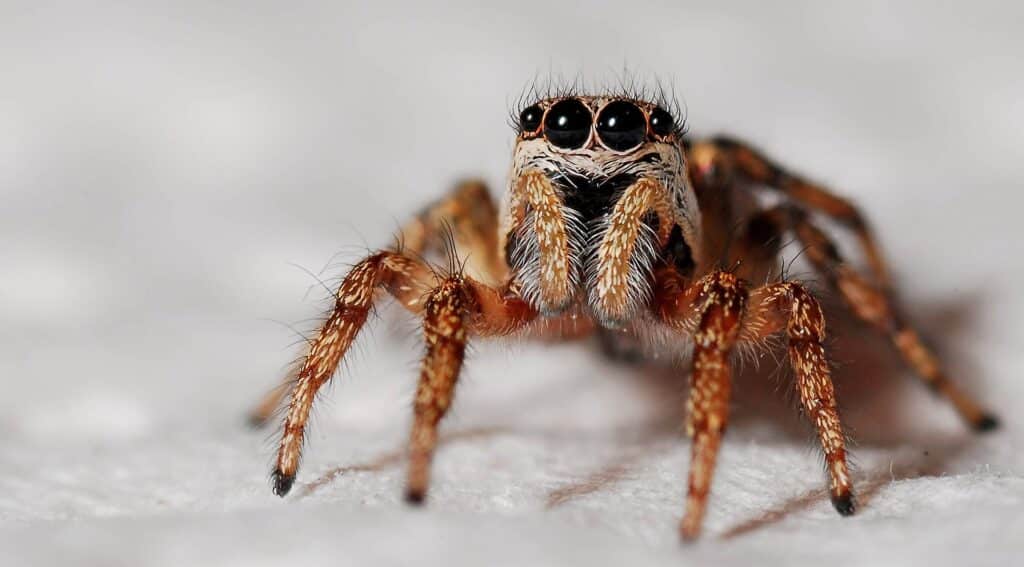
Common ballooning families: Linyphiid spiders (sheet web weavers and money spiders) represent prolific ballooners, with tiny adults routinely ballooning alongside juveniles. Many orb weaver juveniles balloon during dispersal though adults typically prove too heavy. Wolf spider spiderlings commonly balloon despite adults being ground hunters. Jumping spider juveniles balloon though adults hunt actively without ballooning.
Size limitations: Ballooning proves most feasible for small spiders typically under 5mm body length and weighing just milligrams. Larger spiders produce insufficient lift-to-weight ratios for sustained flight though may balloon short distances. This size constraint means most ballooning involves juveniles rather than adults except in families with very small adult body sizes.
Species variation: Within families, species differ in ballooning propensity with some demonstrating high rates where most juveniles balloon while others rarely balloon relying primarily on ground dispersal. These differences reflect ecological specialization—species occupying ephemeral or patchy habitats show higher ballooning rates than those in stable continuous habitats.
Ballooning prevalence: Despite size constraints limiting adult participation, ballooning represents remarkably widespread behavior across spider diversity with representatives from most major spider families demonstrating capability. This taxonomic breadth suggests ancient origins with ballooning behavior potentially present in early spider lineages hundreds of millions of years ago.
Why Ballooning Isn’t Just a Fun Fact
It’s easy to brush off spider ballooning as just a strange nature trick. But it has real implications. It’s one of the ways spiders repopulate quickly, even after seasonal slowdowns or cleaning efforts. And it’s part of why they show up in parts of the home you thought were sealed.
A few key things to keep in mind:
- Ballooning spiders are often young and small, so they’re hard to spot.
- They don’t need an open door to get inside—just an air current and a landing point.
- They’re usually harmless, but their arrival could signal favorable indoor conditions.
- If silk threads keep appearing in corners or across surfaces, spiders may be settling in.
Not every spider that balloons will survive. But the ones that land in the right place can start building quickly.
When the Air Brings in Uninvited Guests
Professional spider control recognizes ballooning as a natural source of some indoor spider appearance, focuses on making conditions unfavorable for establishment rather than attempting perfect exclusion, and implements comprehensive approaches.
If you’re observing numerous small spiders appearing indoors particularly during spring or fall, discovering silk strands across outdoor surfaces suggesting ballooning activity, or concerned about recurring spider presence despite exclusion efforts, contact Aptive today for a free quote and expert evaluation from a quality pest control service.