You might recognize that certain rodent species pose greater threats to structures and health than others, with species-specific behaviors and capabilities determining damage severity and control difficulty.
Understanding differences between these rodent species explains varying damage patterns and risks each poses, informs species-appropriate control strategies, and enables accurate identification determining which rodent problems homeowners face. While all three species cause significant rodent damage, their different behaviors, habitat preferences, and capabilities create distinct management challenges requiring tailored approaches for rodent control.
What Are Norway Rats?
Norway rats represent the largest and most physically-powerful common household rodent, with their size, gnawing capability, and burrowing behavior creating substantial structural threats.
- Physical characteristics and identification: Norway rats demonstrate robust heavy-set bodies weighing 200-500 grams with adults measuring 18-25cm body length plus 15-21cm tails (total length up to 40cm or 16 inches). Their bodies appear thick and blocky with blunt muzzles, small eyes relative to head size, and small ears that don’t reach eyes when folded forward. Fur coloration ranges from gray-brown to reddish-brown dorsally with lighter gray or white undersides, and tails appear shorter than head-plus-body length, thick, scaly, and sparsely-haired.
- Behavior and habitat preferences: Norway rats demonstrate terrestrial preferences living at or below ground level, with populations establishing in basements, crawl spaces, ground-floor wall voids, and outdoor burrows along building foundations. They excavate extensive burrow systems in soil creating networks of tunnels with multiple entrances, nesting chambers, and food storage areas. Indoors, they nest in lower building levels preferring protected areas behind stored materials, within structural voids, or beneath equipment.
- Reproductive capacity: Female Norway rats demonstrate high reproductive rates producing 3-6 litters annually with 6-12 pups per litter under favorable conditions. Gestation requires just 21-23 days, young reach sexual maturity at 2-3 months, and females can breed year-round indoors where conditions remain favorable. This reproductive capacity enables rapid population growth from small founding populations.
- Dietary habits: Norway rats are opportunistic omnivores consuming diverse foods including grains, seeds, meats, fish, eggs, garbage, pet food, and stored human foods. They require approximately 20-30 grams of food and 60ml water daily, with food preferences favoring high-protein and high-fat items. They will gnaw through packaging, plastic containers, and even thin metals accessing stored foods.
- Damage mechanisms: Norway rat damage severity reflects their large size and powerful gnawing capability. Their continuously growing incisors (growing 4-5 inches annually) require constant gnawing maintaining appropriate length, with rats chewing wood framing and joists potentially compromising structural integrity. Their burrowing beneath foundations can undermine structural support causing settling or cracking.
- Health concerns: Beyond structural damage, Norway rats vector numerous diseases including leptospirosis through urine contamination, salmonellosis through fecal contamination, rat-bite fever, and serve as hosts for disease-carrying fleas and mites. Their droppings, urine, and dander contribute to allergen loads affecting sensitive individuals.
What Are Roof Rats?
Roof rats demonstrate climbing abilities and elevated habitat preferences creating attic and upper-level infestations with damage patterns distinct from ground-dwelling Norway rats.
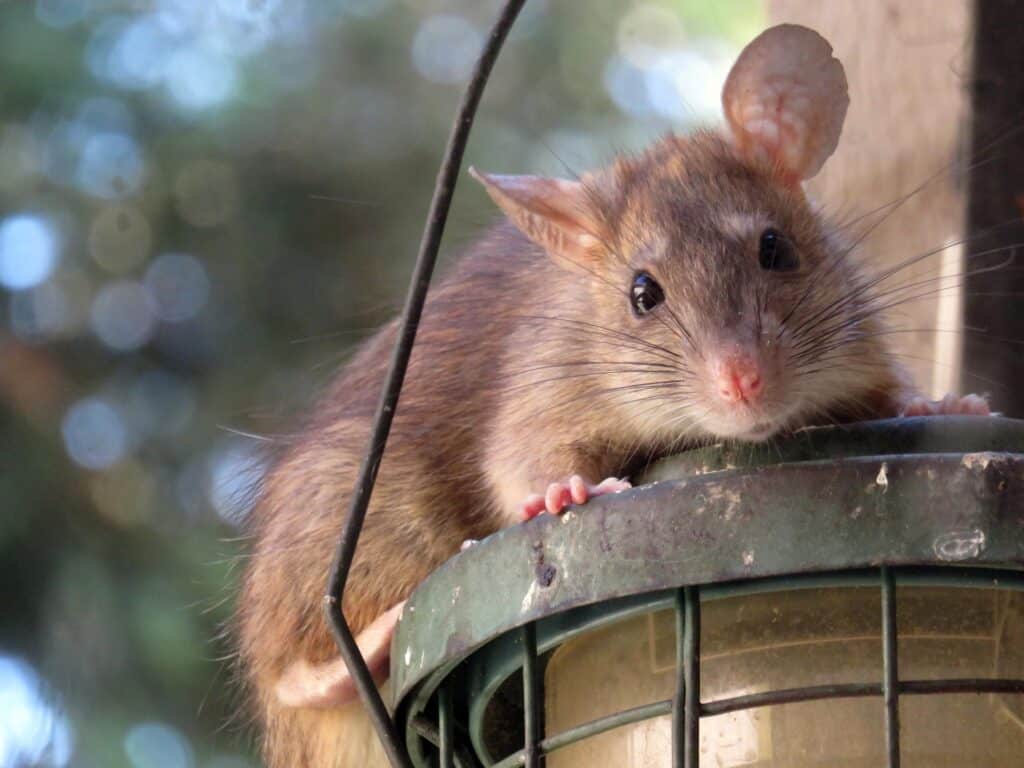
- Physical characteristics and identification: Roof rats appear more slender and graceful than Norway rats, weighing 150-250 grams with body lengths 16-20cm plus tails measuring 19-25cm (tails longer than head-plus-body). Their bodies show sleek streamlined appearance with pointed muzzles, large prominent eyes, and large thin ears reaching or covering eyes when folded forward. Coloration ranges from black to brown dorsally with gray, white, or cream undersides. The long thin scaly tail and overall slender build distinguish them from stockier Norway rats.
- Climbing abilities and habitat: Roof rats excel at climbing, readily scaling rough walls, trees, vines, utility lines, and pipes accessing upper building levels. They prefer elevated locations established in attics, roof spaces, ceiling voids, wall cavities in upper floors, and trees with dense canopies. This vertical habitat use explains their common name and creates detection and control challenges since human activity concentrates at ground level while roof rats operate overhead.
- Behavior patterns: Roof rats demonstrate neophobic (fear of new objects) behavior approaching novel items cautiously, making trap and bait acceptance slower than some species. They’re primarily nocturnal with peak activity 30 minutes after sunset and before sunrise. They follow established travel routes repeatedly creating visible runways and rub marks along beams, pipes, and structural members. Social structure involves dominant hierarchies affecting feeding and nesting locations.
- Reproductive capacity: Female roof rats produce 3-5 litters annually with 5-8 young per litter. Gestation requires 21-23 days, young mature at 2-4 months, and breeding can occur year-round in warm climates or heated indoor environments. While slightly less prolific than Norway rats, their reproductive rates still enable rapid population establishment.
- Dietary preferences: Roof rats show greater preference for fruits, nuts, seeds, and grains compared to Norway rats’ omnivorous tendencies, though they’ll consume diverse foods when preferred items are unavailable. They require approximately 15-30 grams of food and 15-60ml water daily depending on diet moisture content. Their fruit preference makes them particularly problematic in areas with citrus trees, palms, or other fruit-bearing plants near structures.
- Damage patterns: Roof rat damage concentrates in upper building areas including gnawed electrical wiring in attics creating fire risks, chewed insulation around HVAC ducts reducing efficiency, damaged roof vents and soffits enabling weather and pest entry, contaminated stored items in attics and storage spaces, and gnawed wooden structural members. Their habit of following pipes and wires means damage often occurs in wall voids and ceiling spaces invisible until failures occur.
- Geographic distribution: Roof rats demonstrate distribution favoring warmer climates particularly coastal areas and southern regions, though they establish in heated buildings in northern areas. Their cold sensitivity compared to Norway rats limits outdoor winter survival in northern climates but doesn’t prevent indoor infestations.
What Are House Mice?
House mice represent the smallest common rodent pest but compensate for reduced individual damage capacity through extremely rapid reproduction and ability to exploit tiny entry points and spaces.
- Physical characteristics and identification: House mice are much smaller than rats, weighing just 12-30 grams with body lengths 65-95mm plus tails 60-105mm (total length typically under 200mm or 8 inches). Their bodies appear delicate with small pointed muzzles, large prominent ears proportionally much larger than rat ears, and large eyes relative to head size. Coloration ranges from light brown to gray dorsally with lighter undersides, and their thin nearly-hairless tails are approximately equal to body length.
- Entry and movement capabilities: Small body size enables house mice to squeeze through openings as small as 6mm (1/4 inch)—roughly the diameter of a dime—exploiting gaps around utility penetrations, beneath doors, and in foundation cracks that exclude larger rodents. They demonstrate excellent climbing on rough surfaces, can jump vertically 30cm and horizontally up to 45cm, and readily travel through wall voids, ceiling spaces, and other structural voids accessing entire buildings.
- Reproductive capacity: House mice exhibit the highest reproductive rate among common household rodents. Females produce 5-10 litters annually with 5-6 pups per litter (range 3-12), gestation requires just 19-21 days (shortest among these three species), young reach sexual maturity at 6 weeks, and breeding occurs year-round indoors. Mathematical models demonstrate that a single breeding pair can theoretically produce over 200 offspring within one year under ideal conditions, though actual population growth faces environmental constraints.
- Territorial behavior: Despite small size, house mice demonstrate territorial behavior with dominant males defending feeding and nesting areas against other males. Population social structure shows complex hierarchies affecting access to resources, with subordinate individuals forced to marginal habitats. This territoriality can actually limit population density in some situations as dominant mice exclude others.
- Dietary requirements: House mice are opportunistic omnivores preferring seeds and grains but consuming diverse foods. They require just 3-4 grams of food daily—roughly equivalent to their stomach capacity—and can survive on minimal water if food contains adequate moisture. This minimal resource requirement enables establishment in locations with limited food availability that wouldn’t support rat populations.
- Behavior patterns: House mice demonstrate less neophobia than roof rats, readily investigating and consuming novel foods making baiting more successful. They’re primarily nocturnal but may show daytime activity in undisturbed areas or with large populations. They rarely travel more than 3-9 meters from nests, creating many small territories throughout structures rather than ranging widely like rats.
- Damage characteristics: Individual house mice cause less damage than rats given smaller body size and weaker gnawing capability, but damage occurs throughout structures from multiple territorial groups. Common impacts include gnawed electrical wiring (thin enough for mice to damage), contaminated stored foods particularly grains and cereals, chewed paper and fabric for nesting material, damaged insulation, and numerous droppings and urine deposits creating sanitation concerns and unpleasant odors.
Rodent Damage Compared
While all three species cause significant problems, their damage patterns, severity, and implications differ based on species-specific characteristics and behaviors. This is why it is necessary to know the difference between mice and rats.
Structural damage severity ranking: Norway rats cause most severe individual structural damage through powerful gnawing of substantial materials including thick wood, concrete, and even lead pipes. Roof rats cause moderate structural damage concentrated in upper areas but with particular concerns around electrical systems. House mice cause least per-animal structural damage but widespread impacts from multiple nesting groups throughout structures.
Fire risk assessment: All three species create fire hazards through electrical wiring damage, but roof rats pose particular concerns given their preference for attics where wiring damage may go undetected longer and where fire spreading into attic spaces can rapidly involve entire structures. Norway rats in basements and walls also damage wiring, while house mice damage thinner gauge wiring extensively.
Contamination and sanitation concerns: House mice potentially create greatest contamination issues through their behavior of depositing numerous droppings and urine marks continuously while traveling (40-100 droppings daily per mouse distributed along travel routes). Rats produce larger but fewer droppings deposited primarily in harborage areas rather than continuously during travel. However, rat urine and droppings harbor more pathogens per deposit given their larger size.
Detection difficulty: Roof rats prove most difficult to detect given elevated activity areas rarely inspected by homeowners and cautious neophobic behavior. House mice show intermediate detection difficulty—their small size enables them to hide effectively but their continuous droppings and less cautious behavior reveal presence. Norway rats prove easiest to detect given ground-level activity overlapping human spaces and larger more-obvious signs.
Population growth rates: House mice demonstrate fastest population growth given shortest gestation, earliest sexual maturity, and highest litter frequency. Norway and roof rats show similar slightly-slower growth rates. From small founding populations, mice reach problematic levels fastest warranting early intervention.
Control difficulty: Roof rats generally prove most difficult to control given elevated activity areas complicating treatment access, neophobic behavior delaying bait and trap acceptance, and climbing abilities enabling rapid reinfestation from exterior trees and structures. Norway rats show intermediate control difficulty. House mice prove relatively easier to control individually but widespread territorial distribution requires comprehensive treatment throughout structures.
Identification Signs
Accurate species identification enables appropriate control strategies, with multiple physical and behavioral characteristics distinguishing these three species.
- Droppings comparison: Rodent droppings provide valuable identification clues. Norway rat droppings measure 18-20mm length with blunt ends, capsule-shaped, found primarily in harborage areas. Roof rat droppings measure 12-13mm length with pointed ends, spindle-shaped, found along runways in elevated locations. House mouse droppings measure just 3-6mm length with pointed ends, rod-shaped, distributed continuously along travel routes. Fresh droppings appear dark and moist while older droppings become gray and crumbly.
- Track and tail drag patterns: Dusty surfaces reveal footprint characteristics. Rat tracks show four toes on front feet and five on hind feet with individual toe prints visible, while mice show similar but much smaller tracks. Rat tails may leave drag marks between footprints in dust or mud particularly with Norway rats’ heavy tails, while house mice rarely show tail drags given lighter tails.
- Rub marks and travel indicators: Rodents following repeated routes deposit body oils creating dark greasy smears on surfaces. Norway rat marks appear low on walls and along floor edges reflecting ground-level travel. Roof rat marks appear on pipes, beams, and upper wall surfaces reflecting climbing routes. House mouse marks are lighter and less obvious but appear along baseboards and edges throughout structures.
- Gnaw mark characteristics: Gnaw marks differ by species size. Norway rat gnawing shows large tooth marks (approximately 4mm width per incisor) on substantial materials including thick wood and plastic. Roof rat marks measure approximately 2-3mm width on lighter materials. House mouse gnaw marks measure just 1mm width appearing as fine scratching on surfaces rather than deep gouges rats create.
- Nesting site preferences: Norway rats nest in burrows outdoors or low protected indoor locations (basements, behind stored materials). Roof rats nest in elevated locations (attics, wall voids in upper floors, dense vegetation). House mice nest in numerous small territories throughout structures in protected locations behind appliances, in stored materials, within wall voids at various heights.
How to Get Rid of Rodents
Professional pest control includes a detailed inspection identifying species and infestation extent, exclusion recommendations and sealing entry points as needed, appropriate interior and exterior treatments, monitoring confirming elimination, and preventive recommendations avoiding reinfestation.
If you’re observing signs suggesting Norway rats, roof rats, or house mice including droppings, gnaw marks, or noises, experiencing rodent damage to structures or stored goods, or uncertain which species you’re dealing with requiring proper identification, contact Aptive today for a free quote and professional evaluation from a quality pest control service.