Call Now and Ask About the Winter Deal While it Lasts →

Call Now and Ask About the Winter Deal While it Lasts →

Sign-in to Account
Call Us

(855) 948-5816

aptive_pest_control_lockup-white

Find Service Area

Ant Lifespan Differences Between Workers and Queens

Written by Aptive Pest Control December 15, 2025

When observing ant trails in homes or watching outdoor colonies, understanding how long ants live is crucial for comprehending colony dynamics, predicting population patterns, and implementing effective ant control strategies. 

Ant lifespan varies dramatically by caste (colony role) and species, with worker ants typically living weeks to months, male ants surviving only days to weeks primarily for reproduction, and queen ants potentially living years to decades as colony reproductive centers. 

Understanding an ant lifespan explains why colonies persist despite worker mortality, reveals why queen-focused control proves most effective, and informs realistic timelines for elimination efforts recognizing that killing visible workers provides only temporary relief without addressing long-lived queens producing continuous replacements.

Ant Caste System and Lifespan Variation

Ants demonstrate eusocial organization with distinct castes performing specialized roles, with caste determining both function and lifespan creating dramatic longevity differences within single colonies.

Worker ants: These sterile females comprise colony majorities performing all labor including foraging, brood care, nest maintenance, and colony defense. Worker lifespans vary substantially by species from 1-2 months in small fast-reproducing species like pharaoh ants to 1-3 years in larger species like carpenter ants. 

Environmental factors including temperature, food availability, predation pressure, and workload intensity affect actual lifespans. Workers performing high-risk activities including foraging outdoors experience higher mortality than workers remaining in protected nest environments.

Queen ants: Reproductive females (queens) demonstrate remarkably-extended lifespans relative to workers, with documented lifespans ranging from 5-15 years in many common species to potentially 30 years in some harvester ant queens. This extreme longevity enables colonies to persist for decades given a single queen’s continuous egg production. 

Protected nest positions, constant worker attendance providing food and care, and lack of dangerous foraging or other high-risk activities contribute to exceptional queen survival.

Male ants: Reproductive males (drones) demonstrate shortest lifespans of any caste, typically surviving just days to weeks. Their sole function involves mating during nuptial flights with virgin queens from other colonies. Following mating, males die quickly having fulfilled their reproductive role. Males never participate in colony labor, receive minimal worker care, and lack adaptations for extended survival.

Species-Specific Ant Species Longevity

Different ant species demonstrate varying lifespans reflecting their ecological strategies, with some emphasizing rapid reproduction with short-lived workers while others invest in longevity and slower population growth.

  • Carpenter ants (Camponotus species): Worker carpenter ants live 6-12 months with some individuals surviving 2-3 years, while queens may live 10-25 years continuously producing workers. These relatively long worker lifespans reflect their large body size and lower reproductive rates compared to smaller species.
  • Odorous house ants (Tapinoma sessile): Workers live several months, while queens survive several years. Colonies often contain multiple queens (polygyne) enabling colony persistence even if individual queens die.
  • Argentine ants (Linepithema humile): Worker lifespans approximate 2-4 months, while queens live 1-2 years. However, their massive supercolonies with thousands of queens distributed throughout networks ensure colony-level persistence far exceeding individual queen lifespans.
  • Pharaoh ants (Monomorium pharaonis): Workers live just 4-10 weeks reflecting their tiny size and rapid reproduction strategy. Queens survive 4-12 months, with colonies maintaining multiple queens enabling sustained populations despite relatively short queen lifespans.
  • Fire ants (Solenopsis invicta): Worker lifespans range from 5 weeks to 6 months depending on caste size (minor versus major workers), while queens live 2-7 years. Their aggressive reproduction and large colony sizes create substantial pest problems.
  • Pavement ants (Tetramorium caespitum): Workers live several months to over a year, while queens survive 3-8 years enabling long-term colony establishment beneath sidewalks and building foundations.

Why Ant Lifespans Vary

Environmental conditions and colony characteristics substantially influence actual ant lifespans within species-specific ranges.

  • Temperature: Warmer temperatures accelerate metabolism and development rates shortening lifespans, while cooler conditions slow physiological processes potentially extending longevity. However, extreme temperatures in either direction increase mortality through thermal stress. Optimal temperature ranges vary by species matching their native climate adaptations.
  • Food availability: Adequate nutrition enables longer worker survival and greater queen fecundity, while food scarcity forces colonies into stress responses including reduced reproduction and increased worker mortality. Protein availability particularly affects brood production and worker longevity.
  • Colony age and size: Young developing colonies often show higher individual worker longevity compared to mature colonies where rapid turnover maintains larger populations. Small colonies with fewer workers may show extended individual lifespans from reduced workload stress compared to large colonies with intense labor demands.
  • Seasonal effects: Many temperate species demonstrate seasonal lifespan variation with workers produced in fall potentially overwintering and surviving 6-8 months while summer workers live just 1-2 months. This seasonal variation reflects differing energy demands and environmental conditions.
  • Predation and competition: External pressures including predator attacks, competition with other colonies, and pathogen exposure all reduce actual realized lifespans below potential maximum longevity observed in protected laboratory conditions.

When You Need Professional Pest Control for Ants

Professional pest control for ants implements strategies such as queen-focused targeting through proper identification determining species and likely nest locations, appropriate treatment selection based on ant biology, strategic baiting or direct treatments, and follow-up ensuring colony elimination.

If you’re experiencing persistent ant problems despite control attempts, observing daily ant trails suggesting active nearby colonies, or uncertain about effective approaches given ant lifespan and reproduction, contact Aptive today for a free quote from a professional pest control service.
Learn more about ants

10 Fascinating Facts about Queen Ants 12 Preventive Tips to Eliminate Odorous Ants for Homeowners 3 Essential Ant Prevention Strategies to Know for New Homeowners 3 Strange Adaptations That Help Ants Survive 3 Surprising Facts About Pavement Ants 3 Things That Attract Ants to Your Home & How to Prevent It 3 Unexpected Reasons Fire Ants Build Mounds in the Same Spot 4 Common Myths About Ant Infestations (And the Truth Behind Them) 5 Effective Measures on How to Prevent Ants in the Apartment A Detailed Guide to Fire Ant Control A Guide to Common Types of Ants: Identification, Behavior, and Risks Ant Trails: Learn Why They Always Return to Your House Ants in Electrical Outlets: Causes, Risks, and Fixes Ants Marching - Why Do Ants Walk in a Line? Are Ants Arthropods? Are Ants Nocturnal? Argentine Ant Supercolonies: Why Control Is Hard Argentine Ants vs. Odorous House Ants Asian Needle Ants Guide: What Are They and Are They Dangerous? Can Ants Feel Pain? Can Ants Harm Pets?: A Guide for Pet Owners Can Ants Really Lift 50 Times Their Body Weight? Can Ants Swim? Common Household Items That Attract Ants Do Ant Trails Really Work Like Highways? Fire Ants vs Pavement Ants: What Are the Differences? Harvester Ants: Guide to Identification, Prevention, and Treatment How Ants Are Getting Into Your House And How to Stop Them How Argentine Ants Communicate to Form Supercolonies How Do Ant Colonies Divide Labor Without a Leader How Long Do Ants Live? How to Get Rid of Ants in the Kitchen How to Identify, Prevent, and Treat Pharaoh Ant Infestations How to Tell if You Have an Ant Infestation or Just a Few Strays How to Treat and Control Flying Ants Little Black Ants vs Pavement Ants: What Are the Differences? Pavement Ants 101: What Are Pavement Ants? Pavement Ants in High-Traffic Outdoor Zones: What You Should Know Preventing Argentine Ants: Tips for Securing Your Home Against Invasion Termite Swarm or Just Flying Ants? The Differences Between Ants and Termites The Different Types of Ants The Role of Ant Queens in Colony Expansion The Strange Reason Ants Follow Dead Ant Trails What Are Army Ants and Where Are They Found? What Are Flying Ants? Homeowner's Guide to Dealing with These Pests What Attracts Ants to Your Home? What Do Ants Do at Night? What Do Odorous House Ants Smell Like? What Happens Inside an Ant Nest After Rainfall When Are Ants Most Active? Seasonal Changes and Their Impact Where Ants Live & How to Control Them Where Do Ants Lay Eggs? Where Do Pavement Ants Get Their Name? Why Ants are Invading Your Home Why Are Ants in the Shower and How to Prevent Them from Entering Why Are You Seeing More Ants After Rain? Here's What to Know Why Do Ants Build Mounds? Why Do Ants Keep Coming Back? Why Do Ants Keep Showing Up in the Same Spot Every Morning Why Do Fire Ant Stings Burn? Why Do Some Ant Colonies Split Instead of Expanding? Why Do Some Ants Form Living Bridges with Their Bodies Why Odorous Ants Love Your Kitchen: Attraction Factors and Prevention Tips Why You Keep Seeing Ants in the Dishwasher Why You Shouldn't Squish Ants

Curated articles for you, from our pest experts.

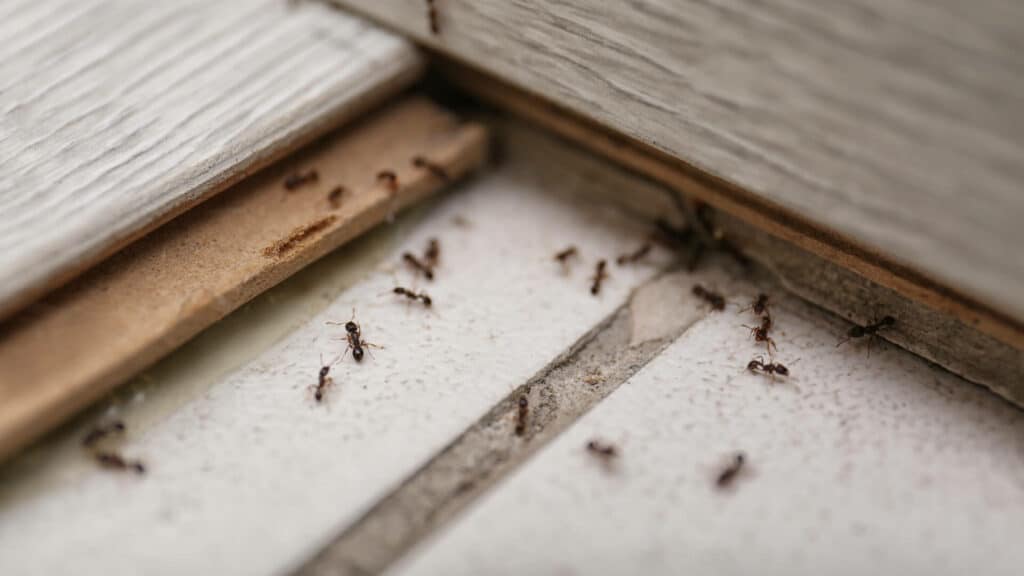
A Close-Up Of Several Small Black Ants Crawling Along The Edge Of A Wooden And Tiled Surface.

4 Insects That Are Hard to Get Rid Of

When experiencing recurring pest problems despite repeated pest control attempts, understanding which insects demonstrate greatest persistence is crucial for implementing appropriate comprehensive strategies rather than ineffective quick fixes.  Certain hard to get...

Dec 17, 2025
A Detailed Close-Up Of A Cicada Perched On A Green Leaf, Displaying Its Intricate Wings And Textured Body Against A Vibrant, Blurred Background.

What Is the Definition of Insect?

When encountering small arthropods in homes and attempting to identify them for appropriate control measures, understanding the scientific definition of insect is crucial for distinguishing true insects from other superficially-similar creatures requiring different...

Dec 11, 2025
A Newly Emerged Cicada With Bright Red Eyes Clings To A Small Tree Branch, Next To Its Discarded Exoskeleton. The Cicada’s Translucent Wings And Vibrant Body Contrast Against The Brown Background, Highlighting Its Recent Molt During Metamorphosis.

What Is Insect Molting?

When discovering papery translucent shells on floors, stuck to walls, or hidden in corners, understanding what these remains represent is crucial for recognizing pest activity and assessing infestation severity. Insect molting (ecdysis) is the process whereby...

Dec 11, 2025
A Group Of Small Potted Plants, Including A Fuzzy Cactus, A Green Succulent, And A Taller Reddish Succulent, Arranged On A Windowsill With Sheer Lace Curtains Softly Filtering Daylight In The Background.

What Are Those Tiny White Bugs on Plants?

When discovering small white insects on houseplants or garden plants, accurate identification is crucial for implementing appropriate control measures and preventing widespread damage to plant collections.  Tiny white bugs on plants typically represent one of...

Dec 11, 2025
An Angled View Of An Open Luxury Car Door Revealing A High-End Black Leather Interior With Quilted Stitching, Spacious Rear Seats, And Built-In Entertainment Screens Mounted Behind The Front Seats. The Exterior Of The Vehicle Is Glossy Black With Chrome Wheel Details, Parked Indoors Under Modern Lighting.

Why Do You Have Bugs in Your Car?

When discovering insects in your vehicle, understanding what attracts bugs in car environments is crucial for implementing pest control strategies and eliminating recurring problems.  Cars provide conditions many insects actively seek including shelter from weather...

Dec 11, 2025
A Close-Up Photograph Of A Red Ladybug With Black Spots Crawling Along The Edge Of A Green Leaf, Set Against A Softly Blurred Green Background.

Which Insects Hibernate?

When temperatures drop and insect activity seemingly disappears, understanding how different species survive winter is crucial for predicting seasonal pest patterns and implementing appropriate year-round control strategies.  While true hibernation (prolonged...

Dec 11, 2025
A Newly Emerged Butterfly With Cream And Dark Brown Patterned Wings Hanging From Its Chrysalis, Surrounded By Multiple Green And Brown Pupae On A Horizontal Branch, Against A Blurred Green Background.

What Is Diapause in Insects?

Diapause represents a critical survival strategy that allows insects to endure unfavorable environmental conditions including extreme temperatures, drought, or lack of food by entering a programmed state of dormancy with suppressed metabolism and arrested...

Dec 2, 2025
A Detailed Close-Up Image Of A Dark, Segmented Isopod Crawling On A Bed Of Dry Twigs, Leaves, And Soil. A Smaller Isopod Is Visible Nearby, Both Surrounded By Textured Ground Debris.

What Are Isopods in the Garden?

Isopods are beneficial soil-dwelling crustaceans commonly found in gardens where they play important ecological roles breaking down organic matter and contributing to soil health through their decomposition activities. These armor-plated creatures including...

Dec 2, 2025
A Vibrant Blue Wooden Door Framed By A Terracotta Wall And Surrounded By Cascading Green, Yellow, And Purple Vines, With House Number 5 Above The Entrance And A Small Stone Staircase Visible Inside.

The Importance of Sealing Entry Points Before Winter

You recognize that cooling fall temperatures trigger pest movement from outdoor environments into heated structures, with proper timing of exclusion work proving critical for preventing winter infestations.  Sealing entry points before winter proves important...

Dec 2, 2025
Modern Kitchen With White Cabinets, Stainless Steel Appliances, And A Decorative Tile Backsplash, Featuring A Wooden Tray With Decorative Items On The Countertop.

Why You Keep Finding Cobwebs Even After Cleaning

You remove cobwebs from corners, ceilings, and furniture only to discover new webs appearing within days or even hours, suggesting ongoing spider activity rather than residual old webs from previous occupation. Cobwebs keep reappearing after cleaning because active...

Dec 2, 2025

Take back your home with pest control today.