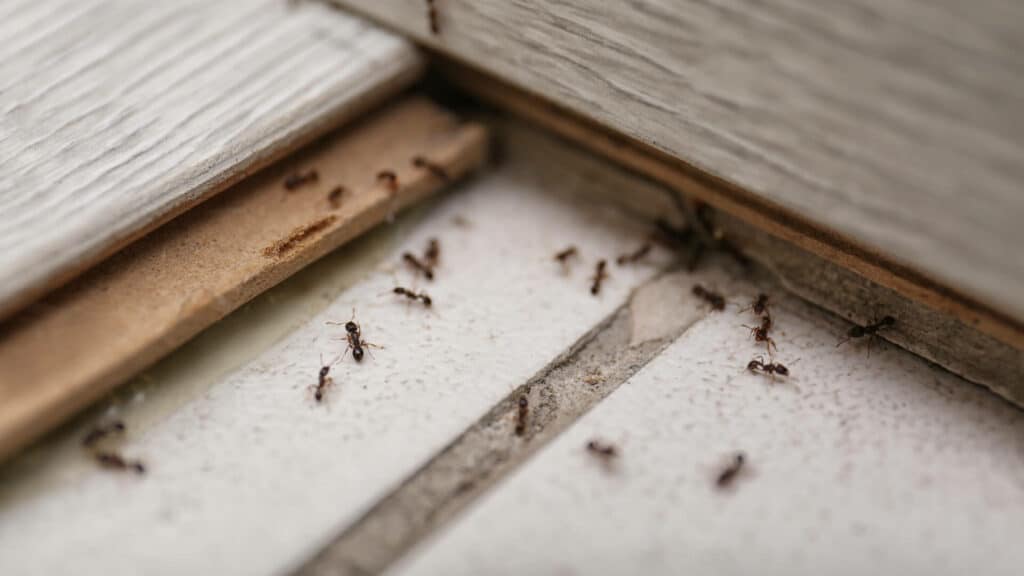
You discover ant trailing across counters, along baseboards, or near specific household items, suggesting certain materials or conditions attract and sustain their activity.
Common household items attracting ants include food sources like crumbs, spills, unsealed pantry goods, pet food, and overripe fruit. Ants detect and follow through pheromone trail systems recruiting additional foragers to productive resource locations.
Understanding what attracts ants into homes explains recurring infestation patterns, reveals prevention opportunities through proper storage and sanitation, and informs comprehensive management addressing both immediate attractants and underlying conditions supporting home ant problems. The specific items and conditions attracting ants vary somewhat by species but share common themes of accessible nutrition and favorable environmental conditions.
Why Ants Love Food
Food represents the most common and powerful ant attractant, with various household food items providing the carbohydrates, proteins, and fats different ant species require.
Crumbs and small food particles: Even tiny crumbs invisible to casual observation attract foraging ants. A single cracker crumb contains sufficient carbohydrates to feed dozens of workers, with ants capable of detecting and transporting food particles measuring just fractions of a millimeter. Common accumulation areas include:
- Under and behind appliances (toasters, microwaves, stoves, refrigerators)
- Along countertop edges and backsplashes
- In cabinet corners and on shelves
- Around dining areas beneath tables and chairs
- Inside pantries on floors and lower shelves
Sugary substances: Ants demonstrate strong attraction to sugar and sweet substances providing quick energy. Household sources include:
- Spilled honey, syrup, jam, or jelly
- Sugar bowls or canisters without tight seals
- Soda or juice spills and residue on bottles
- Candy wrappers with residue
- Sweet coffee or tea drips near machines or stations
Greasy and protein-rich foods: While many people associate ants exclusively with sweets, numerous species also seek proteins and fats. Attractants include:
- Meat drippings and grease splatter near stoves
- Pet food (both dry kibble and canned varieties)
- Cooking oil residue on surfaces
- Nut butters and oils
- Cheese, dairy products, and their residues
Unsealed pantry items: Food packages without proper sealing allow odor escape attracting scouting ants. Vulnerable items include:
- Open cereal boxes, cracker packages, and chip bags
- Improperly sealed flour, sugar, and grain containers
- Spice containers with loose lids
- Baking supplies in original packaging
- Dried fruits and nuts in unsealed containers
Garbage and compost: Trash receptacles and compost bins contain concentrated food odors and residues. Interior kitchen trash especially attracts ants when:
- Bags aren’t emptied regularly
- Containers lack tight-fitting lids
- Residue accumulates on can interiors or rims
- Food waste includes particularly attractive items (fruit, sweets, meat)
Ants Need Water
Beyond food, ants require water for survival with moisture needs varying by species, making water sources significant attractants particularly during dry periods or in arid climates.
- Leaky plumbing and fixtures: Even minor leaks create moisture attracting ants. Dripping faucets create small water pools, leaking pipe connections beneath sinks provide continuous moisture, toilet tank or bowl leaks supply drinking water, water line connections to appliances like dishwashers and refrigerators may develop slow leaks, and drain connections can create persistent moisture problems ants readily exploit.
- Condensation sources: Temperature differentials causing condensation provide drinking water. Cold water pipes “sweat” in humid conditions creating droplets ants access, toilet tanks with exterior condensation offer reliable moisture, windows accumulate condensation providing drinking sources, refrigerator drip pans collect defrost water often going unnoticed, and air conditioning units produce condensate that may pool or drip creating ant-accessible water.
- Pet water bowls: Standing water in pet dishes attracts ants, particularly outdoor pet bowls near entry points that provide convenient access, indoor bowls in kitchens or laundry rooms where ants already forage, spilled water around bowl perimeters creating moisture zones, and uncleaned bowls developing residue and biofilm making them even more attractive.
- Damp or humid areas: Certain rooms or locations with elevated humidity prove particularly attractive. Bathrooms with poor ventilation maintain high moisture levels, basements with moisture issues provide favorable conditions, laundry rooms with dryer steam create humid environments, kitchen areas near dishwashers experience elevated humidity, and crawl spaces with ground moisture attract moisture-seeking species.
- Houseplant watering: Plants create multiple moisture attractions including saturated soil from overwatering, drainage dishes with standing water, water spills during watering activities, and high humidity developing around plant groupings creating favorable microclimates.
Less Obvious Attractants
Beyond the most common items, various other household materials and conditions attract ants or contribute to favorable environments supporting their activity.
- Pet-related items: Beyond food and water bowls, various pet items attract ants. Pet beds with food crumbs or spilled treats, litter boxes attracting protein-seeking species, aquarium areas with food residue or splashed water, bird cages with scattered seed and droppings, and rodent or small animal cages with bedding and food all create ant activity focal points.
- Electrical outlets and appliances: Certain ant species demonstrate attraction to electrical equipment. Warmth from powered electronics, electromagnetic fields some species apparently detect, and protected voids within devices all prove attractive, with this behavior particularly noted with fire ants and certain other species creating potential electrical hazards.
- Structural features: Building characteristics create favorable conditions. Window sills collecting dead insects provide protein, door thresholds trap food particles, baseboards accumulate debris in gaps, wall voids provide harborage, and attic or crawl space insulation offers nesting sites all contributing to ant establishment.
- Seasonal attractants: Items appearing or becoming problematic during specific times create temporal patterns in ant activity. Holiday decorations with food residues from Halloween candy or Christmas cookies, seasonal fruits during harvest times, increased beverage consumption areas during summer, and heating system areas during winter providing warmth all create changing attraction patterns throughout the year.
What You Can Do if You’re Seeing Activity
Professional pest control combines inspection identifying attractants and entry points, sanitation and exclusion recommendations where necessary, appropriate treatments targeting both foraging workers and colonies, and monitoring confirming elimination success while preventing reinfestation with ant control.
If you’re experiencing persistent ant activity despite addressing obvious attractants, discovering trailing that keeps returning to certain areas, or uncertain what’s actually drawing ants into your home, contact Aptive today for a free quote from a quality pest control service.