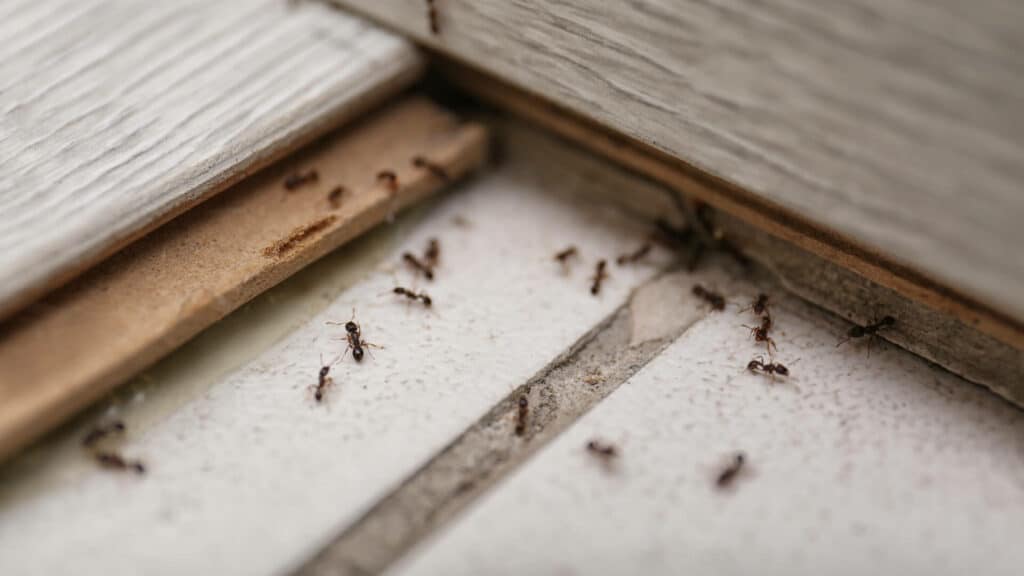
When crushing ants and detecting unusual odors, understanding what odorous house ants smell like is crucial for accurate species identification enabling appropriate pest control strategies.
Odorous house ants (Tapinoma sessile) release a distinctive odor when crushed commonly described as rotten coconut, spoiled butter, or musty sweet scent, with this characteristic ant smell produced by defensive chemicals including methyl ketones released from anal glands when ants are threatened, injured, or killed.
Understanding this diagnostic odor enables confident field identification distinguishing odorous house ants from other common household ant species lacking characteristic scent, and informs appropriate ant control approaches given their behavioral characteristics.
What Do Odorous House Ants Smell Like?
The distinctive odor odorous house ants produce results from specific volatile compounds synthesized and stored in specialized glands for defensive purposes.
Chemical composition: Research identifies the primary odorous compounds as methyl ketones including 6-methyl-5-hepten-2-one and related compounds produced in pygidial glands (anal glands) located at the abdominal tip.
When ants are crushed, threatened, or alarmed, these glands release volatile compounds creating the characteristic odor. The specific compound ratios vary somewhat among populations but consistently produce recognizable scent described variously as rotten coconut, blue cheese, spoiled butter, or musty sweetness with individual perception varying based on olfactory sensitivity.
Defensive function: The odor serves multiple defensive functions including alarm pheromone alerting nestmates to danger triggering evacuation or defensive behaviors, potential predator deterrent making ants distasteful or warning of chemical defenses, and possibly antimicrobial properties protecting colonies from pathogens.
Detection threshold: Human olfactory sensitivity to these compounds varies substantially among individuals with some people detecting odor from a single crushed ant while others require crushing multiple ants or fail to detect odor entirely. This variation reflects genetic differences in olfactory receptor expression affecting ability to perceive specific volatile compounds. However, most people detect characteristic scent when crushing several ants or when encountering large infestations.
Distinguishing Odorous House Ants from Similar Species
The diagnostic odor provides a reliable identification feature distinguishing odorous house ants from other common household species that may appear superficially similar.
- Physical characteristics: Beyond odor, odorous house ants demonstrate distinctive features including 2.4-3.25mm worker body length making them small among common household ants, dark brown to black coloration, single node (segment) on petiole (waist) between thorax and abdomen versus two nodes in some other species, and unevenly-rounded thorax profile when viewed from side. However, these features require close examination while odor provides instant identification.
- Similar species comparison: Several other common household ants demonstrate comparable size and coloration but lack characteristic odor. Argentine ants (Linepithema humile) appear similar but produce a musty smell distinctly different from coconut-like odor when crushed, little black ants (Monomorium minimum) are smaller with different odor, and various other dark ant species lack diagnostic scent. Carpenter ants prove much larger and easily distinguished by size alone.
- Behavioral differences: Odorous house ants demonstrate rapid erratic movement when disturbed, form trails containing hundreds to thousands of workers, and readily abandon trails when disrupted reforming quickly elsewhere. These behavioral characteristics combined with odor enable confident identification even without microscopic examination.
Where These Ants Usually Show Up Indoors
- Kitchen and food storage areas: Odorous house ants concentrate foraging in kitchens and pantries accessing counters, sinks, stored foods, and garbage. Their small size enables access through tiny packaging gaps and cracks reaching stored goods.
- Bathrooms: Moisture attracts these ants to bathrooms where they access water from condensation, drips, and plumbing. They nest in wall voids near plumbing and travel along pipe runs throughout structures.
- Wall voids and structural spaces: Colonies establish in wall voids, beneath floor coverings, in insulation, and various other protected structural spaces providing shelter and moisture. Indoor nesting enables year-round activity independent of outdoor conditions.
- Outdoor-to-indoor connections: Outdoor colonies under mulch, pavers, foundation stones, and landscaping materials create source populations invading structures. Workers travel between outdoor nests and indoor foraging sites creating persistent invasion pressure.
Biology and Colony Structure
Understanding odorous house ant biology informs control strategy development recognizing their unique characteristics affecting management difficulty.
Colony organization: Odorous house ant colonies typically contain multiple queens (polygyne colonies) with 100,000 or more workers, enabling rapid population growth and colony persistence even if some queens are eliminated. Colonies often establish multiple interconnected nests (supercolonies) with workers, queens, and broods moving freely between nest sites, complicating control efforts requiring elimination of entire colony networks rather than individual nests.
Reproductive capacity: Queens produce eggs continuously with multiple queens in colonies creating substantial reproductive output. Colonies reproduce through budding where workers, queens, and brood split forming new satellite colonies rather than through swarming flights typical of many ants. This budding behavior means disturbing colonies or using repellent products can cause colony fragmentation creating multiple new colonies worsening problems.
Seasonal activity: Odorous house ants remain active year-round in heated structures though outdoor activity peaks during warm months. Indoor invasions often increase during spring when colonies expand and during hot dry summers or rainy periods when outdoor conditions become less favorable.
Dietary preferences: Workers demonstrate strong preference for sugary foods including honeydew from aphids, plant nectars, and human foods containing sugars. They also consume proteins from dead insects and various other foods making them adaptable generalist foragers exploiting diverse resources.
When to Consider Pest Control Services
Professional pest control services provide effectiveness through proper species identification via odor and morphology, appropriate baiting and treatment selection and location targeting.
If you’re detecting the characteristic rotten coconut ant smell indicating odorous house ant presence, experiencing persistent trailing despite control attempts, or uncertain about effective management approaches, contact Aptive today for a free quote.