Ant queens lay eggs exclusively within protected nest chambers deep inside colonies, where specialized worker ants tend to develop broods in carefully controlled temperature and humidity conditions essential for successful development.
These egg-laying chambers remain hidden in soil cavities, wall voids, rotting wood, or other sheltered locations providing safety from predators, environmental extremes, and disturbances that could harm vulnerable eggs and larvae. Understanding where ants establish nests and rear broods helps homeowners locate source colonies requiring treatment rather than endlessly eliminating foraging workers that represent only a small fraction of total colony populations.
Where do ants like to lay eggs?
Ant queens lay eggs in protected brood chambers within nests located in diverse environments including underground soil cavities, rotting wood, wall voids, beneath rocks and debris, inside tree stumps, and within structural voids depending on species-specific preferences.
These nesting sites provide stable temperature and humidity conditions, protection from predators and weather, and proximity to food resources supporting colony growth. Carpenter ants excavate galleries in moist, damaged wood for egg-laying chambers, while fire ants construct elaborate underground tunnel systems with multiple brood chambers at various depths.
Pavement ants nest under concrete slabs and foundations, odorous house ants colonize wall voids near moisture sources, and pharaoh ants establish satellite nests throughout structures in tiny crevices near warmth. Worker ants constantly move eggs, larvae, and pupae between chambers optimizing developmental conditions as temperature and humidity fluctuate.
Do ants prefer to lay eggs indoors or outdoors?
Most ant species strongly prefer laying eggs in outdoor nests where they evolved, with indoor nesting representing opportunistic exploitation of favorable conditions when structures provide suitable temperature, moisture, food access, and protected spaces mimicking natural habitats.
Species like carpenter ants, odorous house ants, and pharaoh ants readily establish indoor colonies when buildings offer advantages including year-round warmth, protection from weather extremes, and consistent food availability from human activities. Indoor nests allow colonies to remain active through winter when outdoor colonies enter dormancy, providing competitive advantages for species adapting to structural environments.
However, many common ants including most fire ant species, harvester ants, and pavement ants maintain outdoor nests while sending foraging workers indoors for food, with queens remaining safely outside. Indoor egg-laying typically indicates serious infestations requiring professional treatment since interior colonies prove difficult to locate and eliminate.
Which species of ants lay the most eggs?
Fire ant queens, particularly red imported fire ant queens (Solenopsis invicta), are among the most prolific egg-layers, producing 1,500-5,000 eggs daily at peak production, with individual queens laying millions of eggs over multi-year lifespans.
Argentine ant queens from massive supercolonies also demonstrate exceptional reproductive output, though individual queens produce fewer eggs than fire ant queens, their colonies contain hundreds to thousands of queens collectively producing enormous egg quantities.
Leafcutter ant queens lay hundreds of thousands of eggs monthly, supporting colonies reaching millions of workers. In contrast, carpenter ant queens produce only 15-20 eggs daily, while pharaoh ant colonies compensate for lower individual queen productivity by maintaining multiple egg-laying queens simultaneously.
How to know if you have an ant infestation
Ant infestations create distinctive signs indicating established colonies with active egg-laying:
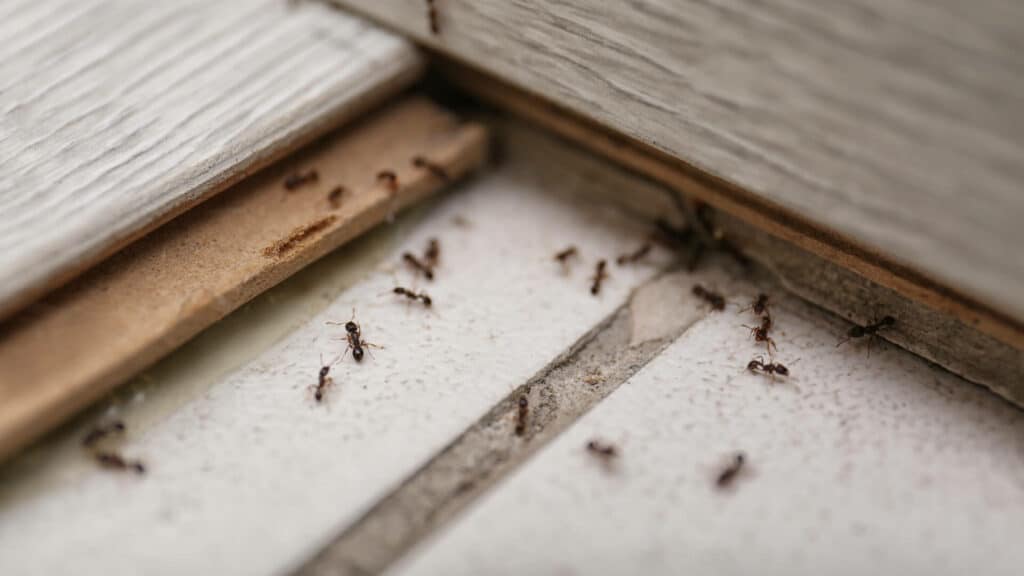
- Persistent indoor ant trails: You might notice continuous streams of ants following pheromone trails between hidden nests and food sources, reappearing daily despite cleaning indicating established colonies producing constant worker replacements.
- Winged reproductive ants (swarmers): It’s significant to observe winged ants indoors, particularly during spring, indicating mature colonies containing queens actively laying eggs and producing reproductive individuals for new colony establishment.
- Ant activity during winter months: You’ll recognize serious infestations when finding active ants indoors during cold weather suggesting colonies nesting within heated structural voids where queens lay eggs year-round protected from seasonal dormancy.
- Frass or structural damage: You might discover sawdust-like material, hollow wood, or damaged structures indicating carpenter ant colonies with brood chambers excavated in wood where queens lay eggs and workers rear developing larvae.
How to get rid of an ant infestation
Eliminating ant infestations requires targeting egg-laying queens and brood chambers within nest sites:
- Use colony-eliminating baits: Apply slow-acting poison baits allowing worker ants to transport toxins to queens and brood chambers, killing egg-laying queens and developing larvae eliminating colony reproduction capabilities permanently.
- Locate and treat nest sites directly: Follow ant trails to source nests, then apply appropriate treatments including dusts, liquids, or foams directly into nest cavities reaching queens and brood chambers rather than just killing foraging workers.
- Eliminate moisture and food sources: Fix water leaks, remove damaged wood, seal food containers, and improve sanitation eliminating conditions supporting indoor nesting and egg-laying while making structures less attractive to colony establishment.
- Seek professional pest control assistance: Contact experts for persistent infestations, or difficult species like pharaoh ants requiring specialized approaches targeting multiple satellite nests where numerous queens lay eggs simultaneously throughout structures.
When to call the professionals
When dealing with ant control throughout your property and need expert solutions that locate hidden nests and eliminate egg-laying queens rather than just visible foraging workers, professional pest control services can provide comprehensive colony elimination strategies. At Aptive, our pest control experts use advanced techniques to identify nest locations and eliminate queens responsible for continuous egg production.
If you’re experiencing persistent ant activity despite your control efforts, have discovered winged reproductive ants indicating mature colonies with active egg-laying, or are dealing with ants nesting and laying eggs within your home’s walls, don’t wait—contact Aptive today for a free quote.