Ghost ants are tiny tropical ants named for their distinctive pale legs and abdomens that make them appear to vanish when moving across light-colored surfaces, creating a ghostly appearance as their dark heads seem to float independently.
These small opportunistic ants thrive in warm, humid environments including southern states and tropical regions, readily establishing indoor colonies in homes and commercial buildings where they trail to sweet foods and moisture sources.
Having some knowledge about ghost ant biology, behavior, and identification helps property owners distinguish these persistent indoor pests from other small ant species and implement effective ant control strategies targeting their unique nesting preferences.
What are ghost ants?
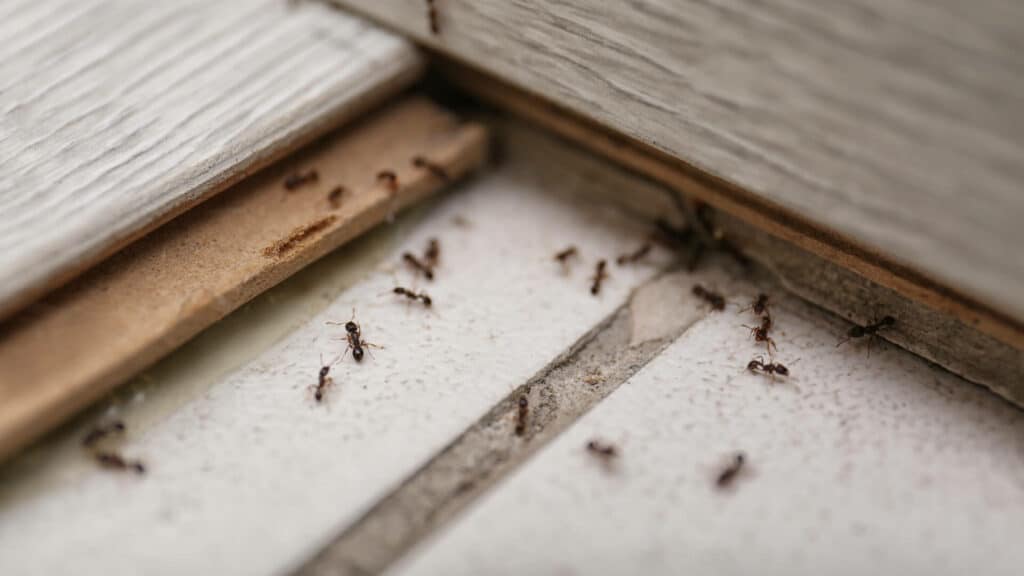
Ghost ants (Tapinoma melanocephalum) are extremely small tropical ants measuring only 1/16 inch with distinctive dark brown to black heads and thoraxes contrasting sharply with pale, nearly translucent legs and abdomens giving them their ghostly appearance.
These ants belong to the subfamily Dolichoderinae and are closely related to odorous house ants, though ghost ants lack the distinctive rotten coconut odor when crushed. Ghost ants are highly adaptable opportunistic feeders consuming sweet substances including honeydew, nectar, and sugary foods along with proteins and fats. Colonies contain multiple queens (polygyne) and frequently split into satellite nests (budding), making them difficult to eliminate with standard ant control methods.
Workers move rapidly in erratic patterns when foraging, appearing and disappearing as their pale bodies blend with light surfaces. Their small size allows entry through tiny cracks and their preference for nesting in wall voids, potted plants, and moist areas makes detection and treatment challenging.
Where are ghost ants located?
Ghost ants are native to tropical regions but have spread throughout warm climates worldwide, establishing outdoor populations in Florida, Hawaii, Texas Gulf Coast, and other southern states while occurring as indoor-only pests in temperate regions lacking suitable outdoor winter conditions.
In tropical and subtropical areas, ghost ants nest outdoors in soil, under objects, in plant cavities, and around foundations, moving indoors during extreme heat or heavy rains. In temperate climates including most of the United States, ghost ants survive only indoors where heated buildings provide year-round warmth and moisture.
They’re particularly common in greenhouses, hospitals, hotels, apartment buildings, and homes throughout the country regardless of climate. Ghost ants prefer moist environments, concentrating in kitchens, bathrooms, and areas around plumbing where humidity remains high.
Their ability to establish satellite colonies throughout structures and relocate quickly when disturbed makes them persistent problems in buildings once introduced through infested plants, shipping materials, or other transported items.
Are ghost ants dangerous?
No, ghost ants are not dangerous to humans, pets, or property, serving primarily as nuisance pests rather than health threats or structural damages despite their persistent indoor trailing behavior.
Ghost ants don’t bite or sting aggressively, with workers possessing tiny mandibles incapable of penetrating human skin under normal circumstances. They don’t cause structural damage like carpenter ants, don’t spread diseases like cockroaches, and don’t contaminate food as seriously as some other ant species, though their presence on food surfaces is unsanitary.
Ghost ants can contaminate food by walking across surfaces after contacting garbage or other unsanitary materials, potentially transferring bacteria, though they’re not known vectors of specific diseases.
Their primary concern is as indicators of sanitation or moisture problems and as persistent nuisances when establishing large colonies trailing throughout kitchens and bathrooms. Some people report minor skin irritation when crushed ghost ants contact skin, though true bites are extremely rare and cause no significant reactions.
The lifecycle of a ghost ant
Ghost ants undergo complete metamorphosis progressing through egg, larval, pupal, and adult stages, with development from egg to adult taking approximately 6 weeks under optimal warm, humid conditions.
Queens lay eggs continuously in protected nest sites, with eggs hatching into tiny larvae within 7-10 days depending on temperature and humidity. Larvae are fed by worker ants and develop through several molts over approximately 2-3 weeks before pupating. The pupal stage lasts about 1-2 weeks, with new adult workers emerging to begin foraging and colony maintenance tasks.
Ghost ant colonies contain multiple queens capable of producing hundreds of eggs, allowing rapid population growth under favorable conditions. Workers live several weeks to months depending on environmental conditions and colony needs.
Colonies reproduce through budding, where queens and workers split off forming new satellite colonies connected to parent nests through foraging trails, making complete colony elimination difficult without comprehensive treatments addressing all nest sites simultaneously. This reproductive strategy allows ghost ant populations to rebound quickly even after significant worker mortality from pest control efforts.
Are ghost ants the same as sugar ants?
Ghost ants are sometimes called “sugar ants” along with several other small ant species attracted to sweets, though “sugar ant” is not a scientific designation and creates confusion when trying to identify specific ant species.
True sugar ants (Camponotus consobrinus) are Australian ants not found in North America, making the term “sugar ant” a catch-all common name for various small ants seeking sugary foods including ghost ants, pharaoh ants, odorous house ants, and pavement ants.
Ghost ants are distinguished from other “sugar ants” by their distinctive bicolored appearance with dark heads and pale bodies, extremely small size, and preference for very humid environments.
What attracts ghost ants?
Ghost ants are attracted to sweet substances including sugar, honey, syrup, fruit juices, and honeydew from aphids and scale insects, along with moisture sources around plumbing fixtures, potted plants, and areas with high humidity.
They readily trail to spilled drinks, sticky residues, ripe fruits, and food crumbs in kitchens, while also seeking proteins and fats from various food sources. Indoor plants provide both moisture and potential nesting sites attracting ghost ant colonies.
Leaking pipes, condensation around air conditioning units, and poorly ventilated bathrooms create favorable conditions for colony establishment. Their attraction to moisture makes them particularly common around sinks, dishwashers, and bathtubs.
What should you do if a ghost ant bites you?
Ghost ant “bites” are extremely rare and cause no significant medical concerns, as these tiny ants lack the jaw strength to penetrate human skin effectively and are not aggressive toward people.
If you experience what seems like a ghost ant bite—perhaps from accidentally crushing ants against skin causing minor irritation—simply wash the affected area with soap and water removing any crushed ant material. Apply a cold compress if minor swelling or redness occurs, though reactions are typically negligible or nonexistent.
Over-the-counter antihistamines or hydrocortisone cream can address any unlikely itching or irritation. Ghost ants are not venomous and don’t inject toxins like fire ants or harvester ants, making medical attention unnecessary for ghost ant encounters.
Why you shouldn’t squish a ghost ant
Squishing ghost ants is counterproductive because crushing workers releases alarm pheromones triggering defensive behaviors in nearby ants, and more importantly, ghost ant colonies respond to disturbance by budding—splitting into multiple new satellite colonies that spread throughout structures making infestations worse.
When ghost ant colonies experience stress from worker deaths or nest disturbance, queens and workers fragment into several new colonies relocating to different areas, directly multiplying the infestation rather than reducing it.
Additionally, squishing the tiny workers provides only momentary satisfaction without addressing the multiple queens continuously producing replacement workers from hidden nests in wall voids, potted plants, and other inaccessible locations.
Effective ghost ant control requires baits allowing workers to transport toxins back to all colony sites killing queens rather than futile efforts crushing individual foraging workers that represent only a tiny fraction of total populations.
How do ghost ants enter homes?
Ghost ants enter homes through tiny cracks and gaps around windows, doors, foundations, and utility penetrations, with their extremely small 1/16 inch size allowing passage through openings barely visible to human eyes.
They commonly hitchhike indoors on potted plants, cut flowers, nursery stock, and shipping materials transported from infested locations including greenhouses and tropical regions. Ghost ants trail along tree branches, utility lines, and building exteriors contacting structures, then exploit foundation cracks, weep holes, plumbing penetrations, and damaged weather stripping gaining interior access.
In tropical and subtropical climates, outdoor colonies migrate indoors seeking favorable conditions during extreme heat, heavy rains, or when outdoor food sources decline. Once inside, ghost ants quickly establish satellite nests in wall voids, beneath baseboards, around plumbing fixtures, and in potted plant soil, spreading throughout structures from initial entry points.
How to know if you have a ghost ant infestation
Ghost ant infestations create distinctive signs indicating established colonies requiring comprehensive treatment:
- Tiny pale-bodied ants trailing indoors: You might notice extremely small ants with dark heads and nearly invisible pale bodies moving in erratic patterns across countertops, sinks, and walls, appearing to vanish on light-colored surfaces.
- Ants concentrated near moisture sources: It’s common to find ghost ants around sinks, in bathrooms, near potted plants, or around air conditioning units where humidity remains high providing favorable nesting conditions.
- Multiple trailing paths throughout structures: You’ll likely observe ghost ants following numerous different trails between various locations rather than single concentrated trails, indicating multiple satellite colonies established throughout buildings.
- Persistent activity despite cleaning efforts: You might experience ongoing ghost ant problems even after thorough cleaning and eliminating visible food sources, as colonies nested in wall voids continue producing workers unaffected by surface sanitation.
How to prevent a ghost ant infestation
Preventing ghost ant infestations requires eliminating moisture sources and sealing entry points preventing colony establishment:
- Reduce indoor humidity and fix leaks: Use dehumidifiers in damp areas, repair plumbing leaks promptly, improve bathroom ventilation, and eliminate standing water removing conditions attracting ghost ants to indoor environments.
- Store foods properly and maintain sanitation: Keep all foods including pet food in sealed containers, clean up spills and crumbs immediately, wipe down counters regularly, and empty garbage frequently eliminating food sources.
- Inspect and treat potted plants: Examine houseplants before bringing them indoors checking for ant activity, repot plants showing signs of ant nesting, and avoid overwatering creating soggy soil conditions ghost ants prefer.
- Seal cracks and eliminate entry points: Caulk gaps around windows and doors, seal cracks in walls and foundations, repair damaged screens, and close openings around plumbing and utilities preventing outdoor ghost ant colonies from accessing structures.
When to contact the professionals
When dealing with ghost ant problems throughout your property and need expert solutions that eliminate multiple satellite colonies rather than just visible trailing workers, professional pest control services can provide effective treatment strategies targeting all nest sites simultaneously. Our pest control technicians will perform a detailed inspection to assess the situation.
If you’re experiencing persistent ghost ant trailing despite your control efforts, have discovered ghost ants around moisture sources and in potted plants, or want preventive protection eliminating conditions attracting these tiny tropical pests, contact Aptive today for a free quote.